100,000 GPUs for the Robot in Every Home: Inside Figure's $3.5 Billion Nscale Compute Deal
Figure is committing $3.5 billion to Nscale for up to 100,000 NVIDIA Vera Rubin GPUs in Barstow, Texas — the largest dedicated compute buy yet for humanoid robot AI, with intent to scale past $6 billion.
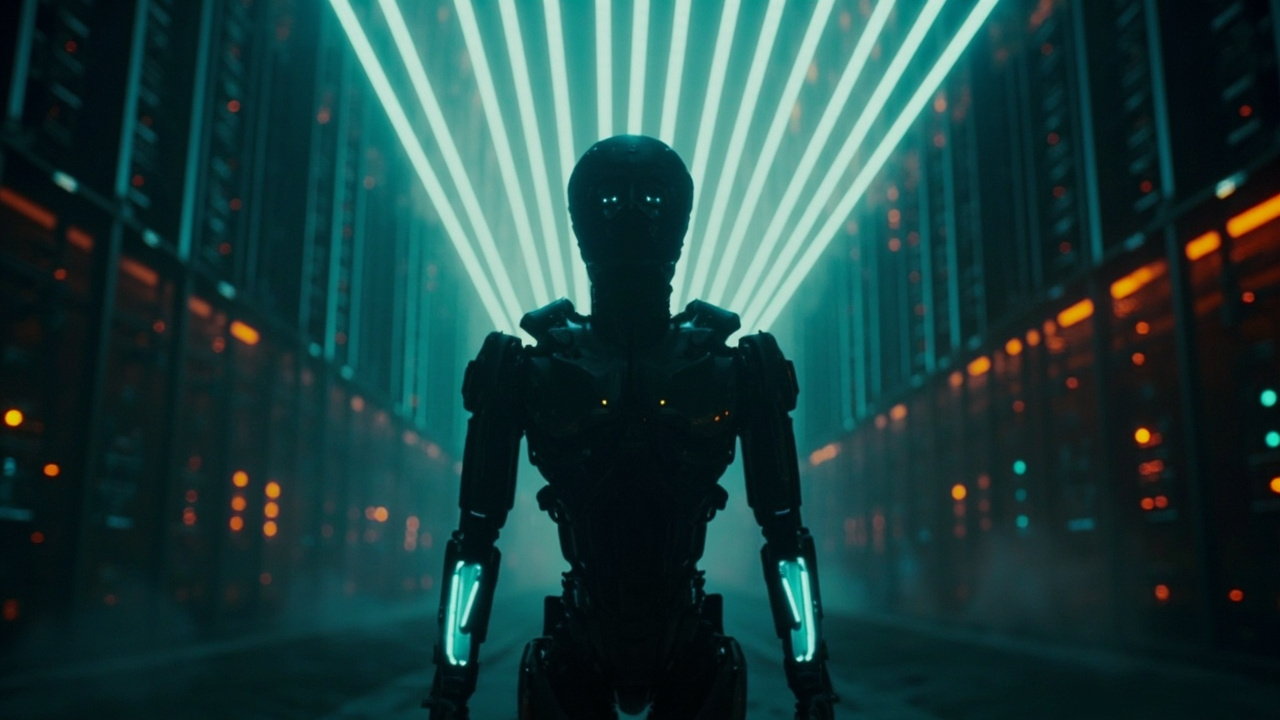
The frontier-model compute race has a new competitor, and it doesn’t live in a chat window. On September 3, 2026, Figure — the Silicon Valley company behind the Figure 03 humanoid robot — announced a multi-year strategic partnership with Nscale, the London-based AI cloud operator, to deploy the NVIDIA Vera Rubin platform with up to 100,000 GPUs, targeted for initial deployment starting in the second half of 2027 at Nscale’s campus in Barstow, Texas. The initial commitment is $3.5 billion of compute, with stated intent to scale to more than $6 billion. As part of the agreement, Nscale is also making a strategic investment in Figure itself.
What was announced
The headline numbers are straightforward: up to 100,000 NVIDIA GPUs on the Vera Rubin platform, a $3.5 billion initial compute commitment, and a path beyond $6 billion. The deployment begins in the second half of 2027 at Barstow, a small West Texas town that has quietly become one of the most concentrated AI infrastructure sites in the United States. Nscale is already contracted to deliver roughly 104,000 NVIDIA GB300 GPUs in a ~240MW hyperscale AI campus there for Microsoft, alongside a growing portfolio that includes a 1.35-gigawatt AI factory campus announced for West Virginia.
But the more consequential detail is what the compute is for. This is not another general-purpose cloud contract feeding chatbots and coding assistants. It is dedicated capacity for training Helix, Figure’s vision-language-action (VLA) model that controls its humanoid robots — the AI system that turns camera input and language commands into whole-body motor control.
Data and compute: the two walls
Figure’s founder and CEO Brett Adcock framed the deal in unusually plain terms: “To bring humanoid robots to every home in the world, we are largely constrained by data and compute.”
The data side of that equation got its own answer just one week earlier, when Figure announced Index — a crowdsourced program the company describes as an effort to build the most diverse humanoid training dataset ever assembled. Participants receive recording devices and are paid by the minute to perform everyday tasks like cleaning and making coffee; Figure says Index is currently generating 35 minutes of training data every second. Add Project Go-Big, the company’s internet-scale humanoid pretraining effort focused on zero-shot human video-to-robot transfer, and the pipeline becomes clear: harvest human demonstration data at population scale, then burn enormous amounts of compute turning it into robot policy.
“Data alone cannot solve this problem,” the company wrote in its announcement. “Scaling physical intelligence will require an immense amount of compute. This partnership with Nscale provides the compute runway needed to train the next generation of AI models to solve general robotics.”
Jensen Huang’s flywheel
NVIDIA founder and CEO Jensen Huang, whose company sits at the center of the deal as both silicon supplier and Figure investor, supplied the framing that ties the pieces together: “Humanoid robots extend physical AI into the world designed for people — opening a major new industry. Nscale and Figure have activated the robotics flywheel: training Figure’s models on NVIDIA Vera Rubin through Nscale’s AI cloud, validating them in NVIDIA Isaac Sim, and deploying them on NVIDIA GPUs in Figure’s robots.”
That loop — train in the cloud, validate in simulation, deploy at the edge, collect more data, repeat — is the structural bet behind the entire partnership. Every robot deployed in BMW’s Spartanburg plant (Figure’s longest-running commercial deployment) and every future home unit becomes a data source feeding the next training run on Vera Rubin.
The Vera Rubin platform itself is NVIDIA’s next-generation rack-scale system, pairing the Vera CPU with Rubin GPUs. NVIDIA claims roughly 3.5x faster training and 5x faster inference over the Blackwell generation, with NVL144 configurations delivering multi-exaflop FP4 performance in 600kW-class racks. When Figure’s allocation comes online in late 2027, it will be renting some of the most advanced commercial silicon on the planet — and pointing all of it at motor control.
Why a neocloud, and why now
For Nscale, the deal is the latest and most vivid proof that “neoclouds” have moved beyond serving LLM startups. Josh Payne, Nscale’s CEO and founder, said: “We’re excited to partner with Figure as physical intelligence becomes AI’s next frontier. We’ve seen incredible growth with inference and agentic AI and Figure is pushing the boundaries of AI even further.”
Nscale has spent the past year assembling an aggressive US footprint — the Microsoft Barstow contract, the West Virginia AI factory letter of intent, a $3.5 billion pre-IPO financing round reportedly in talks with participation from NVIDIA and Third Point — and a marquee anchor tenant in humanoid robotics differentiates it from competitors whose demand is concentrated in text and code.
For Figure, the timing reflects a company that has raised its war chest and now needs to spend it on scale. The September 2025 Series C pushed Figure past $1 billion raised at a $39 billion post-money valuation, with Parkway Venture Capital, Brookfield, and NVIDIA among the backers. A $3.5-to-6-billion compute commitment is the logical next expenditure for a company whose product roadmap — mass production via its BotQ manufacturing line, home deployments of Figure 03 — depends entirely on Helix getting dramatically better.
The context that matters
Two readings of this deal are worth holding simultaneously.
The bullish one: physical AI is absorbing capital infrastructure at the same pace and scale as language AI did in 2023-2024. The same flywheel logic — data, compute, deployment, more data — that produced the LLM boom is now being funded explicitly for robots, complete with its own dedicated GPU allocations. If humanoid labor is the next multi-trillion-dollar industry, this is what the buildout looks like from the inside: single-company compute commitments crossing the billion-dollar line before the robots have reached any consumer’s home.
The skeptical one: $39 billion valuations and multi-billion compute deals are being struck on the strength of factory pilots and paid data-collection programs, not proven unit economics. Roboticists have spent decades discovering that manipulation in unstructured environments is brutally hard, and VLA models — while genuinely improving — still face a sim-to-real gap that no amount of Vera Rubin FLOPs alone will close. The compute runway helps only if the data feeding it generalizes.
Either way, the deal marks a milestone: it is hard to name a larger single-purpose compute commitment dedicated specifically to training robot brains. The race to put a humanoid in every home now has its own gigawatt-scale tailwind — and a very specific address in West Texas.
Sources
- [1] https://www.figure.ai/news/figure-and-nscale-sign-strategic-partnership
- [2] https://www.prnewswire.com/news-releases/nscale-and-figure-sign-strategic-partnership-to-power-the-next-generation-of-physical-ai-302868918.html
- [3] https://www.unite.ai/nscale-figure-ink-3-5b-deal-for-up-to-100000-vera-rubin-gpus/
- [4] https://www.eweek.com/news/figure-ai-3-5-billion-nscale-humanoid-robot-compute/
- [5] https://app.dealroom.co/news/note/nscale-bets-up-to-6b-of-compute-on-figure-s-humanoid-robots