Six Months Behind, Playing to Win: Kai-Fu Lee's iPhone-vs-Android Map of the US-China AI Race
In a wide-ranging Mishal Husain interview, the 01.AI founder says the US-China frontier gap has collapsed from years to six months — and that China will win AI on reach while America wins on revenue.
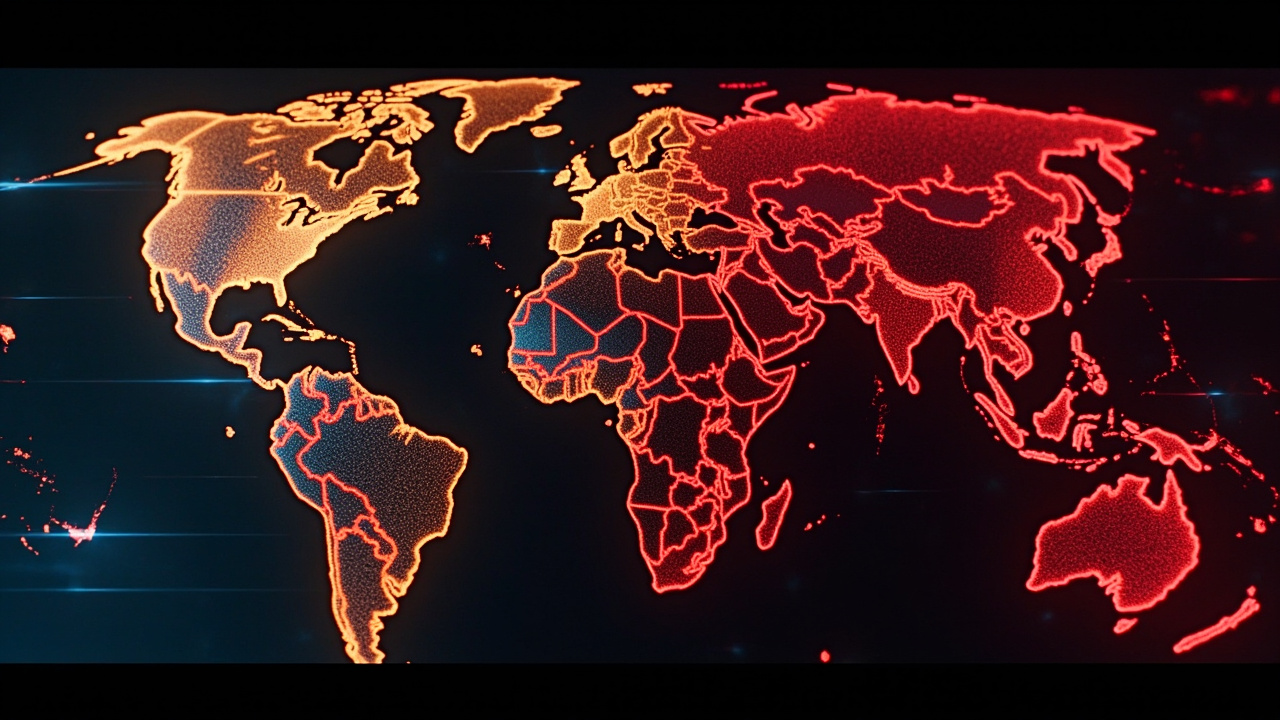
When ChatGPT launched, Kai-Fu Lee argues, the United States was three to four years ahead of China in frontier AI. Today, he says, the gap is about six months — and the speed of that collapse has surprised everyone, including the policymakers who designed the chip export controls meant to prevent it.
Lee’s credentials for making that call are unusual. Born in Taiwan, he moved to the United States at eleven, earned a PhD in speech recognition in the 1980s, and then held senior roles at Apple, Microsoft, and Google — which poached him with a multi-million-dollar package in 2005 to lead its China entry. Today he lives in Beijing, runs his own AI company (01.AI), and has invested in dozens of Chinese startups, several of which minted billionaires. Few people have seen both ecosystems from the inside for four continuous decades.
The occasion was an interview with Mishal Husain published September 4–5, 2026, timed to Lee’s forthcoming book AI Native: The Mandate to Transform Your Company. But the headline-grabbing portion was geopolitical, not organizational.
The gap: from years to months
Lee’s core claim is that US export controls on advanced semiconductors “undervalued Chinese companies and their engineers’ tenacity.” In his telling, Chinese labs operated with perhaps one to three percent of the GPU power available to top American rivals and still produced “almost comparable” results. The mechanism was unglamorous: what he calls “dirty work” — ten times the engineering effort spent fixing, polishing, and optimizing because hardware couldn’t be brute-forced.
He contextualizes the open-source question the same way. Chinese models (DeepSeek, Moonshot’s Kimi, and peers) are largely open source not from ideology but from positioning: Chinese companies, he says, don’t believe they can win the closed-source game outright. His metaphor is a study group — if Silicon Valley labs are geniuses destined for Nobel Prizes, Chinese companies are very good students who pool their progress through published papers, open weights, and talent that circulates between firms. DeepSeek’s reports reference Kimi’s work and vice versa. American frontier labs largely stopped publishing; the Chinese study group operates “in a fishbowl for the world to see,” and the world is free to copy the homework.
iPhone vs. Android
The interview’s most quoted framing is economic. OpenAI and Anthropic, Lee says, “have built the iPhone. Chinese companies are more like Android.” The iPhone makes by far the most money; Android has the larger market share. He is explicit that this resolves a common misconception: no, Chinese AI companies will not be more profitable in the long run. American companies will make more money. OpenAI and Anthropic sit atop an enterprise-software market that pays heavily for premium, closed, indemnifiable capability.
But reach is a different contest. If you are a buyer in a developing economy, choosing between a $50,000 frontier model and a roughly equivalent open model that is six months older — Lee compares it to “a $50,000 Tesla this year or a $5,000 Tesla that is six months old” — the cheaper option is a genuinely strong value proposition. Asked whether DeepSeek or Kimi will become the AI for the developing world, meaning China wins the global race, Lee calls it “a likely outcome, with caveats”: Chinese labs must keep trailing by only months, and someone still has to build the polished, multilingual consumer interfaces that OpenAI-style companies build. Right now, he notes, “there is not enough of a carrier” for Chinese models to conquer developing-world consumers directly.
The displacement warning, sharpened
Lee has warned about AI job displacement since his 2018 book AI Superpowers, but he now describes the threat as having “recently risen rapidly to very high levels.” His new numbers: AI is solving tasks ten times longer than it could a year ago — a model that handled a four-minute human task now handles a forty-minute one — while the cost of intelligence keeps falling. Combined, he predicts adoption “more than the steam engine, more than the internet, more than Moore’s Law.”
His organizational prescription is the DRI model borrowed from Steve Jobs: companies will need fewer people, but the ones who remain must be “Directly Responsible Individuals” — willing to own outcomes, command armies of AI workers in parallel, and be accountable when things go wrong, because AI cannot be accountable. He sketches his own company’s future as perhaps twenty people plus one hundred AI agents per unit, flexing in either direction with growth.
He is also blunt about second-order effects: countries that can afford it should redistribute AI-generated wealth so people can work fewer hours and be paid for activities that are not economically valued today. And he makes a consumer-side argument that CEOs moving too fast tend to miss — if every company becomes “merciless,” running lean with AI and shedding workers, “who becomes the consumer to buy the products?”
The personal AI coach
The most concrete detail in the interview is Lee’s own management setup. He runs an always-on AI “CEO coach” that sits in every meeting he attends, sees everything he says, and reviews six months of longitudinal meeting history. It recently told him that accumulated company stress had made him “harshly critical of people in front of others” — a pattern of gentle, gentle, gentle, then super mean — that he hadn’t noticed in himself. It also informed him that 93.6% of his meeting comments were requests for administrative detail, when what his teams actually wanted from the CEO was strategy. The tool provides an evidence chain for each critique, which he says is why he trusts it: it is objective, present in every meeting, and has no incentive to flatter.
He closes where his 2018 book did — on the coupling of AI’s ability to think with humans’ ability to love — now split into two loves: human-to-human connection (the job sector he expects to grow most, because people refuse synthetic empathy) and love of an idea, the passion that produced the iPhone, reusable rockets, and comfortable women’s clothing, and that AI can now amplify by handling execution.
Why it matters
The six-month figure is the number to watch. If Lee is right, then export controls bought time but not separation, and the “study group” dynamics of Chinese open-source labs set a deflationary price floor under frontier capabilities worldwide. The same week as the interview, independent trackers showed open-weight models reaching 53% of developer tokens — consistent with Lee’s Android thesis playing out in real time. His counterweight is equally pointed: reach is not revenue, and the profitable tier of the AI stack still runs through American enterprise software. Both things can be true at once — which is exactly what makes this race harder to score than either camp admits.