One Gigawatt on 264 Acres: Inside TCS HyperVault's $7.4 Billion Hyderabad AI Data Centre Bet
TCS subsidiary HyperVault has secured 264 acres in Hyderabad for a 1 GW AI data centre campus backed by up to ₹70,000 crore ($7.41B), a phased liquid-cooled build for frontier AI firms and hyperscalers due by June 2028.
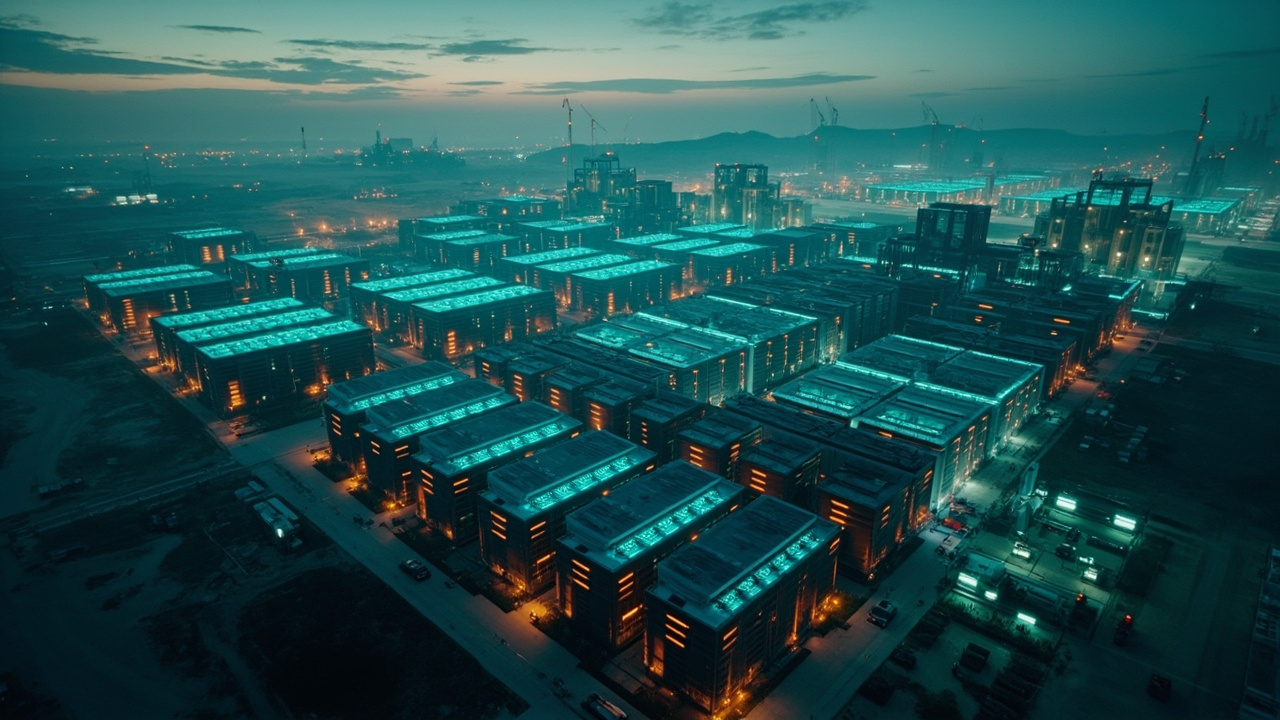
On September 5, 2026, Tata Consultancy Services confirmed in a stock exchange filing that its subsidiary, HyperVault AI Data Center Limited, has secured 264 acres of land in Hyderabad to build a purpose-designed AI data centre campus with capacity of up to 1 gigawatt. HyperVault and its partners are expected to invest as much as ₹70,000 crore — roughly US$7.41 billion — to build and operate the facility, making it one of the largest data centre commitments ever announced by an Indian company, and one of the largest single-site AI infrastructure bets anywhere in the world.
The announcement, made alongside Telangana Chief Minister A. Revanth Reddy, lands at a moment when compute has become the defining strategic resource of the AI era. States and nations are racing to attract GPU-era capacity, and the TCS-HyperVault deal instantly redraws the map of where frontier-scale AI compute will physically live.
What Was Announced
The core facts of the deal, per TCS’s exchange filing and the state government:
- 264 acres of secured land in Hyderabad’s Bharat Future City development
- Up to 1 GW of AI data centre capacity at full build-out
- Up to ₹70,000 crore (US$7.41 billion) in investment from HyperVault and its partners
- ~7,000 direct and indirect jobs across construction, engineering, power, cooling systems, and operations
- June 2, 2028 — the deadline Chief Minister Revanth Reddy has publicly set for the facility’s launch
The campus will not be a general-purpose data centre. TCS says it is being built specifically for frontier AI companies and hyperscalers, with infrastructure designed to support high-density GPU deployments for AI training, inference, and other advanced computing workloads — the kind of compute-hungry work that today’s large language models and agentic AI systems demand.
Built for the GPU Era
What separates this project from a typical enterprise data centre is its design philosophy. HyperVault says the Hyderabad campus will use liquid cooling, larger power blocks, and water-neutral design principles from the ground up — necessities for housing the next generation of power-dense AI chips, rather than retrofits bolted onto older infrastructure.
“We are building infrastructure for where AI is going: higher density, liquid cooling, larger power blocks and faster deployment,” said Deepesh Kiran Nanda, CEO and MD of HyperVault AI Data Center Limited. “Hyderabad gives us the foundation to build that at scale for frontier AI companies and hyperscalers.”
The build-out will happen in phases, calibrated to customer demand and evolving technology requirements, TCS said. At full capacity, the company expects the campus to rank among the most advanced and largest AI infrastructure sites in the country.
Part of a Bigger TCS Strategy
For TCS, the Hyderabad campus is not a standalone real estate play — it is a deliberate extension of the company’s pivot from pure IT services toward owning AI infrastructure itself. The move builds on TCS’s earlier AI push, including its Rapid Outcome AI-Nvidia partnership aimed at fighting off AI-led disruption to India’s IT services industry. HyperVault now gives that strategy its own physical backbone.
TCS CEO K. Krithivasan framed the subsidiary as advancing the company’s “Infrastructure-to-Intelligence” strategy — combining AI-ready infrastructure with TCS’s cloud, engineering, enterprise transformation, and AI capabilities.
HyperVault also isn’t starting from zero. Private equity major TPG had earlier committed ₹18,000 crore to the venture, part of a wave of private capital flowing into AI infrastructure. And this is not the Tata Group’s first major AI compute bet: Tata previously partnered with OpenAI on a 100 MW AI data centre in India, signalling a broader group-wide push alongside global hyperscalers — including Reliance Industries and the Adani Group — already expanding in the country.
Telangana Calls It “Historic”
The project marks a major win for Telangana’s push to position Hyderabad as India’s AI infrastructure hub. Chief Minister Revanth Reddy, who met HyperVault representatives on Saturday, described the investment as historic for both the state and the country.
“This establishes that Hyderabad is now at the forefront of the global AI revolution with a strong focus on infrastructure,” Reddy said, adding that compute access is fast becoming a form of public infrastructure — comparable, in his framing, to roads or electricity.
State IT and Industries Minister D. Sridhar Babu, who led the negotiations, said the deal moved unusually fast: it originated from a conversation between the Chief Minister and Tata Sons Chairman N. Chandrasekaran at Davos in January 2026, and was finalised within months — a pace he described as moving “at the speed of thought.”
Context: India’s AI Infrastructure Race
The HyperVault announcement is the latest and largest move in a broader Indian AI infrastructure surge. AM Intelligence, backed by renewables giant Greenko, recently ordered 9,000 NVIDIA Rubin GPUs for its own Hyderabad AI factory under an US$8 billion buildout plan. AWS is investing ₹60,000 crore in a Bharat Future City data centre campus of its own. And analysts project global data centre investment could reach US$31.6 trillion by 2050, with India positioning itself as a leading destination.
There is also a strategic subtext. As US export controls and geopolitical tension shape where advanced GPUs can be deployed, India is pitching itself as a democratic, scalable alternative for AI compute — and a 1 GW campus from one of the country’s most trusted corporate names is exactly the kind of anchor tenant that thesis needs.
What to Watch
- Customer sign-ups. A 1 GW campus is only as good as its tenants. Watch for announcements from frontier AI labs and hyperscalers committing capacity at the site.
- GPU supply. Phased build-out means the campus’s actual compute footprint will depend heavily on chip availability through 2027–2028.
- The June 2028 deadline. Data centre construction at this scale routinely slips. Whether HyperVault hits the CM’s timeline will be a key credibility test.
- Competitive response. Reliance, Adani, and global hyperscalers are all expanding in India — expect counter-announcements.
For now, the message from Hyderabad is unambiguous: India’s largest IT services company believes the next decade of its business will be decided not in code, but in concrete, power, and cooling — and it has just committed ₹70,000 crore to that belief.
Sources
- [1] https://www.reuters.com/world/india/indias-tcs-unit-invest-up-74-billion-ai-data-center-campus-2026-09-05/
- [2] https://swarajyamag.com/infrastructure/tcs-subsidiary-hypervault-plans-1-gw-ai-data-centre-campus-in-hyderabad-with-up-to-rs-70000-crore-investment
- [3] https://aitechnews.in/tcs-hypervault-hyderabad-ai-data-centre/
- [4] https://www.thehindu.com/news/national/telangana/revanth-and-tcs-announce-70000-crore-ai-data-centre-in-future-city-to-be-completed-by-june-2-2028/article71431767.ece
- [5] https://www.moneycontrol.com/news/business/telangana-cm-urges-tcs-hypervault-to-launch-its-hyderabad-ai-data-centre-by-june-2028-14023401.html/amp