One Robot for Aging Alone: Tuya's Doova Wants to Be the Whole Answer
At IFA 2026 in Berlin, Tuya Smart unveiled Doova, an AI home companion robot for seniors living alone that combines fall detection, 60-second emergency escalation, conversational companionship, and smart-home control in one soft-bodied device.
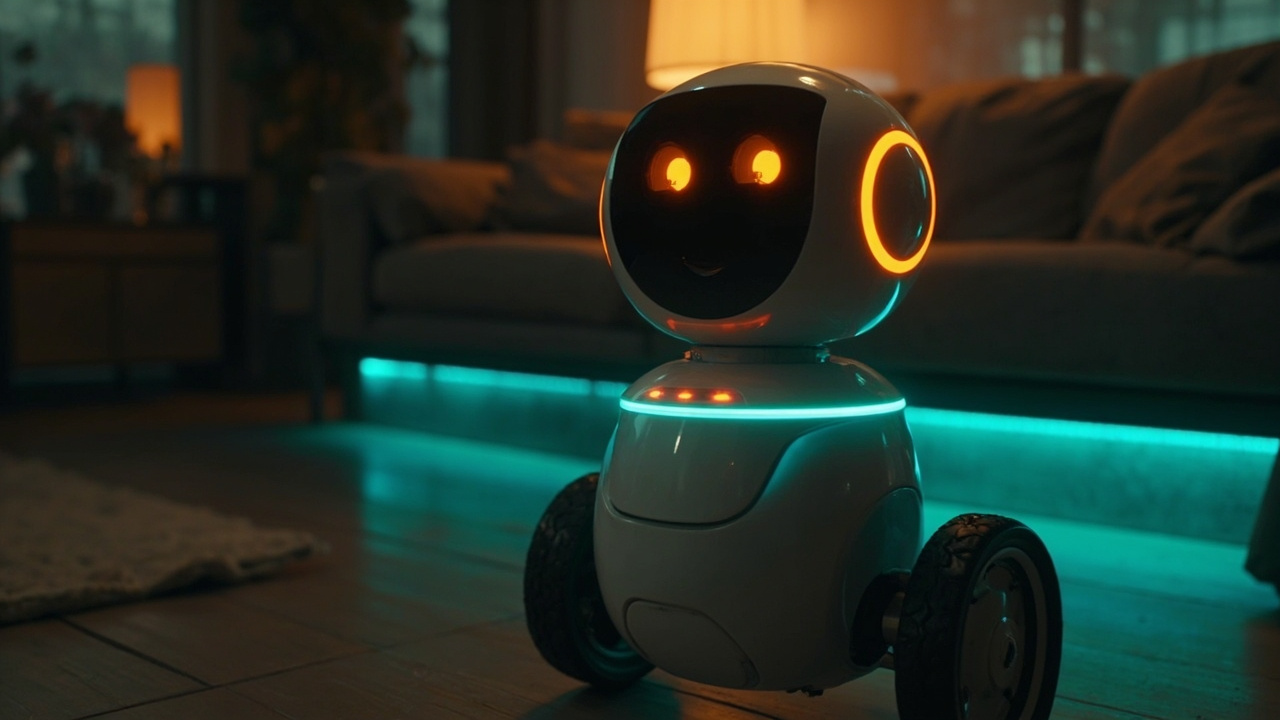
For years, the eldercare robotics conversation has been stuck on the same question: should we build humanoid nurses, or wall-mounted fall sensors? At IFA 2026 in Berlin, Tuya Smart (NYSE: TUYA; HKEX: 2391) offered a third answer. Doova, the company’s new AI home companion robot unveiled on September 5, is neither a humanoid gimmick nor a passive alarm. It is a wheeled, conversational, autonomously patrolling hub that tries to be the single device a senior living alone actually needs — and its design bet says more about where consumer robotics is heading than a dozen humanoid demos.
What Doova actually does
The core scenario Tuya targets is brutally specific: an older adult lives alone, has an accident, and the real danger is not the fall itself but the hours that pass before anyone notices. Doova’s answer layers three technologies. An LDS LiDAR unit maps the home. A four-microphone array performs sound source localization, so the robot can tell where a voice came from. AI vision with skeletal-recognition algorithms lets it visually assess a person’s posture and condition.
Put together, the workflow is this: a user calls out “Hey Tuya, help,” and Doova navigates to them, moves to their side, and assesses the situation in real time. If it detects no response within 60 seconds, it automatically initiates an emergency response — a two-way live video call alert to family members, so a human can arrange assistance without delay. The 60-second window is a deliberate design choice: fast enough to matter in a real emergency, slow enough to avoid false alarms every time someone dozes off in a chair.
More than an alarm on wheels
Emergency response is the hook, but Tuya is clearly betting that the device’s day-to-day value is what keeps it in the home. Doova’s conversational ability runs on a multimodal large language model, which the company says enables natural, free-flowing conversation rather than fixed command-and-response patterns. In quiet moments it offers company and plays entertainment content. In daily life it interprets complex bills and letters, flags potential scam risks — a quiet nod to the elder-fraud epidemic — and walks users through operating smart appliances.
It also handles the routine-management layer: medication reminders, weather updates, schedules, and light interactive games. Over time it learns preferences, ranging from meal suggestions to gardening advice to outfit recommendations. Future plans include autonomous item-finding throughout the home, aimed at the very real anxiety of misplaced belongings.
The monitoring story is similarly thought through. Instead of patrol-style devices that follow walls on fixed routes — which can feel like overt surveillance — Doova uses what Tuya calls a node-oriented coverage strategy centered on each room. It moves between spaces on a dual-wheel drive with caster wheels, performs a 360-degree scan at each location, and generates a safety report delivered to the user’s phone. Autonomous docking and recharging means the loop runs without daily intervention.
The smart-home Trojan horse
The most strategically interesting part of Doova may be what it does for Tuya’s core business. Doova doubles as a central smart-home control hub: with voice commands, users coordinate lighting, curtains, kitchen appliances, and bathroom devices across Tuya’s AIoT ecosystem. For a company whose platform connects an enormous share of the world’s white-label smart home devices, a friendly robot in the living room is the most natural interface it has ever shipped — one that lowers the barrier to smart living precisely for the population that finds apps and dashboards most intimidating.
Tuya’s platform scale is worth underlining. As of June 30, 2026, the Tuya AI Developer Platform counted more than 2,092,000 registered AI developers across over 200 countries and regions. The company reported Q2 2026 revenue of US$92.9 million, up roughly 16.0% year-over-year, with PaaS revenue of US$67.9 million, up 16.9%. Doova extends that ecosystem from the cloud into physical, embodied presence — a robot as the front door to a developer platform.
The hardware design reinforces the positioning. Tuya deliberately avoided the cold, mechanical aesthetic of conventional robots: the body is soft and curved, the height is optimized for interaction whether the user is standing, seated, or reclining, and a 10.1-inch high-definition display with dynamic facial expressions is meant to make conversation feel warmer. This is a device designed to be accepted as part of the household, not tolerated as equipment.
Why the market is paying attention
The demographics do the heavy lifting here. Market researchers put the elder care assistive robots market at roughly US$3.4–4.05 billion in 2025–2026, with projections to US$7.4–9.8 billion by 2030–2033 at compound annual growth rates of 14–16 percent. Companion robot segments specifically are tracking similar trajectories. Every developed economy is aging, caregiver labor is scarce everywhere, and adult children increasingly live far from their parents. A device that combines detection, escalation, companionship, and home control addresses all four pressure points at once.
Tuya is not alone in seeing this. University research groups are designing empathetic companion robots for older adults; startups and established assistive-robot makers are shipping devices that help couples with disabilities stay in their homes. What distinguishes the Doova approach is the platform economics: Tuya does not need Doova itself to be a blockbuster. It needs Doova to prove that its AI agent stack, its cloud, and its device ecosystem can anchor an embodied consumer product — and to give its two million developers a new category to build for.
Open questions
Fair caveats remain. Tuya’s announcement does not include pricing or a release date, so affordability — the factor that decides whether this reaches ordinary seniors rather than tech-early-adopter children buying for their parents — is unknown. The 60-second escalation and scam-detection features also raise the stakes on reliability: an emergency device that mishears, mislocalizes, or fails to dock is worse than no device at all, and real-world validation in messy homes will take time. And as an always-on microphone-plus-camera that roams the house, Doova will inevitably face privacy scrutiny, particularly in Europe where it just debuted.
But as a statement of direction, Doova is one of the more coherent products at IFA 2026. Rather than chasing humanoid spectacle or shipping another smart speaker, Tuya has packaged the four things an aging population living alone actually needs — safety, escalation, company, and control — into one deliberately unthreatening machine, and plugged it into one of the largest IoT ecosystems on the planet. The eldercare robot may finally have found its form factor.
Sources
- [1] https://www.prnewswire.com/news-releases/tuya-smart-unveils-doova-at-ifa-2026-an-ai-home-companion-robot-designed-to-support-independently-living-seniors-302870623.html
- [2] https://finance.yahoo.com/technology/ai/articles/tuya-smart-unveils-doova-ifa-075800826.html
- [3] https://www.stocktitan.net/news/TUYA/tuya-smart-unveils-doova-at-ifa-2026-an-ai-home-companion-robot-3cj5kbzs1ydg.html
- [4] https://www.tuya.com/
- [5] https://ir.tuya.com/
- [6] https://www.grandviewresearch.com/industry-analysis/elder-care-assistive-robots-market-report