The Ethics of Listening: AI Gets Close to Decoding Animal Language — and Bioethicists Sound the Alarm
AI foundation models are closer than ever to decoding the calls of crows, whales and belugas. Bioethicists warn the same tools hand humans new levers to manipulate animals — from poachers mimicking mating calls to farms broadcasting distress vocalizations.
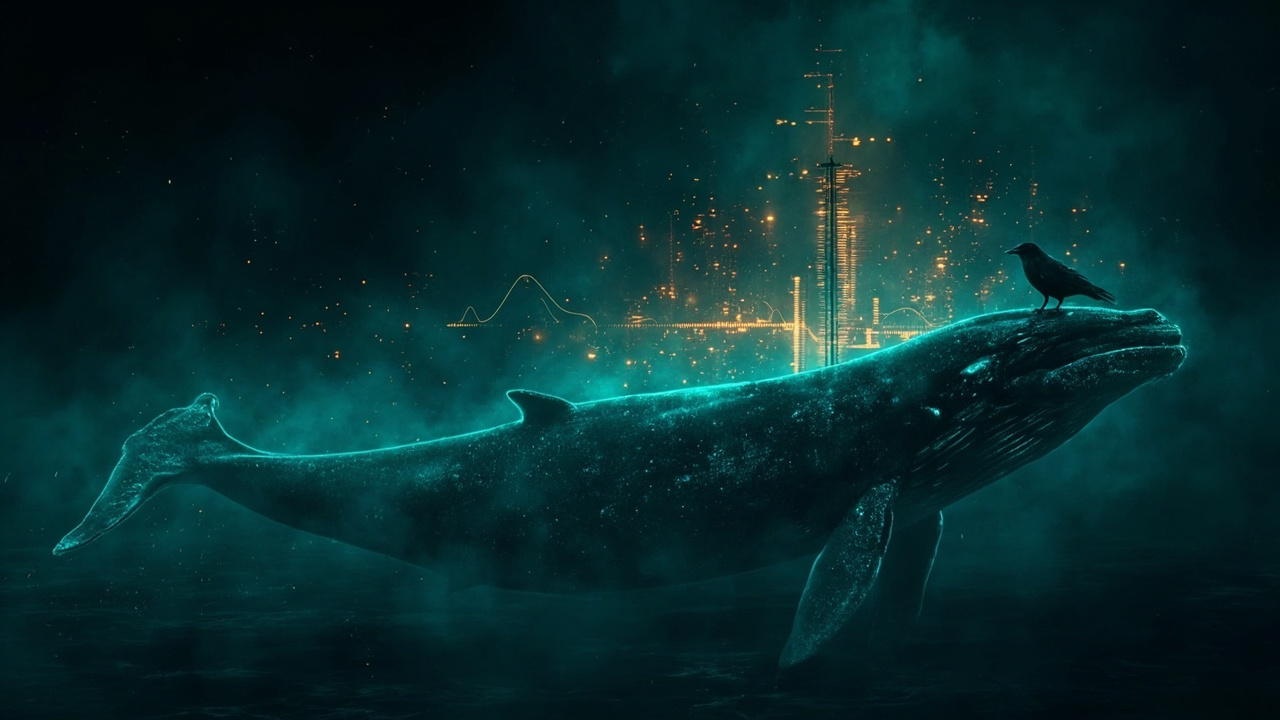
For decades, “talking to animals” sat firmly in the realm of fable and science fiction. That is changing fast. Over the weekend of September 5–6, 2026, Bloomberg’s Weekend edition published a piece that quickly became one of the most-read AI stories of the day: scientists are getting genuinely close to using AI language models to decode the communication of crows, whales, and other species — and bioethicists are warning that the same capability opens what one outlet called “AI’s next ethical minefield.”
The story matters because it marks a shift in the conversation. The question is no longer whether machine learning can find structure in animal vocalizations. It is what humans will do with that structure once we can read it — and, eventually, speak it back.
The science has reached a genuine convergence
The technical backdrop is a field that researchers now call Animal Language Processing (ALP). The Earth Species Project (ESP), a nonprofit founded in 2017, published a widely circulated framing essay in April 2026 describing how a decade of work has converged: large-scale bioacoustic data from passive recorders and animal-borne tags is finally meeting modern self-supervised foundation models that can learn structure directly from raw, largely unlabeled recordings.
The results are no longer curiosities. Researchers have documented that elephants call one another by distinct names, and that female beluga whales use a functional “come back!” call to coax wandering calves back to the group. ESP currently studies the vocal systems of crows and beluga whales, and its NatureLM-audio model lets biologists interrogate acoustic datasets in natural language rather than writing bespoke classifiers. Project CETI, the Cetacean Translation Initiative, continues its machine-learning push on sperm whale vocalizations — work that earlier produced visualizations of call sequences suggestive of a combinatorial communication system.
Three shifts made this possible. First, sensing: autonomous recorders and animal-borne tags now capture continuous, overlapping, context-rich interactions that were previously impossible to annotate. Second, methodology: the field moved from task-specific classifiers (“detect this species,” “label this call type”) toward general-purpose representation learning that transfers across species. Third, culture: researchers increasingly work across taxa, asking whether representations learned on birds, bats, and marine mammals reveal shared structural axes of communication across the Tree of Life.
Crucially, ALP does not assume animal communication is “language” in the human sense. It does not presuppose recursion or human-like syntax. It treats any system of structured signals — vocal, gestural, multimodal — as data that can be mined for regularities, context-sensitivity, and interactional patterns. Hypotheses still matter, but they increasingly emerge from large-scale analysis rather than being fixed in advance.
Why ethicists are worried
The Bloomberg Weekend report, following the paper’s earlier coverage, makes the core concern explicit: the same models that let us understand animals also hand humans new levers to exploit them. The scenarios bioethicists raise are concrete:
- Poaching. If a model can synthesize a mating call, a poacher can broadcast it to lure endangered animals into range.
- Industrial farming. Distress vocalizations could be broadcast deliberately to scare predators away from livestock — or, more darkly, the ability to detect and suppress distress calls could make the suffering inside factory farms less visible, not less real.
- Tourism and entertainment. Decoded signals could be used to manipulate wildlife for closer encounters and better footage.
- Surveillance and control. Military and commercial programs could use communication decoding to track and manage animal populations without their welfare entering the equation.
Even research itself carries risk. CETI founder David Gruber, speaking to Mongabay as part of a February 2026 report on the proposed PEPP Framework (Prepare, Engage, Prevent, Protect) — developed by scientists at NYU’s More than Human Life (MOTH) program together with CETI — noted that “even routine recording and playback can cause stress in animals.” In one documented case, researchers studying elephant communication played back a call from an individual that had already died. The family reacted with what observers described as significant distress, searching for their dead relative; the deceased elephant’s daughter called for days afterward.
The PEPP Framework is voluntary. But its authors point out that many human and Indigenous rights regimes began the same way — as nonbinding principles that hardened into enforceable international norms. “If we can agree on shared standards now, formal international guidelines become feasible and enforceable,” Gruber said.
Translation is not understanding
A deeper philosophical worry runs through the academic literature. A 2025 paper by Küçükuncular in AI and Ethics (summarized by Faunalytics) argues that when an algorithm renders a whale song as “I’m lonely,” it is reorganizing the animal’s vocalizations to fit our linguistic template. The output projects our worldview and may be a mistranslation of what the animal was expressing. Meaning, the argument goes, arises from a creature’s way of being in the world; no algorithm can make us know what it is like to be another species.
This has governance implications. If translation systems become commercialized before ethical guidelines exist, the platforms, patents, and data pipelines will already be owned by companies with incentives that have nothing to do with animal welfare. The proposed guidelines read almost like a Hippocratic oath for interspecies AI: do no harm; act for the animals’ benefit, not human entertainment; respect autonomy (animals should be able to walk away or stop talking); honor privacy and dignity; remain transparent about uncertainty; and don’t restrict the benefits to charismatic species or wealthy countries.
There is also a subtler trap. If moral and legal standing begins to hinge on whether an animal can “talk back” in a way our systems can parse, we risk rebuilding the very hierarchy the technology was supposed to dissolve. Octopuses and insects may stay enigmatic simply because their signaling is too alien for our models — that should not make them matter less.
The upside ethicists insist on
None of this argues for stopping. The conservation record of simply listening is real: the 1970s discovery that humpback whales sing helped drive the legal protections that pulled the species back from the brink. Modern applications point the same way — if AI can recognize whale distress calls caused by shipping noise, that evidence becomes a lever for mandatory slow-down zones and rerouted lanes. ESP’s own framing essay is explicit that ethics and governance questions are “baked in” to the field’s agenda, with the MOTH program actively stress-testing where existing frameworks fall short.
The trajectory of the field now depends less on model capability than on institutional choices made in the next few years: who owns the models, who audits the translations, and whether precaution or profit sets the default. As the AI and Ethics paper puts it, AI itself is neither moral nor immoral — it reflects the motives of its makers. The question the Bloomberg piece leaves readers with is the right one: even if we can talk to animals, should we — and if so, on whose terms?
For now, the scientists building Animal Language Processing have an unusual advantage rare in AI: the field’s leading organizations are writing the ethics framework while the technology is still in the lab, not after it ships. Whether that head start survives contact with commercial incentives will be one of the defining stories of interspecies AI.
Sources
- [1] https://www.bloomberg.com/news/articles/2026-09-04/ai-s-next-ethical-dilemma-should-humans-talk-to-animals
- [2] https://aiweekly.co/ai-news-today
- [3] https://earthspecies.org/2026/04/02/animal-language-processing-an-ai-convergence-in-animal-communication/
- [4] https://news.mongabay.com/short-article/scientists-call-for-ethics-rules-as-ai-fuels-animal-communication-research/
- [5] https://faunalytics.org/the-ethics-of-using-ai-to-talk-to-animals/