One Box for Storage, Security, and a Brain: Inside UGREEN's HomeAgent and the $9,999 Jetson Thor Hub That Wants to Run Your Whole Home
UGREEN's HomeAgent lineup merges a NAS, an NVR, and an on-device AI assistant — topping out with a $19,999 NVIDIA Jetson Thor T5000 hub delivering 2,070 TFLOPS of local FP4 compute.
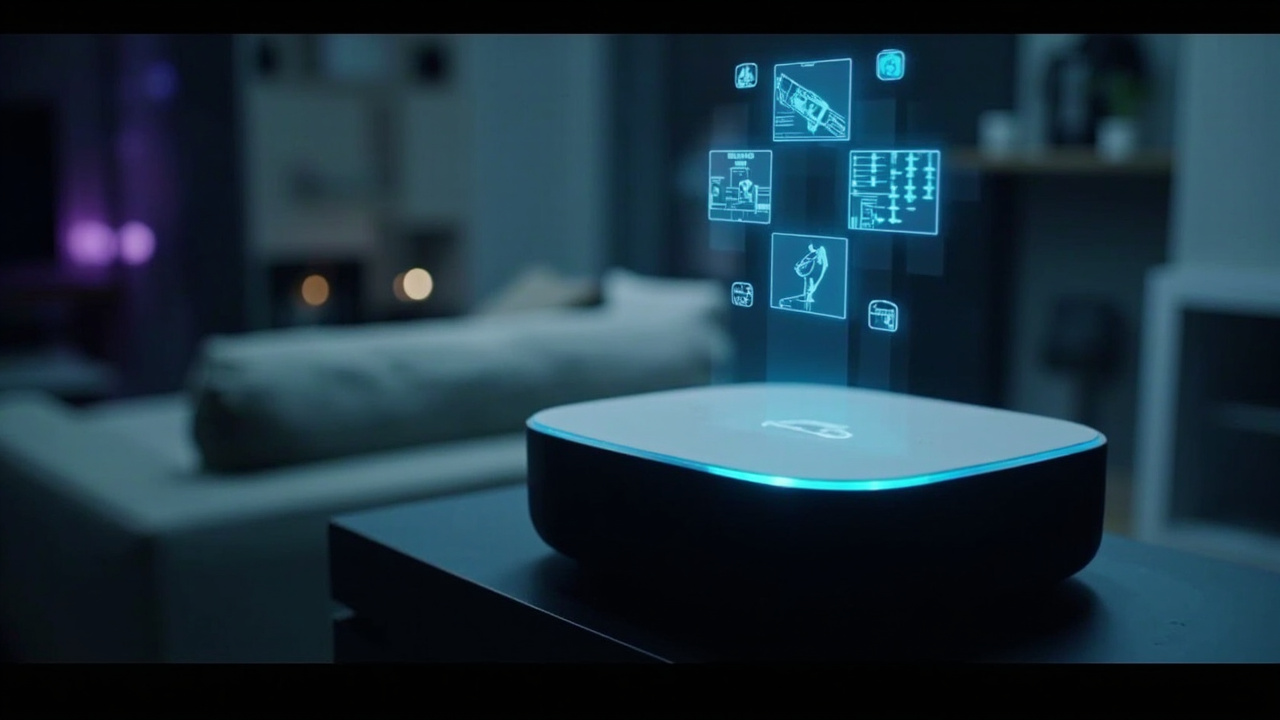
The company best known for charging cables and iPhone accessories has just made one of the boldest plays in consumer AI hardware. UGREEN — a Chinese electronics maker whose NASync line quietly became a favorite among home-server enthusiasts — has officially entered the smart home market with HomeAgent, a family of local-AI hubs that combine a network-attached storage server, a security camera recorder, and a fully on-device AI assistant in a single box.
The lineup, unveiled September 3 at an event in Boston ahead of a Kickstarter crowdfunding campaign opening in October, spans three tiers. At the top sits the MasterAgent MA100, built on NVIDIA’s Jetson Thor T5000 module, which UGREEN says delivers an astonishing 2,070 TFLOPS of sparse FP4 AI compute — a figure that would have described a small data center GPU just a few years ago, now packaged for a living room shelf. It carries a $19,999 MSRP, discounted to a $9,999 “Super Early Bird” crowdfunding price.
Three tiers, one philosophy
The entry HomeAgent HA100 ($1,799 MSRP, $899 Super Early Bird) provides 26 TOPS of local AI performance with 16GB of DDR5 memory and an M.2 NVMe SSD slot dedicated to AI model storage. The mid-tier HA100 Pro ($5,999 MSRP, $2,999 Super Early Bird) steps up to 205 TOPS with faster connectivity. And the MA100 ($19,999 MSRP) is the no-compromises flagship, pairing the Jetson Thor T5000 with 128GB of shared memory and high-speed NVMe expansion.
What unites all three is the same design philosophy: local-first AI. The hubs run their assistant — named Uliya — entirely on the device. Video from UGREEN’s new SynCare security cameras is recorded and analyzed locally. Event summaries, person/pet/vehicle recognition, and even photo highlight generation for the company’s new e-paper Gallery frame all happen on hardware sitting inside your house, with no cloud round-trip and no subscription fee.
That is a direct answer to the two biggest complaints about modern smart homes: recurring costs and privacy. As 9to5Google noted in its coverage, a locally run model “carries less risk” than one that ships your camera footage to someone else’s data center. UGREEN’s pitch is essentially: think of what Google Home does with AI event detection — but run all of it off the cloud, in a hub you own.
A NAS company’s trojan horse
The strategic logic becomes clearer when you look at UGREEN’s existing business. The company already sells well-reviewed NAS devices — the DXP4800 Plus at $656.99, the eight-bay DXP8800 Plus at $1,369.99, and a line of “AI NAS” iDX6011 systems reaching $5,999. HomeAgent is the natural convergence: the NAS holds the data, the NVR ingests the camera streams, and the AI layer makes both useful without a cloud intermediary.
The launch ecosystem is deliberately complete. Three SynCare cameras cover indoor and outdoor use: the ID500 Pro indoor camera with pan/tilt, 4K capture, Wi-Fi 6, and — pointedly — a physical privacy shutter; the OD600 Pro battery/solar outdoor model; and the OD800 Pro PoE version. Both outdoor units capture three simultaneous video feeds via a bullet camera plus a pan/tilt module, with up to 9x hybrid zoom. Add-ons include the $299 Gallery e-paper smart frame and a $69 smart speaker built for talking to Uliya.
Crucially, the hubs support Matter, the cross-industry smart home standard, and act as a unified local controller for other devices on the network — positioning HomeAgent not as a closed ecosystem but as a brain that can orchestrate hardware from other brands.
Why the absurd-sounding $9,999 version matters
It is easy to dismiss a five-figure smart home hub as a stunt. But the MA100’s existence says something important about where consumer AI hardware is heading. NVIDIA’s Jetson Thor platform was designed for embodied AI — robots, autonomous machines, and agentic systems that need datacenter-class inference without datacenter latency or connectivity. Putting it in a consumer home hub is a bet that the next phase of smart homes is agentic: assistants that watch camera feeds, remember where you left your keys, manage your storage, and coordinate dozens of devices — continuously, privately, and without per-query API costs.
There is also a math argument. Households that would otherwise pay for cloud camera subscriptions, AI assistant tiers, and cloud storage spend hundreds of dollars per year forever. A local hub inverts that into a one-time capital cost — a trade that becomes more compelling the heavier the AI workload gets, and the MA100’s 128GB of memory means it can host genuinely large open-weight models, not just the toy-scale assistants typical of edge devices.
Analysis: credible, but execution is everything
UGREEN has real advantages here: an existing NAS customer base that already trusts it with storage hardware, manufacturing scale from its accessories business, and NVIDIA’s brand halo on the flagship. The Verge’s framing — “this NAS company wants to run your local smart home” — captures both the opportunity and the risk. NAS buyers are tinkerers; mainstream smart home buyers are not. Winning them over requires the Uliya assistant to actually be good, the Matter integration to be reliable, and the Kickstarter fulfillment (October campaign, shipping later) to go smoothly — a bar at which crowdfunded hardware has failed publicly many times.
The pricing also reveals the tension in local AI economics: 26 TOPS for $899 is aggressive but plausible; 2,070 TFLOPS for $9,999 is essentially a Jetson Thor dev kit wrapped in a consumer shell, and nascompares reports the ~50% crowdfunding discount is doing heavy lifting to make it discussable at all.
Still, the direction is right. Cloud-based smart home AI has stalled on privacy worries and subscription fatigue, while open-weight models have made local inference genuinely useful. HomeAgent is the most complete attempt yet to package that shift as a product a normal person could buy — and whether it succeeds or stumbles, it marks the moment consumer electronics makers stopped treating local AI as an enthusiast niche and started building businesses around it.
Sources
- [1] https://www.theverge.com/tech/990006/this-nas-company-wants-to-run-your-local-smart-home
- [2] https://9to5google.com/2026/09/03/ugreen-announces-homeagent-smart-home-hub/
- [3] https://www.engadget.com/2250749/ugreen-smart-home-ecosystem-built-around-local-ai-hubs/
- [4] https://ai.ugreen.com/pages/ugreen-homeagent-crowdfunding
- [5] https://nascompares.com/2026/09/03/the-new-ugreen-homeagent-series-revealed/