40% Less Warming Per Flight: Google and Cathay Pacific Scale AI Contrail Avoidance Across Asia-Pacific
Google and Cathay Pacific are expanding AI-powered contrail avoidance to ultra-long-haul routes after early trials cut contrail warming by roughly 40% — the first commercial deployment of its kind in Asia.
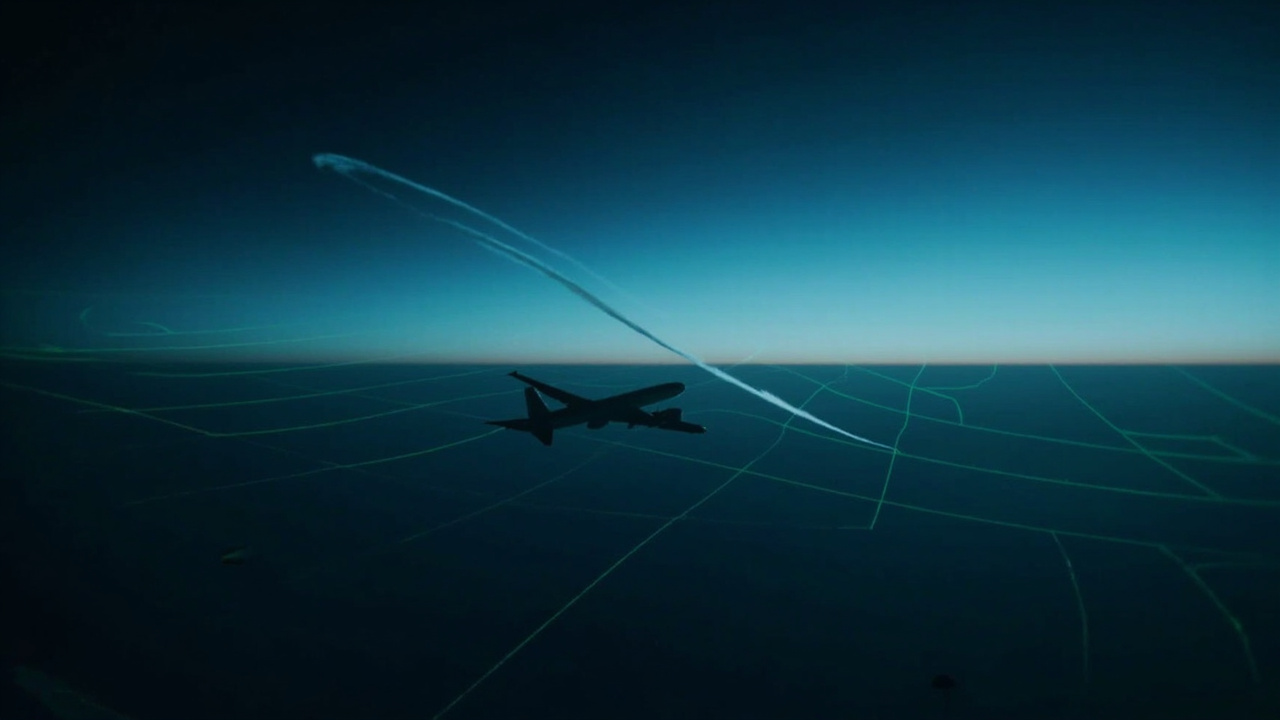
The white streaks trailing a cruising airliner look harmless — ephemeral artistry painted across a blue sky. According to IPCC assessments cited by Google, they are nothing of the sort: contrails are responsible for roughly one-third of aviation’s total climate impact. Today, Google announced it is scaling an AI system that helps pilots fly around them, expanding a partnership with Cathay Pacific into a larger second phase of trials across Asia-Pacific, the world’s fastest-growing aviation market.
The early results are striking. In an operational trial that targeted more than 100 flights across Cathay Pacific’s network, over 80 flights followed AI-plotted contrail-avoidance routes. Google’s satellite imagery analysis estimates those flights reduced the warming impact of their contrails by roughly 40% — achieved with nothing more exotic than small, planned altitude changes, using today’s aircraft and today’s fuel.
Cathay Pacific is Google’s first commercial airline partner in Asia to test contrail avoidance on ultra-long-haul routes — flights lasting more than 16 hours and often spanning 13,000 kilometers (8,000 miles) or more.
How predictive AI reaches the cockpit
The core idea is disarmingly simple. Contrails only form when an aircraft passes through cold, humid air masses where water vapor condenses around soot particles from jet exhaust. Most dissipate within seconds, but a persistent fraction spreads into cloud-like sheets that trap heat in the atmosphere. Avoiding them means shifting altitude slightly to steer around those ice-supersaturated zones — “much like pilots do to navigate around turbulence,” as Google’s announcement puts it. The adjustments are routine in kind, stay within established safety parameters, and are not expected to affect passengers or flight safety.
The hard part is knowing where those zones are, hours before departure, along a 13,000-kilometer route. That is where the AI does its work. Google’s system fuses machine-learning predictions, satellite imagery, and weather intelligence to pinpoint contrail-forming regions in advance, allowing dispatchers and pilots to bake small altitude shifts into the flight plan before the aircraft ever leaves the gate.
The data pipeline extends into the air. Cathay Pacific connects Google’s dynamic forecasts directly to the flight deck through in-flight Wi-Fi and its proprietary Electronic Flight Folder (EFF), giving pilots live contrail intelligence alongside their usual operational metrics — without interrupting standard cockpit workflows. It is a quietly elegant example of applied AI: not a chatbot, not a copilot for humans at a desk, but a forecasting model embedded in the operational fabric of a working airline.
The Hong Kong–Singapore effect
The trial’s route-level data reveals how concentrated the opportunity is. The Hong Kong–Singapore corridor was among the routes tested, because flights in that airspace frequently encounter conditions conducive to persistent contrail formation. Analysis from the trial indicates that interventions on that single route accounted for more than 50% of the trial’s total emissions reductions.
For an airline whose hub sits at the heart of Asia’s short- and long-haul networks, that concentration matters. A small number of high-yield routes — where contrail-forming conditions cluster — can deliver a disproportionate share of the climate benefit, which sharpens the economic case for operational adoption.
A track record built across three continents
Today’s announcement is the latest step in a research arc that has moved from models to live airline operations on multiple continents.
In earlier trials with American Airlines, pilots flew 70 test flights over six months using Google’s AI-based predictions. Satellite imagery analysis found those predictions reduced contrail formation by 54%. The economics were equally notable: flights that avoided contrails burned about 2% more fuel, but Google estimated this would translate to roughly 0.3% additional fuel when scaled across an airline’s fleet — putting contrail-avoidance costs in the range of $5 to $25 per ton of CO2 equivalent. Using IPCC figures, Google’s team calculated that the reduction in contrail warming was about 20 times greater than the warming added by the extra fuel burn. Few climate interventions in aviation come close to that ratio.
And in August 2026, Google partnered with the UK Government on Operation Blue Skies — described as the world’s first state-backed contrail-avoidance trial at the scale of an entire oceanic airspace. That 30-month program, running in Shanwick airspace over the eastern North Atlantic (which accounts for roughly 5% of global contrail warming), brings together NATS, Contrails.org, Imperial College London, the University of Cambridge, and the Met Office, with Google UK contributing £1.4 million in-kind.
With the Cathay Pacific expansion, Google’s contrail work now spans the United States, the North Atlantic, and Asia-Pacific — and the company is formalizing the science side by partnering with Contrails.org, a nonprofit dedicated to advancing contrail mitigation research.
Why this matters beyond aviation
The significance of this story is larger than one airline’s emissions ledger. Aviation is one of the hardest sectors to decarbonize: sustainable aviation fuel remains scarce and expensive, hydrogen and electric aircraft are decades from long-haul relevance, and demand keeps growing. Contrail avoidance is the rare lever that is available now, requires no new hardware, and pays back in climate impact per dollar at a rate that rivals or beats many carbon-removal approaches.
It is also a case study in where AI’s climate value actually lies today. The headline applications of AI — chatbots, coding agents, image generation — consume enormous compute. But a forecasting model that reroutes 80 flights and cuts their non-CO2 warming by 40% demonstrates a different calculus: modest, targeted machine intelligence deployed against a well-characterized physical problem, with satellite verification closing the loop between prediction and outcome.
There are open questions. The 40% figure is an estimate derived from satellite imagery analysis, not direct measurement, and it covers the subset of flights that followed avoidance routes — fleet-wide effects will depend on how often dispatchers and pilots can act on the forecasts in real operations. Nighttime contrails trap more heat than daytime ones (they trap outgoing radiation without reflecting incoming sunlight), so the timing of interventions matters as much as their location. And scaling from 80 flights to a global network means integrating contrail forecasts into air-traffic management systems that were never designed with them in mind — the reason state-backed programs like Operation Blue Skies exist.
But the direction is clear. Google describes contrail mitigation as “one of the most immediately available, scalable, and cost-effective ways to reduce aviation’s climate footprint,” and the Cathay Pacific second phase — with open research contributions through Contrails.org — is designed to prove operational feasibility across Asia and transpacific routes, not just prove the concept.
For an industry searching for climate wins it can bank this decade, AI-guided altitude changes may be the unlikeliest and most practical of them all.
Sources
- [1] https://blog.google/innovation-and-ai/models-and-research/google-research/contrail-avoidance-ultra-long-haul-flights/
- [2] https://www.reuters.com/world/asia-pacific/cathay-pacific-google-expand-ai-trials-cut-climate-warming-aircraft-contrails-2026-09-07/
- [3] https://www.unite.ai/google-cathay-pacific-expand-contrail-avoidance-trials-in-asia-pacific/
- [4] https://sites.research.google/gr/contrails/