Mini Hedge Funds for Everyone: Inside the WSJ's Account of Retail Investors Vibe-Coding AI Trading Agents
Retail investors are vibe-coding trading agents on Claude and Codex and wiring them into brokerage accounts. Moomoo's US CEO calls them 'mini hedge funds' — but the research behind the story says their portfolios don't beat index funds.
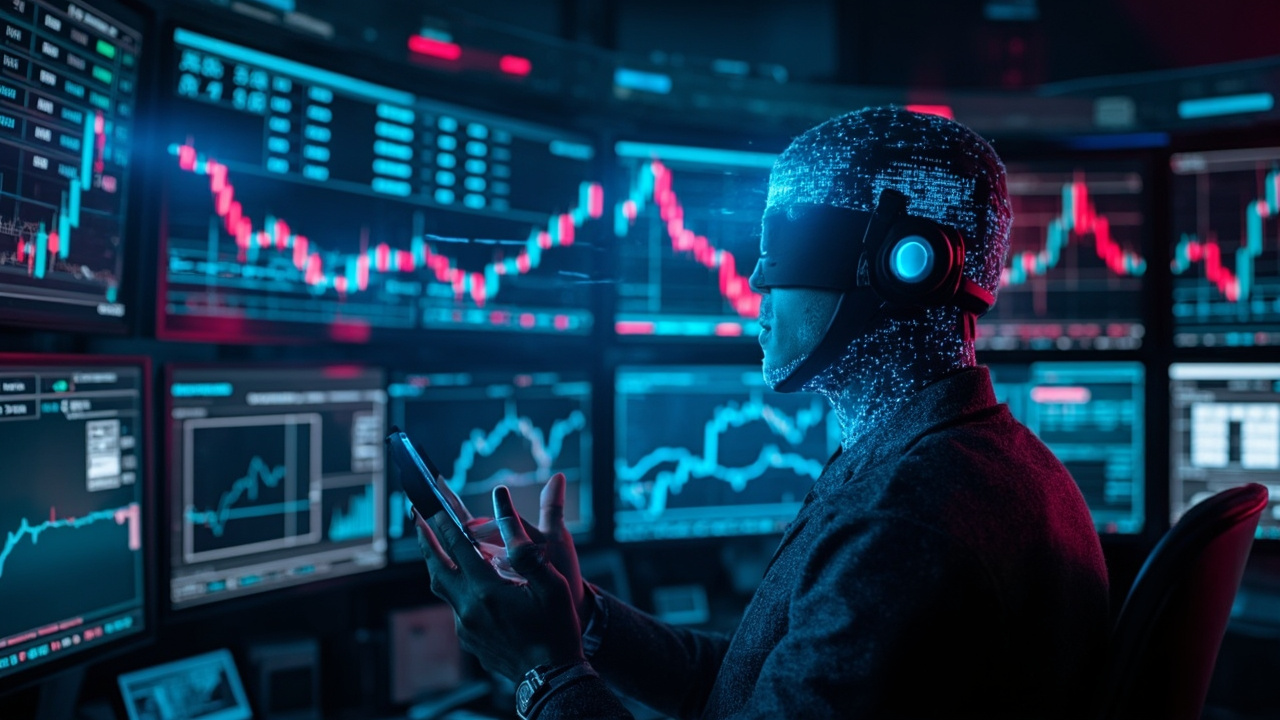
The Wall Street Journal’s latest installment of its “AI Shift” series lands on a scene that would have sounded like science fiction two years ago: ordinary Americans describing the trading algorithms they built by chatting with an AI model, and the brokerage features that let those algorithms move real money without a human clicking anything. The piece — anchored by a profile of a retail investor who has handed his portfolio to agents that “even have names” — is the clearest signal yet that agentic trading has crossed from demo videos into the mainstream brokerage app.
What the WSJ found
The core of the story is the collision of two trends that developed independently in 2025 and 2026. The first is vibe coding: people with no formal software background building working applications by prompting models like Anthropic’s Claude and OpenAI’s Codex, iterating until the code runs. The second is agentic finance: brokerages exposing official APIs — increasingly via the Model Context Protocol (MCP) — so third-party AI agents can query portfolios and place trades on a customer’s behalf.
Put them together and you get retail investors who prompt a model into existence a trading system, point it at their brokerage account, and let it run. The Journal describes these traders automating advanced day-trading strategies and executing transactions without manual intervention.
The industry is leaning in. Neil McDonald, US chief executive of the trading platform Moomoo, told the paper: “These people are becoming mini hedge funds.” McDonald predicted that agents will drive a substantial share of platform trades by year-end — a striking forecast for technology that was unavailable to retail customers in any official form eighteen months ago.
The plumbing already exists
What makes the WSJ story more than an anecdote is that the infrastructure is shipping. Robinhood launched Agentic Trading and an Agentic Credit Card on May 27, 2026, becoming one of the first major brokerages to give autonomous finance to ordinary investors rather than institutions. CEO Vlad Tenev framed it as a natural extension of the company’s mission: “Our mission has always been to democratize finance for all, and now, that mission extends to AI agents.”
The design shows how seriously Robinhood takes the risk profile of its own product:
- Dedicated accounts. Agentic trading lives in a separate account from the user’s main portfolio, so an agent can only touch funds explicitly deposited for it.
- Live notifications. Every trade triggers a push notification, with a real-time activity feed and P&L visible in the Robinhood apps.
- One-tap kill switch. Customers can disconnect an agent at any moment.
- Spending controls. The Agentic Credit Card issues a dedicated virtual Gold Card with user-set limits, optional manual approvals, and fraud monitoring that can review both user instructions and agent actions when disputes arise.
The beta started with equities only, with options, crypto, event contracts, and futures promised as it matured; crypto agent trading arrived for eligible US customers in July. Webull, meanwhile, advertises direct agent integration “inside Claude Code, Claude, Codex, and more” — a sign that the brokerage industry now treats AI agents as a channel, not an edge case.
The performance question
Here the story turns uncomfortable. The Journal cites research finding that AI-built trading strategies skewed toward concentrated portfolios of high-valuation, media-attention stocks — and did not beat passive benchmarks. That result rhymes with everything finance has learned about retail behavior for decades: removing the friction of manual execution doesn’t remove the tendency to chase whatever is trending.
Earlier reporting on the same wave adds texture. A Business Insider feature from June profiled traders who vibe-coded screeners and agents on Cursor and Claude; one 27-year-old mentor claimed an 87% single-month return on a brokerage screenshot, while conceding that AI “can’t give a trader a winning strategy” and can’t rescue someone who doesn’t understand market fundamentals. An eToro survey cited in that piece found the share of investors using AI to pick investments jumped 75% in a year, and 38% said AI would likely make better decisions than they would.
The gap between confidence and evidence is the real story. A single hot month from a concentrated book is indistinguishable from luck at these sample sizes — the same trap that devoured a generation of day traders, now automated.
Why it matters
Three consequences are worth watching. First, systemic behavior: thousands of agents running similar momentum-following prompts on the same news flow could correlate retail flows in ways regulators have never modeled. Moomoo’s year-end volume forecast, if right, makes this a 2027 problem, not a hypothetical. Second, liability: when an autonomous agent misreads an instruction and empties a dedicated account, brokerages are pre-positioning with notifications, approval gates, and audit trails — but the dispute framework is untested. Third, the advice boundary: an agent that “manages” a portfolio edges toward personalized investment advice, a regulated activity, while living inside a self-directed account. Expect the SEC and FINRA to weigh in as volumes grow.
The deeper shift is cultural. The WSJ’s subjects don’t describe themselves as coders or quants; they describe a relationship with a system they prompted into existence and trust with money. The moment trading agents got names, the question stopped being whether retail investors would use AI — it became who is accountable when everyone’s mini hedge fund is long the same seven stocks.
Sources for this article are listed below. Portfolio figures and quotes are as reported by the cited outlets; single-month return claims are anecdotal and not independently verified.
Sources
- [1] https://www.wsj.com/tech/ai/the-ai-shift-turning-everyday-investors-into-mini-quant-funds-ebe4d45f
- [2] https://robinhood.com/us/en/newsroom/robinhood-is-now-open-to-agents/
- [3] https://www.cnbc.com/2026/05/27/your-ai-agent-can-now-trade-for-you-on-robinhood-and-buy-stuff-with-your-credit-card-too.html
- [4] https://www.businessinsider.com/ai-trading-bots-vibe-coding-stock-market-investing-day-trading-2026-6
- [5] https://www.webull.com/agentic