Sketch It, Circle It, Ship It 50% Faster: OpenAI's ChatGPT Images 2.5 Makes Editing Visual
OpenAI launches ChatGPT Images 2.5 with up to 50% faster generation, far better likeness preservation for people and pets, and new sketch-and-circle editing tools that replace prompt wrestling.
Six months is all it took. OpenAI shipped ChatGPT Images 2.0 in April 2026; on Tuesday, September 8, the company launched ChatGPT Images 2.5, shared first with Axios, and the upgrade is less about a headline benchmark and more about dismantling the two most persistent frustrations in consumer AI imaging: generations that are too slow, and edits that demand you negotiate with a text box.
According to OpenAI, the new model generates images up to 50 percent faster than its predecessor. Just as significantly, Axios’ early hands-on testing found it does a dramatically better job preserving the likeness of people and pets — the category of failure that has haunted image models since the beginning, where a “photo edit” quietly replaced your dog with a plausible stranger’s dog.
Editing becomes visual
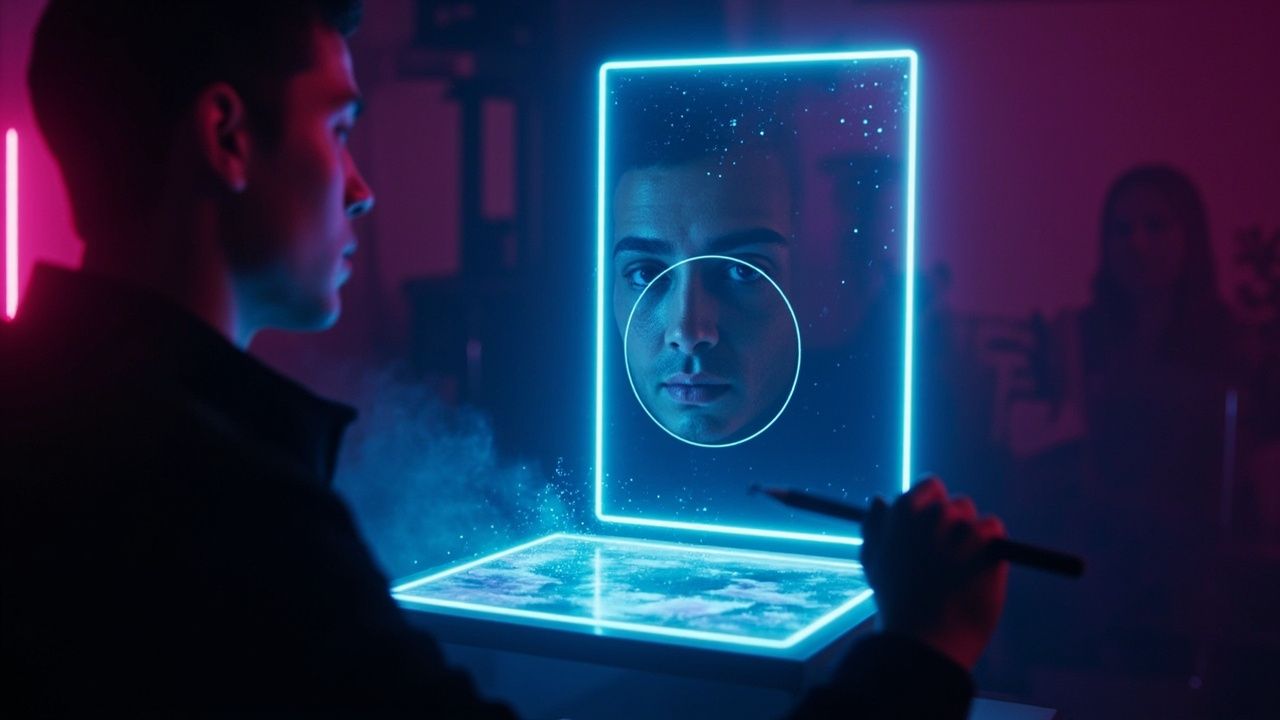
The deepest change in Images 2.5 is the interaction model itself. Users can now base generations and edits on sketches, and visually indicate where they want changes by circling or pointing at regions of the image — rather than relying solely on carefully engineered prose. The new editing screen lets you type and place the words you want rendered, sketch an object to be added, and make other precise changes without re-prompting from scratch.
It is a subtle philosophical shift: the prompt stops being a contract you write blind and becomes a canvas you annotate. OpenAI’s framing is explicit. “The sketch tool and these templates are kind of an attempt to make people more engaged in the process of creation, rather than them being a passive force,” Adele Li, OpenAI’s product lead on images, told Axios. Li said the goal is for the model to help dissolve the notion of a single, recognizable “AI aesthetic.” “I don’t want to be able to see ChatGPT in the world,” she said. “I want people to be able to generate and express their own individualism.”
What the early testing showed
Axios put the model through a battery of realistic tasks, and the results read less like a demo and more like a work session with a capable collaborator.
The cat portrait. Given a photo of Ina Fried’s cat Raven and asked for suggestions, ChatGPT proposed a range of genre conversions — film noir detective, stained-glass window, Renaissance portrait. The model’s chain-of-thought summaries, now surfaced in the product, showed how it reasoned about the subject, noting it wanted to preserve Raven’s “wonderfully unimpressed expression.” A humorous anatomical diagram accurately labeled her eyes as a “gaze of judgment,” her brain as a “treat detection organ,” and noted her “tail of indifference.”
The tattoo. Axios uploaded a photo of a friend’s existing arm tattoo plus a text description of what she wanted added. The model returned four design options composited next to the original. When the friend gave feedback — lightening certain areas, and circling the exact region where she wanted a specific change — ChatGPT iterated, merged the two preferred directions when asked to split the difference, and even surfaced local tattoo artists specializing in that style when prompted.
The logo. Asked to design a mark for Axios’ 2028 Olympics coverage using the Axios logo while avoiding the word “Olympics” and the rings (organizers guard their trademarks aggressively), the first attempt was underwhelming. After a suggestion to try a sun behind a downtown silhouette, the model produced something more compelling and then applied it across a range of merchandise on request.
The pattern across all three: multi-turn iteration that stays anchored to the original subject, accepts spatial feedback, and treats trademark constraints as design constraints rather than afterthoughts.
The cadence tells the story
Each generation of image engines shows dramatic improvement, comparable to the leaps in text models — and the release rhythm is accelerating. The lineage now runs: the December 2025 “new ChatGPT Images” (up to 4x faster generation, precise edits), Images 2.0 in April 2026 (improved text rendering, multilingual support, advanced editing), and now 2.5 arriving in September with speed, likeness fidelity, and visual editing tools. Invisible watermarks remain automatic on output, and Axios notes that while occasional AI hallmarks persist, “it’s definitely getting harder to tell.”
The uncomfortable footnote
Any honest coverage of this release has to include what the article itself confronts: generative AI systems were trained on the work of real artists, famous and otherwise, usually without consent or compensation. The same editor who enthusiastically made soccer cards, coloring pages, and logos has friends who now compete with systems built partly on uncompensated creative labor. An image editor that can turn a photo into anything — or a person into a Sesame Street-style Muppet — concentrates that tension in a consumer product with hundreds of millions of users.
Images 2.5 does not resolve that tension; it scales it. The bet in San Francisco is that speed, fidelity, and agency-preserving tools will keep pulling creation toward AI-native workflows faster than the backlash pushes back. For now, the technical direction is clear: the interface between human intent and generated pixels is migrating from language toward direct manipulation — and OpenAI intends to own that migration.
Sources
- [1] https://www.axios.com/2026/09/08/exclusive-hands-on-with-chatgpts-new-image-editor
- [2] https://tech.yahoo.com/ai/chatgpt/articles/chatgpt-images-gets-better-faces-183004947.html
- [3] https://help.openai.com/en/articles/6825453-chatgpt-release-notes
- [4] https://openai.com/index/introducing-chatgpt-images-2-5/