From $1B to $5B in Six Months: Ukraine's UForce Courts a $500M Round to Build NATO's Drone Stack
Bloomberg reports UForce — the London-based consolidator of Ukraine's Magura sea drones and Nemesis bombers — is in talks for a ~$500M round at a ~$5B valuation led by Valor Equity Partners, a five-fold jump in six months as European defense money chases battlefield-proven autonomy.
Six months ago, UForce was a freshly minted unicorn: $50 million raised at a valuation “over $1 billion,” enough to make it Ukraine’s first defense-tech company to cross that line. This week, Bloomberg reports the London-based company is in talks to raise roughly $500 million at a valuation near $5 billion — a five-fold mark-up in half a year, in a round expected to be led by Valor Equity Partners, the investment firm run by SpaceX board member Antonio Gracias.
The deal is not closed. People familiar with the discussions, speaking anonymously because the terms are private, cautioned that the numbers could still shift before anything is final. UForce declined to comment; a request to Valor went unanswered. But the shape of the round — the size, the lead, the speed — says a great deal about where autonomous-weapons capital is flowing in 2026, and about how quickly battlefield proof points convert into Silicon Valley-style valuations.
What UForce actually is
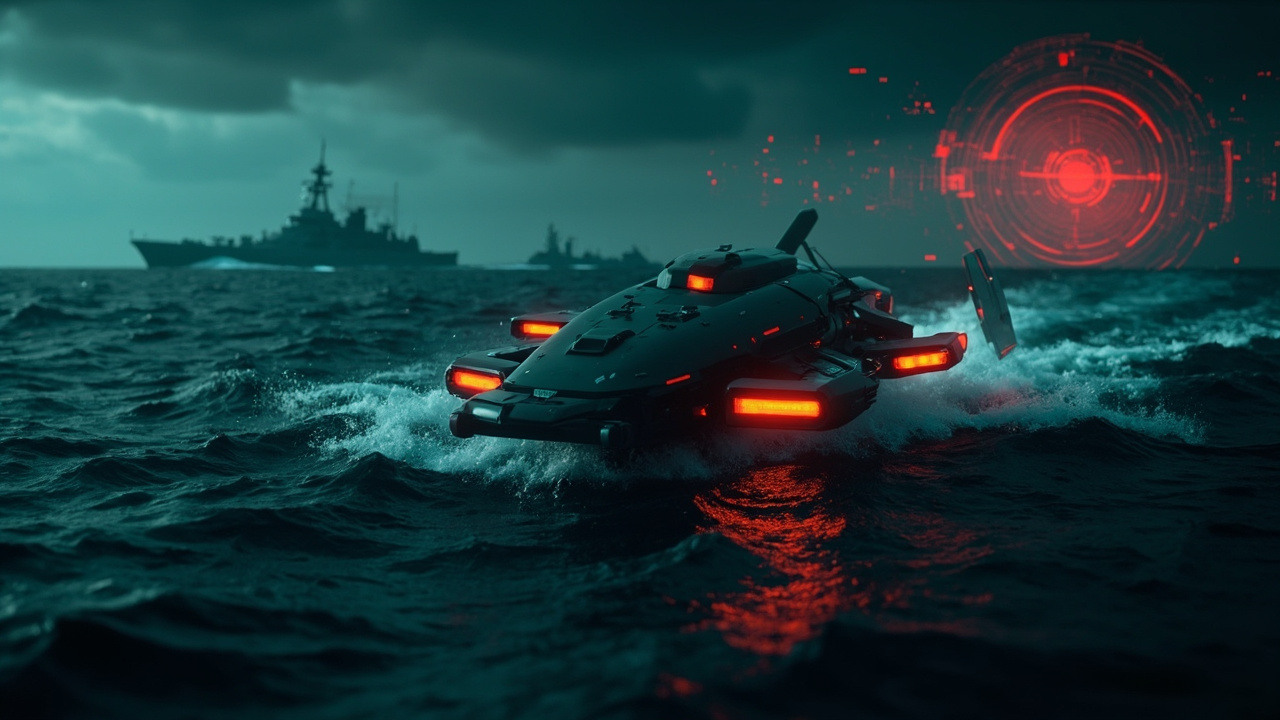
UForce is not a single-product drone vendor. It is a consolidator: a holding company that has merged nine Ukrainian defense-technology firms into one integrated stack spanning air, sea, and land. The crown jewels are the teams behind the Magura family of unmanned surface vessels — the sea drones that sank Russian warships in the Black Sea and, in a landmark first, downed fighter jets — alongside the makers of Nemesis bomber drones and counter-drone systems designed to intercept the other side’s swarms.
The pitch is an integrated combat suite built to NATO standards, at precisely the moment Europe is racing to rearm. CEO Oleg Rogynskyy is a serial founder from the enterprise-software world — he previously built People.ai — and the bench around him reads like a deliberately assembled credibility portfolio: former Ukrainian Prime Minister Oleksiy Honcharuk is chairman and co-founder, and Ben Wallace, the former UK defense secretary, sits on the board.
That governance structure matters for the round. European sovereign funds and NATO-adjacent investors want assurance that Ukrainian battlefield IP can be industrialized, exported, and supported at alliance scale without single-country risk. A London headquarters, a British former defense secretary, and a Ukrainian war-time production base are the combination that makes a $5 billion price thinkable.
Why the valuation multiplied
Three things have changed since March.
First, the combat record compounded. The Magura V5 and its successors didn’t just harass the Russian fleet — they helped push it largely out of the western Black Sea, and the newer MV11 variant (2,200 kg payload, up to seven days of autonomy) doubles as a carrier platform for other drones. In July, a Magura sank a target ship during US-Philippine alliance exercises, and American special-operations forces tested the family during multinational drills. Very few autonomous systems on earth have that résumé.
Second, the US production door opened. In late July, UForce signed a teaming agreement with US boatbuilder Reconcraft to manufacture Magura vessels in the United States for the first time — a deal the Wall Street Journal reported aims at “hundreds or even thousands” of boats. For US Navy and allied planners, the appeal is straightforward: combat-proven maritime autonomy, transferable manufacturing, no decade-long development program. Rogynskyy called Ukraine’s consent to US production “absolutely key.”
Third, the European money arrived. Capital has poured into drone technology this year as defense budgets climb and the continent pushes for strategic autonomy from the United States. Germany’s Quantum Systems raised $1.2 billion at an $8 billion valuation in July; the same month, Helsing announced a $1.8 billion round at an $18 billion valuation. UForce’s $5 billion target sits comfortably inside that curve — arguably at the low end for a company with live combat deployments.
The Valor factor
Valor Equity Partners is not a conventional defense investor, and that is the point. The firm’s portfolio spans Anduril Industries, Hadrian, and Chaos Industries on the defense-manufacturing side, but its deepest returns came from years of backing Elon Musk’s companies — it owned roughly 4% of SpaceX when that company went public. Antonio Gracias, who would anchor this round, sits on SpaceX’s board.
Bringing that profile to a Ukrainian-British drone consolidator signals how thoroughly the boundary between “tech investing” and “defense investing” has dissolved. The skill set Valor brings — hyperscale manufacturing, cost-down engineering, supplier integration — is exactly what UForce needs to convert artisanal war-time production into alliance-scale output. Anduril’s playbook, applied to a company that already has its products in active combat.
What to watch
The obvious risk is that talks slip or terms soften — Sifted reported in August that UForce had begun the push targeting “upwards of $4 billion,” and the number has drifted upward since. A round this size, in a sector this young, will invite scrutiny of revenue quality: how much of UForce’s book is Ukrainian government procurement at war-time margins, and how much is exportable NATO demand at peacetime economics?
The strategic stakes are larger than one company. Ukraine’s drone industry has effectively become the world’s live laboratory for autonomous warfare — iterating at software speed under fire, then exporting the survivors. If the Valor-led round closes near $5 billion, it will be the clearest signal yet that venture capital now prices battlefield validation as a primary asset class. And it will confirm that the consolidation play — nine companies, one stack, one NATO-grade wrapper — was the right structure to monetize it.
For now, the number on the table is roughly $500 million in, at roughly $5 billion. Six months from unicorn to five times unicorn, on the strength of sea drones that changed naval warfare. The round isn’t done until it’s done — but the direction of the defense-tech market no longer is in much doubt.
Sources
- [1] https://www.briefs.co/news/uforce-targets-roughly-5b-valuation-in-fresh-raise-with-valo/
- [2] https://aiweekly.co/alerts/ukrainian-drone-maker-uforce-in-talks-to-raise-500m-at-5b-led-by-valor-equity
- [3] https://sifted.eu/articles/uforce-fundraise-defence-tech-valuation
- [4] https://www.bloomberg.com/news/articles/2026-03-05/ukraine-battlefield-tech-firm-uforce-nears-1-billion-valuation
- [5] https://www.wsj.com/politics/national-security/ukraines-battle-tested-drone-boats-to-be-made-in-the-u-s-for-the-first-time-2aae98b2