It's Official: Apple Ships the iPhone Duo — a $1,999 Titanium Foldable With a Near-Invisible Crease
At its 'Surprise and Shine' event, Apple finally unveiled the iPhone Duo: a 7.6-inch book-style foldable with an A20 Pro chip, a titanium-and-ceramic hinge, and a $1,999 price tag — the most expensive iPhone ever, shipping October 23.
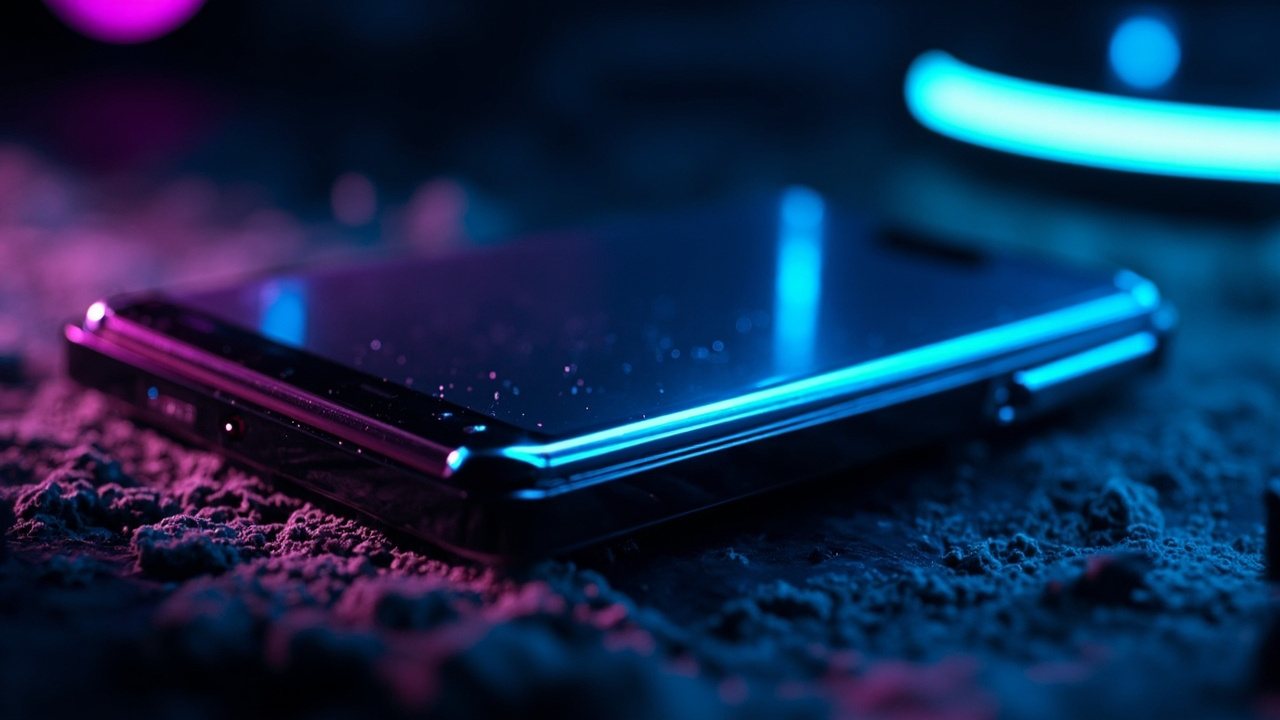
The rumor cycle is over. At its “Surprise and Shine” event in Cupertino this morning — the first keynote of the John Ternus era — Apple introduced the iPhone Duo, the first foldable iPhone in the product line’s nineteen-year history. It is a book-style device that opens into a 7.6-inch inner display, it is built around grade 5 titanium and a ceramic-fiber hinge, and it starts at $1,999. Pre-orders open October 16, and the first units ship October 23.
After nearly a decade of watching Samsung define the category, Apple has finally answered — and it has done so with the most expensive iPhone it has ever sold.
The hardware: titanium, ceramic fibers, and a crease you’re meant to forget
The iPhone Duo’s defining engineering problem was never the folding itself — it was the crease. Every foldable on the market carries a visible valley where the display bends, and Apple reportedly refused to ship one until it could minimize it. The company’s answer, per its own newsroom release, is a premium nano-texture finish on the inner display that reduces glare and reflections while minimizing crease visibility, alongside a hinge assembly crafted from grade 5 titanium and structural elements made from ceramic fibers that Apple says are three times stronger than grade 5 titanium.
A titanium plate runs through the structure to relieve bend stress at the fold — the exact failure point that has plagued earlier foldables from other manufacturers. Opened, the Duo is the thinnest iPhone ever made; closed, it reads as a normal, if thick, iPhone.
The rest of the spec sheet, as catalogued by PhoneArena from the announcement:
- Inner display: 7.6 inches — the largest iPhone display ever, with the nano-texture anti-glare finish
- Chip: A20 Pro, Apple’s first smartphone SoC built for this form factor, paired with an advanced thermal management system built around a custom vapor chamber
- Memory: 12 GB of RAM
- Battery: 4,700 mAh — implemented as a dual-battery design, with one high-energy cell in each half of the body rather than a single battery spanning the hinge
- Camera: 48 MP Dual Fusion camera system
- Storage: starts at 256 GB
The dual-battery detail is easy to skim past but quietly significant. A single battery spanning the fold is a well-known structural and thermal liability in book-style devices; splitting the pack lets Apple balance weight across both halves and route heat into the vapor chamber more evenly. Combined with the ceramic-fiber hinge, it suggests Apple treated this less like a phone with a moving part and more like a wearable mechanism rated for years of daily cycles.
The price: $1,999, and an $800 premium
The iPhone Duo starts at $1,999 for the 256 GB model. That is $800 above the entry-level iPhone 18 Pro announced on the same stage — a premium that positions the Duo not as a mainstream upgrade but as a halo device, aimed at the same early-adopter audience that has sustained Samsung’s Galaxy Z Fold line and Google’s Pixel Fold.
It is also, by a wide margin, the most expensive iPhone Apple has ever shipped. Whether that price holds will be the single most-watched commercial question of Apple’s holiday quarter: foldables remain a small slice of the global market, and Apple is entering the category at the top of the price curve rather than the middle.
The AI story: Siri AI arrives on the biggest screen Apple has put in a pocket
The Duo does not exist in a vacuum — it is the hardware flagship for the next generation of Apple Intelligence and Siri AI, the rebuilt conversational assistant Apple previewed at WWDC in June and is now shipping across iOS 27, iPadOS 27, macOS Golden Gate, watchOS 27, and visionOS 27.
Per Apple’s own iOS 27 page, Siri AI is positioned as a full conversational assistant — open-ended questions, brainstorming, multi-step requests — rather than the command-matching Siri of the previous decade. Reporting on the January Apple–Google partnership, confirmed by both companies, has Google’s Gemini powering the assistant’s large-model reasoning in the cloud, alongside Apple’s own on-device models and Private Cloud Compute, with OpenAI’s ChatGPT remaining available as an integration. Event coverage highlighted new Intelligence features like Live Rewind and Siri Recap landing on the new hardware.
For the Duo specifically, the calculus is straightforward: a 7.6-inch canvas changes what an assistant can usefully do on a phone. Split-screen conversations, on-screen awareness across two apps, and document-scale output are use cases that a 6-inch slab handles awkwardly. If Siri AI is genuinely capable, the Duo is where it will show best. AppleInsider has also reported Apple Pencil support for the device, extending it toward the note-taking and sketching territory the iPad has owned.
The rest of the keynote: iPhone 18 Pro, Watch Series 12, Ultra 4, AirPods 5
The Duo headlined, but it was one of six-plus launches. The iPhone 18 Pro and Pro Max run the same A20 Pro silicon — Apple’s first 2-nanometer phone chips — with camera and display updates across the board. The Apple Watch Series 12 brings a faster S-series chip and expanded health tracking, the Watch Ultra 4 refreshes the rugged line, AirPods 5 update the earbuds, and a batch of smart-home hardware rounded out the show. CNBC’s recap framed the whole event as Ternus’s debut on the biggest stage in consumer tech — a new CEO staking his first keynote on both a brand-new form factor and an AI story that has to land this time.
What to watch
Three things will determine whether today was a turning point or a footnote:
- The crease, in person. Nano-texture finish and marketing photos are one thing; months of daily folding are another. Hands-on reviewers will hunt for the crease within hours of the October 23 release.
- Sell-through at $1,999. Analysts will parse supply-chain orders closely. A multi-month wait list signals the category finally going mainstream under Apple; deep availability by December signals a niche debut.
- Siri AI cadence. The assistant ships in beta, and some capabilities will trail into later iOS 27 point releases. Apple’s AI credibility has already taken one cycle of slipped deadlines — the Duo gives the software its best possible showcase, but only if it shows up on time.
One thing is certain: nineteen years of the iPhone’s single-slab orthodoxy ended this morning in Cupertino. The foldable era of the iPhone has a release date — October 23 — and a price — $1,999. The market now gets to vote.
Sources
- [1] https://www.apple.com/newsroom/2026/09/apple-unveils-iphone-duo/
- [2] https://www.apple.com/iphone-duo/
- [3] https://www.cnbc.com/2026/09/09/apple-event-today-live-updates.html
- [4] https://www.macworld.com/article/3228054/surprise-and-shine-apple-event-live-blog-iphone-18-pro-folding-duo-airpods.html
- [5] https://mashable.com/tech/iphone-duo-foldable-announcement-apple-event-2026
- [6] https://www.phonearena.com/phones/Apple-iPhone-Duo_id12657
- [7] https://fox40.com/news/apple-unveils-foldable-iphone-duo-at-september-event/amp/
- [8] https://www.usatoday.com/story/tech/2026/09/09/apple-event-sept-9-live-updates--live/91599414007/