Two Gigawatts Down Under: NVIDIA and Eight Australian Partners Bet Big on Sovereign AI
NVIDIA has enlisted eight Australian cloud and data center operators — Firmus, Sharon AI, NEXTDC, AirTrunk, CDC, IREN, Megaport and ResetData — to build up to 2 GW of AI factory capacity by 2027, even as grid queues threaten to leave some partners waiting for power.
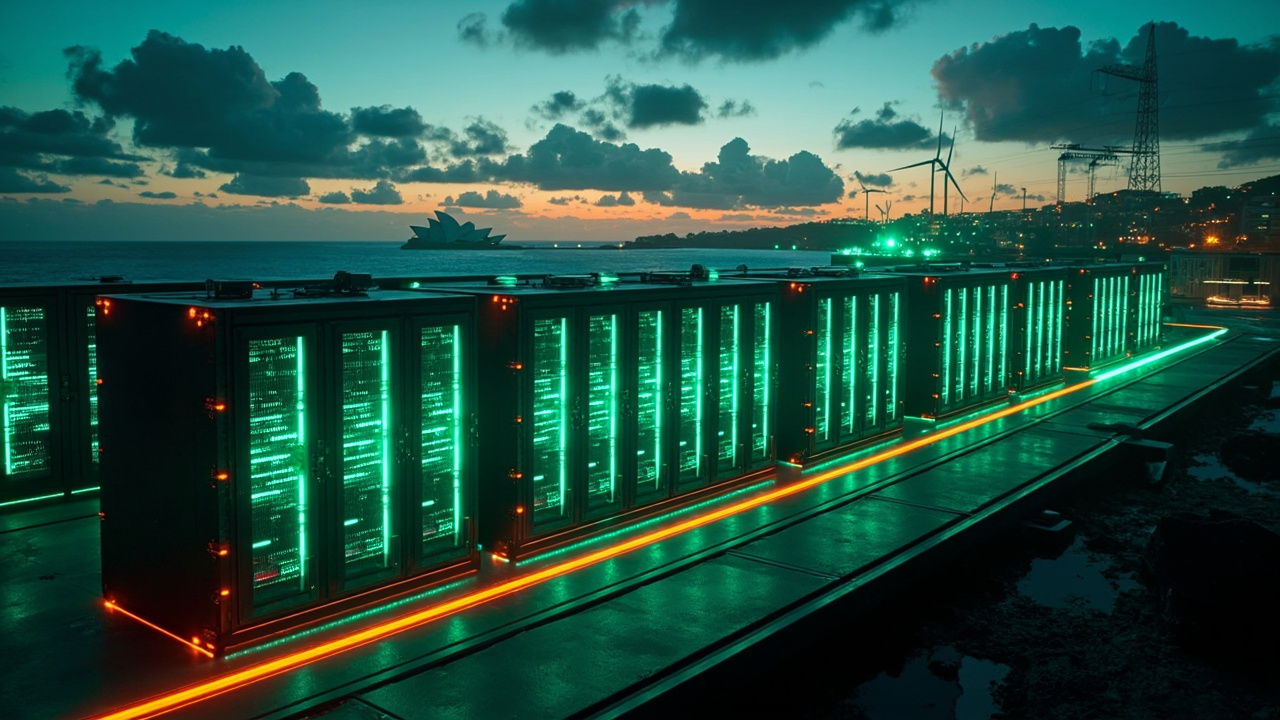
NVIDIA has picked Australia as its next frontier for AI infrastructure. In an announcement that landed late on September 9 and rippled through September 10’s news cycle, the company said it is partnering with eight Australian cloud computing and data center operators to dramatically expand AI factory capacity across the country — targeting a buildout of up to 2 gigawatts by 2027, enough power draw to rival a large nuclear plant’s output.
What was announced
The partner list reads like a who’s-who of Australia’s data center boom: Firmus, Sharon AI, NEXTDC, AirTrunk, CDC, IREN, Megaport and ResetData. According to NVIDIA’s press release, the headline names — Firmus, Sharon AI, NEXTDC and AirTrunk — are tasked with delivering the bulk of the up-to-2-gigawatt buildout by 2027, in response to what the company describes as surging demand from AI labs and AI-native startups in the Asia-Pacific region.
Reuters framed it bluntly: Nvidia plans a major expansion of data centre capacity in Australia to meet AI demand. The scope includes GPUs, networking equipment and software — the full NVIDIA stack, deployed on Australian soil.
The scale of the individual commitments is striking:
- Sharon AI plans to deploy up to 68,000 NVIDIA GPUs. Its compute collaboration with NVIDIA dates to June 2026 and carries a contract value of up to $4.88 billion.
- Firmus is already running customer models at its Melbourne AI factory under Project Southgate, with roughly 18,400–18,500 NVIDIA GB300 (Blackwell Ultra) GPUs tied to a multi-year, multi-billion-dollar agreement with a global hyperscale customer signed in March 2026.
- IREN is contributing capacity at its Bundey campus in South Australia, where renewable-powered compute has become a template for the energy-hungry AI era.
- NEXTDC, AirTrunk, CDC, Megaport and ResetData round out the ecosystem with colocation, interconnect and sovereign cloud capacity.
Why Australia, and why now
Three forces are converging. First, the sovereign AI agenda: governments worldwide want frontier compute inside their own borders, and NVIDIA has been marketing precisely this pitch — TechTimes reported NVIDIA is now calling Australia a “2GW sovereign AI hub.” A country that hosts its own AI factories can train, fine-tune and serve models on domestic infrastructure without shipping data or dollars offshore.
Second, grid congestion almost everywhere else. While US grid operators warn that data center growth is pushing systems like PJM toward supply crises, and European interconnect queues stretch for years, Australia offers land, fiber routes to Asia, and a growing renewables fleet. US tech firms are actively eyeing Australia for AI centers precisely because the power math works better there — at least on paper.
Third, timing. The announcement lands days before NVIDIA’s AI Infra Summit (September 15–17 in Santa Clara), where gigawatt-scale AI factory reference designs are front and center. Australia is being positioned as the proof case for what an entire national ecosystem, rather than a single hyperscaler campus, can deliver.
The catch: the power may not arrive on time
The most candid caveat in the coverage is the grid. TechTimes noted that electricity grid queues in Australia may not supply all partners in time — a sobering note underneath the 2 GW headline. Connection applications in the National Electricity Market can take years to process, and large-load customers increasingly discover that a signed GPU order and an energized site are two very different things.
The demand trajectory explains the concern. The Australian Energy Market Operator (AEMO) forecasts that AI data centers could account for 13% of Australia’s total electricity use by 2035–36, up from roughly 3% today. Even a fraction of the announced 2 GW arriving ahead of new generation and transmission would strain local networks. Australia’s government has responded by signaling that the AI industry will be expected to help fund grid expansion — effectively asking hyperscalers and AI factories to underwrite the infrastructure they depend on.
Analysis: a milestone, with fine print
For NVIDIA, the deal extends a playbook that has worked from Kansas to Kuala Lumpur: recruit local operators, ship them the full Blackwell stack, and let national pride and startup demand do the selling. Australia adds a wrinkle — its largest AI infrastructure beneficiaries, Firmus and Sharon AI, are reportedly also among the last to benefit from an experimental financing arrangement, adding a layer of financial engineering risk on top of the usual construction and interconnect risks.
For Australia, the bet is that cheap renewable energy and geographic position can turn the country from a compute importer into an Asia-Pacific AI hub. The 2 GW target, if even partially met by 2027, would put Australia on the map for AI labs seeking capacity outside the congested US market — and would validate the sovereign AI thesis that compute is becoming a matter of national capability, not just commerce.
What to watch next: whether AEMO and state governments fast-track connection agreements for the named partners; whether Sharon AI’s 68,000-GPU deployment hits its milestones; and whether Firmus’s hyperscale contract expands beyond the initial ~18,400 GB300 GPUs. If the power shows up, Australia’s AI decade starts now. If it doesn’t, the 2 GW number will join the long list of announced capacities that reality quietly revised downward.
One thing is certain: the era of measuring AI ambition in single data centers is over. The unit of competition is now the gigawatt — and Australia just claimed two of them.
Sources
- [1] https://nvidianews.nvidia.com/news/nvidia-expands-ai-infrastructure-capacity-in-partnership-with-australias-data-center-ecosystem
- [2] https://www.reuters.com/world/asia-pacific/nvidia-teams-up-with-australian-partners-build-ai-factory-capacity-2026-09-10/
- [3] https://www.techtimes.com/articles/327170/20260910/nvidia-calls-australia-2gw-sovereign-ai-hub-grid-queues-wont-supply-all-partners-time.htm
- [4] https://finance.yahoo.com/technology/ai/articles/nvidia-partners-8-australian-firms-122438874.html
- [5] https://www.energyconnects.com/news/renewables/2026/september/us-tech-firms-eye-australia-for-ai-centers-local-operator-says/