One Company, 26 New Gigawatts: Microsoft's 38GW Data-Center Roadmap Would Out-Power New York State
Bloomberg reports Microsoft plans to grow its owned-and-leased data-center capacity from ~12GW today to more than 38GW by 2032 — a single-company buildout that would eclipse New York state's peak electricity consumption, with a third of it on AI-specific silicon.
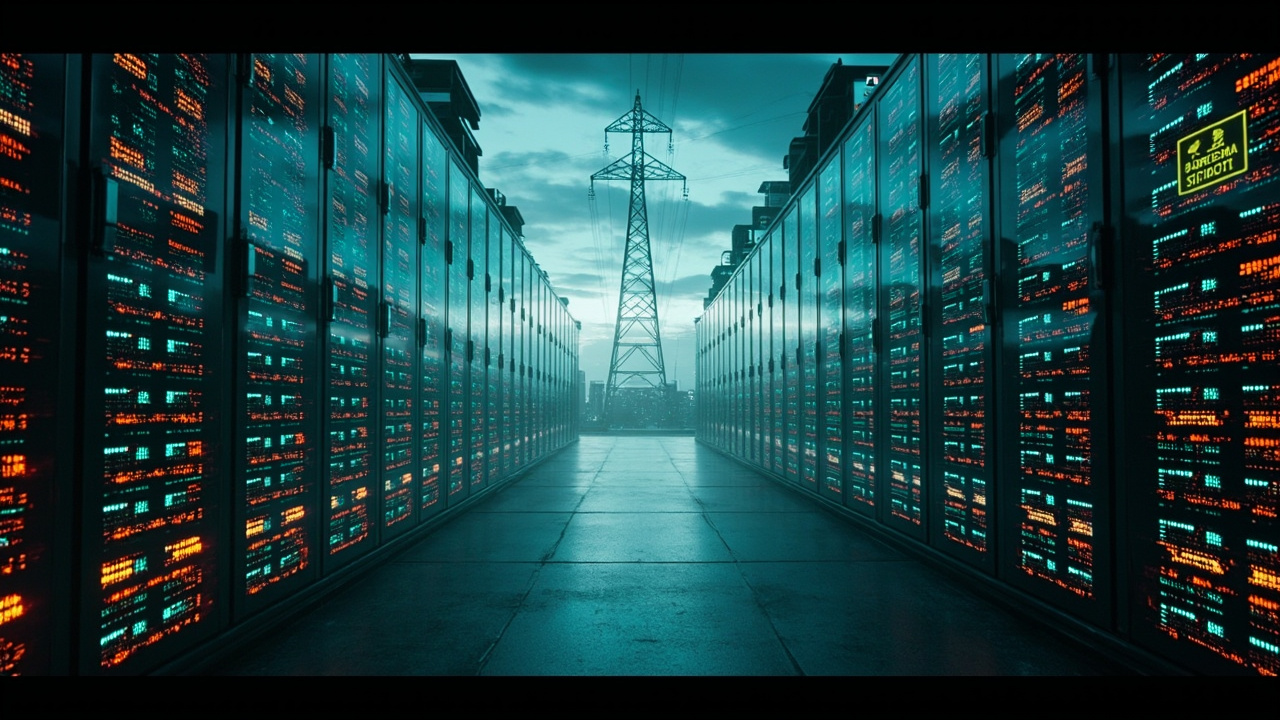
On September 10, 2026, Bloomberg’s Brody Ford and Matt Day published the numbers behind the largest single-company infrastructure commitment in the history of computing: Microsoft plans to expand its owned-and-leased data-center footprint from roughly 12 gigawatts today to more than 38 gigawatts by 2032. That is over 26 gigawatts of new capacity — added by one company, in six years — and Bloomberg’s framing gives the figure its proper scale: the finished network would eclipse the amount of electricity New York state consumes during peak periods.
The plan, described by people familiar with the roadmap, is Microsoft’s answer to a problem that has been visibly fraying its AI business for over a year: demand for compute keeps outrunning the company’s ability to physically build it. The Information’s companion reporting on the same day was blunt about the cause — Microsoft has been “hurt by server shortage” — and the goal is nothing less than to triple Azure’s cloud capacity by 2032.
What the roadmap actually says
Three details in the Bloomberg report stand out.
The scale is measured against a US state, not a tech rival. One gigawatt is enough to power roughly 750,000 American homes at any given moment. A 26-gigawatt buildout is, in electrical terms, a new nation-grade allocation of power — and Microsoft intends to own or lease essentially all of it. For context, the entire US data-center fleet tracked by utility regulators consumed about 4.4% of the country’s electricity in recent estimates; EPRI projections put the industry’s share at 9–17% by 2030. Microsoft’s roadmap alone moves the national needle.
A third of the buildout is AI-specific silicon. Roughly one-third of the 38GW footprint will be centered on AI-dedicated infrastructure — not general-purpose cloud servers, but the GPU-dense, liquid-cooled halls that train and serve frontier models. That aligns with what the stocktwits summary of the report highlighted: AI-dedicated capacity is projected to grow from around 2 gigawatts now to about a third of the total footprint. Microsoft is not hedging between “AI maybe” and “AI for sure”; it is allocating the majority of its future growth to the AI bet.
The number excludes neocloud rentals. The 38GW figure covers only capacity Microsoft owns or leases directly. Anything it rents from neoclouds like CoreWeave sits on top of that. The true compute under Microsoft’s control in 2032 — when rented capacity, the OpenAI partnership’s own buildouts, and third-party arrangements are counted — will be meaningfully larger.
Why now: the capacity crunch that wouldn’t end
The roadmap lands after more than a year of public strain. Since late 2025, reporting has documented internal Microsoft forecasts that the global data-center capacity shortage would last through at least 2026, with multiple US Azure regions short on physical space, racks, or servers. In April 2026, coverage of a $627 billion Azure backlog described AI demand outpacing the company’s ability to deliver power, cooling, and shell construction. And on the same day the 38GW plan leaked, the OpenAI ecosystem showed the strain at the retail level: OpenAI froze new $200/month ChatGPT Pro signups, citing “unprecedented” demand for GPT-6 Astra — a capacity crunch that traces straight back to insufficient inference infrastructure.
Microsoft’s most recent fiscal year closed with $145 billion in capital expenditure, a figure that already stunned Wall Street when reported. The 38GW roadmap is the physical receipt for where that money — and the hundreds of billions more to come — is going. Investors read it that way immediately: Nvidia’s stock edged higher on the news, a rational tell for a plan that implies enormous sustained demand for AI accelerators through the end of the decade.
The energy question nobody can defer
A buildout of this size collides with a hard physical constraint: the electric grid. Wood Mackenzie analysis earlier in 2026 found the US data-center boom already slowing due to power grid limits, and Bloomberg’s own data-center ownership reporting has tracked the fragmented, capital-intensive scramble for megawatts. Microsoft’s answer, under Cloud Operations and Innovation president Noelle Walsh, has combined new capacity in power-rich regions — the company’s new Pecos, Texas datacenter is the flagship example — with aggressive power purchasing, nuclear offtake deals, and community pledges designed to soften local opposition.
The company also has recent history with volatility here. In 2025 it slowed or paused some early-stage data-center projects even while expanding elsewhere, a pattern that suggests the 38GW figure is a directional ceiling, not a construction contract. Bloomberg’s sources made the same caution explicit: the roadmap could shift as new server farms take years to develop, and six years is a long time in AI demand curves.
What it means
Three implications worth tracking.
The compute oligopoly consolidates. A 38GW footprint would put Microsoft’s owned capacity ahead of most national grids’ data-center allocations. Rivals will answer — Meta and Microsoft were already reported leading an $850 billion boom in data-center leases in mid-2026 — but the capital requirements now effectively bar new entrants from the frontier-inference market. Whatever else the AI buildout produces, it is producing an infrastructure oligopoly first.
Power, not chips, becomes the binding constraint. With a third of the footprint on AI silicon, Microsoft’s roadmap implicitly concedes that the scarce input is no longer GPUs — it is megawatts, transformers, and transmission lines. That reframes the AI supply chain around energy developers, grid operators, and the political process of siting, and it explains the Pentagon’s same-day report of a potential $5 billion loan to AI-cloud upstart Fluidstack: the state is being pulled into financing compute the way it once financed shipyards.
The 2032 date is a demand-side prediction in disguise. Microsoft is not building 38GW as a hedge; it is building it because its AI forecasts say the workloads will exist to fill it. If those forecasts are wrong, the roadmap becomes one of the largest stranded-asset risks in corporate history. If they are right, the 2030s will be shaped by a handful of companies whose private infrastructure rivals the electrical scale of American states.
Either way, the era of measuring tech companies by users or revenue is over. Microsoft just submitted its bid to be measured in gigawatts — and the number is 38.
Sources
- [1] https://www.bloomberg.com/news/features/2026-09-10/microsoft-ai-focused-data-center-plan-to-add-26-gigawatts-of-compute
- [2] https://news.bloombergtax.com/financial-accounting/microsoft-plans-data-center-push-to-triple-its-computing-power
- [3] https://aiweekly.co/alerts/microsoft-plans-to-grow-data-center-capacity-from-12gw-to-38gw-by-2032-a-third
- [4] https://au.finance.yahoo.com/news/nvidia-stock-edges-higher-microsoft-213811766.html
- [5] https://www.theinformation.com/briefings/microsoft-hurt-server-shortage-aims-triple-cloud-capacity-2032