Sold Out: OpenAI Pauses New $200 ChatGPT Pro Sign-Ups Because GPT-6 Astra Demand Is Overwhelming Its Infrastructure
One week after launching GPT-6 Astra, OpenAI has stopped selling new $200/month ChatGPT Pro subscriptions — the tier it says 'puts the most strain on our systems' — with existing subscribers unaffected, no reopening date, and the API, Plus, Go and $100 Pro plans still open.
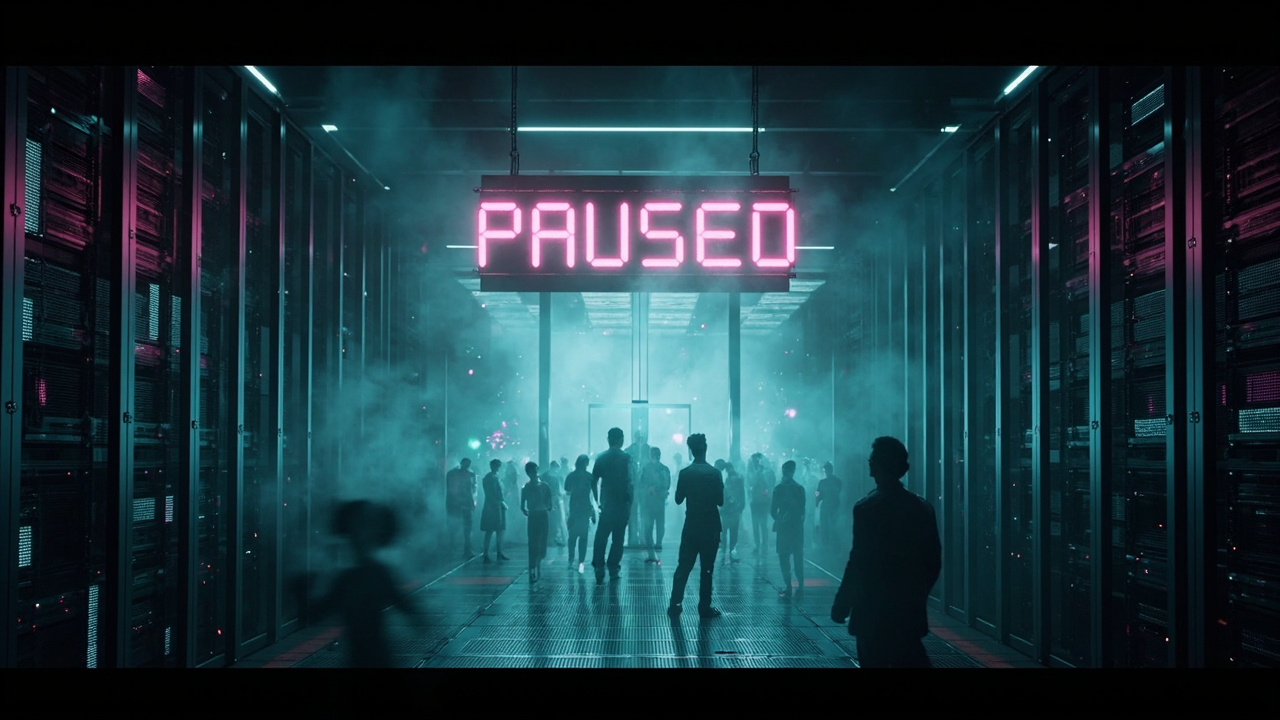
In an era when AI labs beg for users, OpenAI has run into the opposite problem: it has too many. On September 10, 2026, the company stopped accepting new sign-ups and upgrades for its $200-per-month ChatGPT Pro plan — the single most lucrative consumer tier it sells — because demand for its newest model, GPT-6 Astra, is physically overwhelming the infrastructure behind it.
The announcement came not through a blog post but through X, from Thibault (Tibo) Sottiaux, the OpenAI product leader who runs core products including ChatGPT and Codex. “Those subscriptions put the most strain on our systems,” Sottiaux explained, “and we wanted to take the smallest step that allows us to continue giving the broadest access possible.” The company says it is “adding more capacity as fast as we can.”
The demand shock, in timeline form
The pause didn’t come out of nowhere. OpenAI telegraphed it a day earlier, on September 9, when Sottiaux posted a warning that reads like something between a brag and a distress signal: “Demand for Astra is really unprecedented. We’re pulling all the levers possible to sustain the demand, but I’ve not seen anything like it until now and we went through very steep growth before. Priority will always be to keep excellent service for existing users, but we might have to pause new Pro subscriptions for a bit if this continues.”
It continued. Within roughly 24 hours, the warning became policy. OpenAI’s own help center documentation now states it flatly: “New sign-ups and upgrades to the ChatGPT Pro $200 plan are temporarily paused. Existing Pro $200 subscriptions will continue to renew as usual.”
The details of the freeze matter for anyone currently on the fence:
- Existing $200 subscribers are safe. Current Pro members keep full access, and their plans renew normally.
- Canceling is now a one-way door. Anyone who cancels — or lets the subscription lapse — cannot buy back into the $200 tier until OpenAI lifts the pause.
- Everything cheaper stays open. New and existing $100 Pro subscriptions, the Go plan, Plus, and API access all remain available for purchase.
- No timeline was given. OpenAI has not said when the tier will reopen, nor how many people per day were attempting to sign up before the shutters came down.
What is Astra, and why is it melting the servers?
GPT-6 Astra launched on September 3, 2026, and OpenAI has marketed it with a fervor the company usually reserves for generational moments — Greg Brockman and others framed the launch as the start of the “AGI era.” That framing was not incidental to what happened next. A model billed as the beginning of general intelligence is precisely the kind of product that pulls in heavy usage.
The benchmark claims explain the stampede. Astra scores 72.6% on OSWorld 2.0 computer use while completing tasks in roughly 47% less time than its predecessor GPT-5.6 Sol. It saturates FrontierMath Tier 4 at 97.6%, ExploitBench at 100%, and ARC-AGI-3 at 99.9% — effectively maxing out several of the hardest reasoning and agentic evaluations in existence. It is designed to navigate software the way a person does, working across browsers, spreadsheets, websites, and desktop applications.
That last point is the crux of the capacity problem. Agentic computer-use workloads are not chat messages; each task can stretch across dozens of steps, long context windows, and sustained GPU time. A single Astra session can consume orders of magnitude more compute than a typical chat query. Multiply that by the heaviest-spending user base OpenAI has — the $200 Pro crowd, who by design push limits hardest — and the tier becomes a structural bottleneck.
The usage mechanics show how hard OpenAI is already throttling. Astra usage across plans is governed by both a five-hour window and a weekly window, and published plan documentation pegs the $200 Pro tier at 200 messages per week for GPT-6 Pro (with a 200-per-day combined cap), while the $100 Pro tier gets 50 messages per week. Users on community forums estimate a full weekly Astra quota amounts to roughly 12–14 hours of intensive agentic work. OpenAI raised Codex usage limits as recently as last month, which suggests the current strain is a genuinely recent phenomenon — the curve bent sharply upward the week Astra shipped.
A good problem, with real costs
There is a version of this story in which a company refusing to take money from eager customers is a catastrophe. This is not quite that story — it is closer to a restaurant turning away walk-ins to protect the experience of diners already seated. OpenAI is deliberately leaving premium revenue on the table to keep service quality stable for its most demanding existing users, and to keep the cheaper tiers — where the majority of users live — fully open.
But the episode carries three uncomfortable implications.
First, compute is still the binding constraint on AI progress, even for the best-funded lab on Earth. This is the same industry collectively planning tens of gigawatts of new data-center capacity — Microsoft alone mapped a 38GW roadmap this week — yet a consumer product launch can still outrun supply within seven days. Demand for frontier AI is not a projection anymore; it is an operational fact that breaks things in real time.
Second, “AGI era” marketing has a physics bill. When you tell the world a model is the beginning of general intelligence, the world tries to use it like one. OpenAI’s own framing accelerated the demand curve it now has to ration.
Third, the pause creates a weird two-tier market: everyone inside the $200 gate keeps the best seat in the house, while equally willing payers are locked outside for an indefinite period. That is a durable customer-experience risk — and a gift to rivals like Anthropic and Google, who can now court the overflow with no such constraints.
For now, the signal to watch is simple: how quickly OpenAI can reopen the $200 tier without the same pressure immediately returning. Every week the pause persists is both a testament to Astra’s pull and a confession that the infrastructure behind the “AGI era” still has a waiting list.
Sources
- [1] https://techcrunch.com/2026/09/10/openai-puts-pro-subscriptions-on-hold-due-to-astra-demand/
- [2] https://www.theverge.com/ai-artificial-intelligence/993759/due-to-gpt-6-astra-demand-openai-has-paused-new-subscriptions-to-its-200-chatgpt-pro-tier
- [3] https://help.openai.com/en/articles/20001516-managing-usage-with-gpt-6-astra-in-work-and-codex
- [4] https://superpowerdaily.com/posts/openai-halts-new-200-pro-sign-ups-as-astra-demand-strains-capacity
- [5] https://openai.com/index/gpt-6-astra/