One Campus Becomes Many Bunkers: UAE Redraws Its $30B Stargate Blueprint After Iran Named It a Target
A Reuters exclusive reveals the UAE is scattering its 5GW AI data center program across multiple sites, adding air defenses, blast-resistant concrete and underground halls after Iranian strikes exposed the risks of concentrating frontier compute near Al Dhafra Air Base.
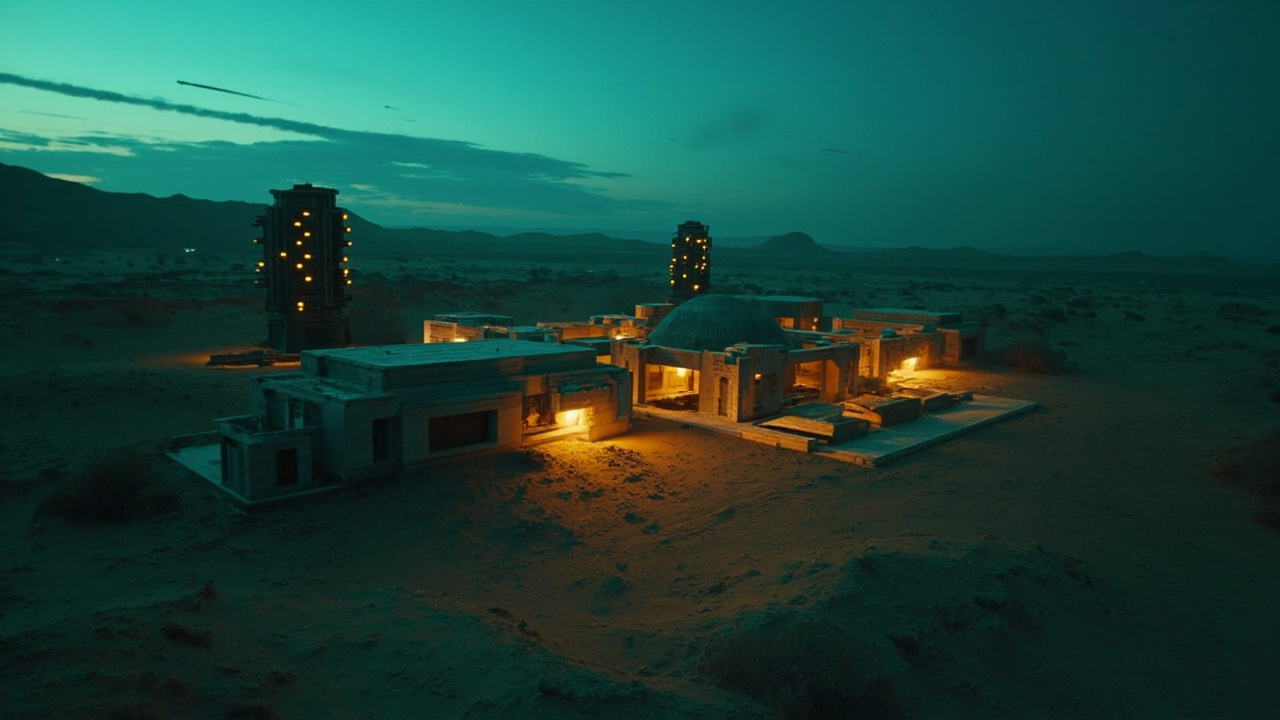
The most consequential data center architecture decision of 2026 was not made in a Silicon Valley review meeting. It was made in Abu Dhabi, under the shadow of missile trajectories. According to a Reuters exclusive published September 11, the United Arab Emirates is quietly redrawing the blueprint for its flagship 5-gigawatt AI infrastructure program — the largest planned AI compute campus outside the United States — after Iran’s armed forces explicitly named the project as a military target.
Six people familiar with the deliberations, including a U.S. official, a Western diplomat, and industry executives briefed on the matter, told Reuters that the original vision of a single 10-square-mile (26-square-kilometer) mega-campus in Abu Dhabi is being abandoned in favor of a distributed network of data centers spread across the UAE. The redesign adds air defense systems, blast-resistant construction, hardened power and cooling redundancy, and — in the most striking detail — potentially places the most sensitive facilities underground or inside mountains.
From Single Point of Pride to Single Point of Failure
The UAE–U.S. AI Campus was announced during President Donald Trump’s visit to the Gulf in May 2025, pitched as the physical anchor of the Emirates’ ambition to become a global AI powerhouse as it diversifies away from oil. The project is led by G42, the AI conglomerate controlled by Sheikh Tahnoun bin Zayed al Nahyan — the UAE national security adviser and brother of the president — and counts OpenAI, Oracle, SoftBank, Nvidia and Cisco among its American and international partners. The first construction phase, the $30-billion, 1-gigawatt cluster known as Stargate UAE, broke ground last year, with the first 200 megawatts due online this year.
The strategic bargain behind it was straightforward: in exchange for access to Nvidia’s most advanced AI chips and other controlled U.S. technology, the UAE agreed to sever AI ties with China and to invest in the Stargate initiative’s American data centers. It was, on paper, a textbook sovereign AI play — a small state converting capital and geopolitical alignment into frontier compute.
Then came the war. After U.S. and Israeli airstrikes against Iran, Tehran began firing missiles and drones at Gulf neighbors hosting American forces. Two Amazon Web Services data centers in the UAE were damaged in March, along with one in Bahrain — and AWS cloud services in the region are still disrupted according to the company’s own status updates. In April, Iran’s armed forces published a video warning that Stargate UAE was a potential target, complete with a map purporting to show the construction site and the caption: “Nothing stays hidden from our sight.”
Two people familiar with the matter confirmed to Reuters that the mapped location — a site near Al Dhafra Air Base on the outskirts of Abu Dhabi, previously not publicly known — is accurate. The base hosts U.S. troops and has itself been targeted since the conflict began in February. Concentrating five gigawatts of national AI capacity, adjacent to a targeted military installation, suddenly looked less like a moat and more like a bullseye.
What the New Blueprint Looks Like
The revisions under consideration, as described by Reuters’ sources, read like fortification doctrine applied to silicon:
- Distribution over concentration. Rather than one 10-square-mile campus, the program will likely become a federated network of sites across the UAE’s seven emirates. The first phase at the original location continues — with modifications — but subsequent capacity gets scattered.
- Underground and mountain siting. Officials are considering placing the most sensitive facilities, including military-linked data, underground or inside mountains. The mostly flat, desert terrain of the country complicates this, but mountain ranges run through parts of the north and northeast, in Ras Al Khaimah and Fujairah. Precedent exists: in the U.S., China and Europe, data centers have been built inside disused mines, Cold War-era bunkers and caves.
- Active air defense. Drone and missile interceptors and electronic jamming equipment are being incorporated into the redesign, according to three sources — a remarkable admission that future AI infrastructure is being planned as a defended military-adjacent asset, not a civilian cloud campus.
- Passive hardening. Blast-resistant concrete, backup power and additional cooling redundancy are on the list of likely measures.
G42, responding to Reuters, did not deny the revision: “The project’s specifics are subject to continuous review in line with the security, resilience and operational standards expected of critical infrastructure at this scale.” OpenAI said it was making “good progress on the infrastructure and adoption priorities” needed to deliver the UAE’s AI vision. Nvidia, Oracle and Cisco did not respond; SoftBank declined to comment. Reuters could not determine how close Abu Dhabi is to finalizing a new masterplan, or how the changes will hit construction costs and timelines.
The Economic Earthquake Behind the Engineering
Daniel Benaim, who served as U.S. deputy assistant secretary of state for Arabian Peninsula affairs and is now a fellow at the Middle East Institute, told Reuters the conflict has been an “economic earthquake” for Gulf states that had long marketed themselves as safe havens for capital and connectivity. “Changes to harden critical infrastructure are vitally necessary,” he said. “Every country in the region is going to look at what they can do to reduce the risk” and reassure international partners and investors.
That framing matters beyond the Gulf. The past two years of AI infrastructure buildout have been dominated by a bigger-is-better logic: ever-larger campuses, ever-denser GPU clusters, ever-bigger single points of aggregation. Oracle’s Larry Ellison, whose company partners with G42 on the project, once said the completed campus would have enough capacity to connect every UAE government agency and commercial institution to the world’s most advanced AI models. That sales pitch — total national compute in one place — is precisely what the war has discredited.
What replaces it is a resilience-first doctrine that will feel familiar to anyone who has worked on critical infrastructure in conflict zones: distribute the load, harden the nodes, defend the perimeter, and assume the map is public. The irony is that the physical topology of “sovereign AI” is now being shaped less by chip export rules or energy prices than by missile range and drone doctrine.
What It Means for the AI Buildout
Three implications are worth watching. First, cost: underground construction, blast-resistant structures, air defense integration and geographic distribution all add meaningful capital expense to an already $30-billion-plus first phase — and Reuters notes nobody yet knows the full cost delta. Second, precedent: if the Gulf’s flagship project goes distributed-and-hardened, expect other sovereignty-minded compute projects, from Saudi Arabia to Southeast Asia, to bake the same assumptions into their masterplans from day one. Third, signal: a state that spent two years courting frontier labs is now designing its AI campus to survive state-on-state attack. That is the clearest acknowledgment yet that large-scale AI compute has crossed from being an economic asset to being a strategic — and strikeable — one.
The UAE is not slowing down. The 200-megawatt first tranche of Stargate UAE is still slated to come online this year, and the country’s bet on AI as a post-oil economic engine remains intact. But the blueprint being revised in Abu Dhabi this month tells the real story of 2026’s infrastructure moment: the age of the exposed, concentrated AI mega-campus is over. The future of frontier compute in contested geographies looks a lot more like a network of bunkers than a city of glass data halls on the desert’s edge.
Sources
- [1] https://www.reuters.com/world/middle-east/uae-revises-ai-data-center-plan-after-iranian-attacks-sources-say-2026-09-11/
- [2] https://www.internazionale.it/ultime-notizie-reuters/2026/09/11/exclusive-uae-revises-ai-data-center-plan-after-iranian-attacks-sources-say
- [3] https://stargate.how/location
- [4] https://www.g42.ai/resources/news/global-tech-alliance-launches-stargate-uae
- [5] https://www.prnewswire.com/news-releases/g42-provides-update-on-construction-of-stargate-uae-ai-infrastructure-cluster-302586401.html