'It Won't Be Easy': Hyundai Executive Says Boston Dynamics IPO Is Unlikely in 2027
A senior Hyundai Motor Group executive tells Reuters a Boston Dynamics IPO is unlikely next year, as the Atlas maker remains unprofitable with nearly 1.7 trillion won in cumulative losses and no at-scale deployment yet.
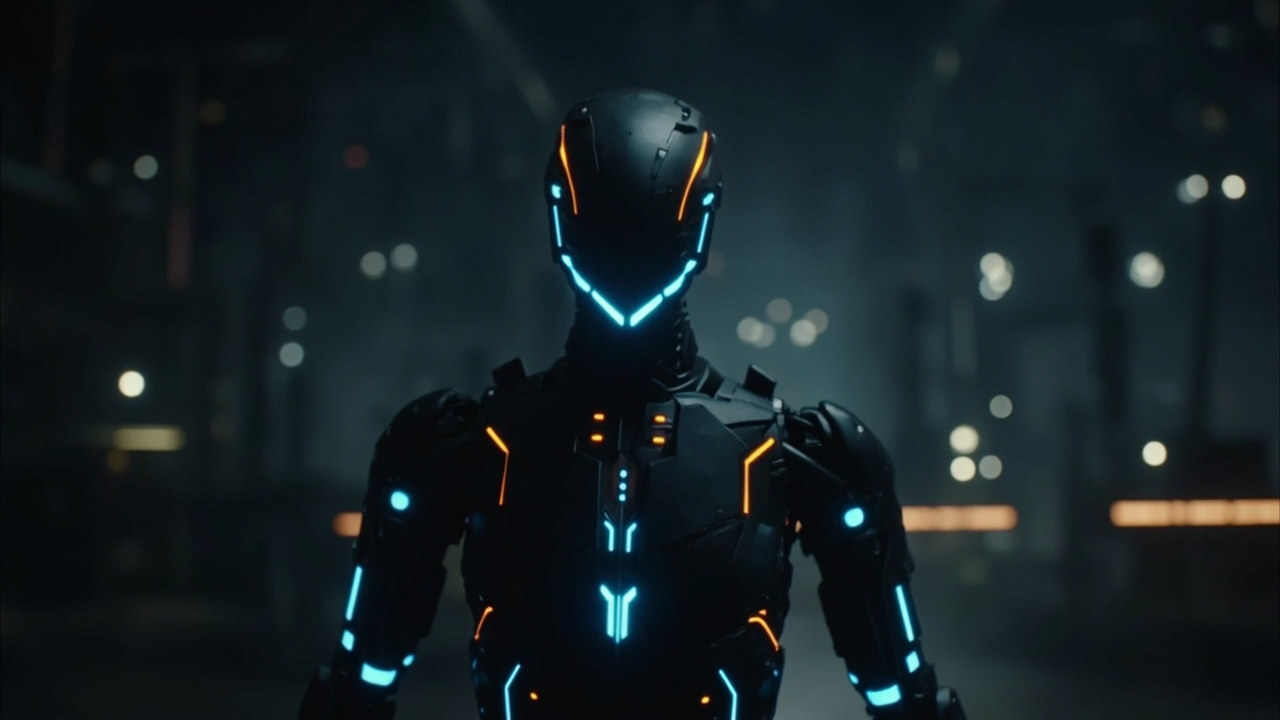
For the better part of a year, the robotics trade has run on one persistent piece of speculation: that Hyundai Motor Group would cash in on the humanoid robot boom by taking Boston Dynamics public. On September 14, a senior executive at the South Korean conglomerate quietly poured cold water on the idea — at least for next year.
In a Reuters exclusive reported from Seoul, the executive, who has direct knowledge of the matter and asked not to be named because the plans are confidential, said Boston Dynamics is unlikely to pursue an initial public offering in 2027. Asked directly whether a listing was possible next year, he answered: “It won’t be easy.” Pressed for detail, he added only that “we need to see conditions and situations,” without elaborating.
The comments, published in the early hours of September 14, suggest a stock market debut for the U.S.-based robotics pioneer may still be years away — a notable cold shower for a sector where humanoid-robot hype has been running white-hot since the production version of the Atlas robot stole the show at CES 2026 in January.
Why the delay matters
The reasoning behind the hesitation is sobering for anyone tracking the humanoid robot industry’s timeline. According to the executive, the company has yet to deploy its flagship Atlas robots at scale, and it remains unprofitable. Those two facts are related, and together they define the gap between the demo-reel version of robotics and the balance-sheet version.
The financial picture is stark. Boston Dynamics recorded a loss of 528.4 billion won (roughly $393 million) in 2025 alone, according to a filing from Hyundai Glovis, the logistics affiliate that holds an approximately 11% stake in the company. Cumulative losses from 2021 through 2025 totalled nearly 1.7 trillion won — about $1.26 billion at current exchange rates. Hyundai Motor Group has never publicly disclosed a timetable or valuation target for a listing.
This is not the profile investors have been pricing in. Hyundai Motor shares more than doubled earlier this year after the January Atlas unveiling, before giving up much of those gains amid a drought of updates on the robotics strategy. Even after the pullback, Hyundai Motor stock is up 25% year-to-date — though that lags a 60% surge in the broader Korean market, a sign that the robotics premium has faded faster than the market rally around it.
A valuation with no floor
Perhaps the most striking detail in the Reuters report is how wide the valuation spread remains. Samsung Securities said market estimates place Boston Dynamics’ value at between 50 trillion won and 100 trillion won — a range spanning roughly $37 billion to $74 billion. That a single company can carry a two-to-one spread in analyst estimates is a measure of how speculative the humanoid robot market still is: there is no revenue base or deployment record to anchor the models.
Other forecasts are even more aggressive — and even further out. In August, IBK Securities argued Boston Dynamics could be worth 141 trillion won (about $105 billion) by 2030, when it expects the company to generate around 11 trillion won in revenue. Meritz Securities analyst Kim Joon-sung took the opposite lesson from the same data: an IPO is more likely in 2029 or 2030, he told Reuters, because Hyundai first needs to gather large amounts of operational data and improve the robots’ capabilities before selling them broadly to external customers.
For context on how fuzzy the numbers are: in July, when Hyundai announced it would buy out SoftBank’s roughly 10% stake to make Boston Dynamics a wholly owned subsidiary, media reports pegged the deal at around 500 billion won ($371.5 million) — implying a total valuation near 5 trillion won. Kiwoom Securities analyst Shin Yoonchul drew exactly that conclusion at the time. In other words, the price Hyundai actually paid for a tenth of the company implied a valuation one-tenth the size of the low end of current market estimates. In January, post-CES enthusiasm had pushed analyst chatter toward 30–40 trillion won, and some local speculation ran as high as 100 trillion won. The spread between the transaction price and the headline numbers is the clearest evidence that nobody — including the owners — really knows what the asset is worth.
The deployment bottleneck
The deeper story here is about the physics and economics of humanoid robots, not the capital markets. Hyundai has said it wants to build a factory capable of producing 30,000 robots a year by 2028, and to begin deploying humanoids at its U.S. manufacturing plant in Georgia that same year before extending them across its manufacturing network. Some analysts consider those targets ambitious.
Kim Hyun-su, a senior fund manager at Seoul-based IBK Asset Management, put the challenge bluntly: “I think it might take far more time for humanoid robots to replace human workers at the assembly line. It’s not difficult to make robots dancing, but it’s challenging to make them carry heavy loads and get involved in manufacturing at plants.”
That observation lands at a moment when the industry’s marketing has never been slicker. Performance videos of dancing, flipping, and parkour-ing humanoids circulate widely; 30,000-units-a-year factories do not. Tesla CEO Elon Musk — whose Optimus program anchors a competing bet on humanoids — has himself described humanoid robots as “the hardest product to scale manufacturing” that his company has ever attempted. When the industry’s loudest promoters concede the scaling problem, a conservative IPO timeline from the owner of its most famous brand reads less like caution and more like accuracy.
What to watch
For investors and industry watchers, the Reuters report sets up a handful of concrete markers. First, the 2028 targets — the 30,000-unit factory and the initial Georgia deployment — are now effectively the gating milestones for any listing narrative. If those slip, the 2029–2030 IPO window suggested by Meritz becomes the base case. Second, watch the ownership: Hyundai moved in July to make the company wholly owned, buying out SoftBank’s stake; existing shareholders include Hyundai Motor, Kia, Hyundai Mobis, and Group Executive Chair Euisun Chung himself. Full ownership gives Hyundai no external pressure to monetize quickly. Third, the losses themselves: 528.4 billion won in 2025 is a real burn rate, and closing it requires either revenue from deployments that don’t yet exist at scale or continued subsidy from the parent.
The humanoid robot story is not broken by this report — if anything, the deployment-first, IPO-later sequencing is the rational version of it. But it is a reminder that the gap between a viral robot video and a durable robotics business is measured in years, and in Hyundai’s own private assessment, more than one of them.
Sources
- [1] https://www.reuters.com/business/media-telecom/ipo-humanoid-robot-maker-boston-dynamics-unlikely-2027-executive-says-2026-09-14/
- [2] https://www.reuters.com/world/hyundai-motor-group-make-boston-dynamics-wholly-owned-with-purchase-softbank-2026-07-16/
- [3] https://www.ksl.com/article/51623596/exclusive-ipo-for-humanoid-robot-maker-boston-dynamics-unlikely-in-2027-executive-says