From Lab Bench to Battlefield Tourniquet: MIT's AI-GUIDE Wins Federal Tech-Transfer Award as Novice Study Hits 93%
MIT Lincoln Laboratory and Mass General's AI-guided vascular access device takes the Federal Laboratory Consortium's 2026 Excellence in Technology Transfer Award, with a new user-validation study showing 93% first-pass needle-insertion success for clinicians with minimal ultrasound training.
The most lethal window in trauma medicine is the first hour. A soldier bleeding out on a battlefield, a car-crash victim on a rural highway, a mass-casualty event where professional caregivers are outnumbered — in all of these scenarios, the difference between life and death often comes down to one procedure: getting a catheter into a major blood vessel fast enough to deliver fluids, drugs, or a resuscitative balloon. It is a procedure that normally takes years of training to master. This month, a device built to let almost anyone do it has been honored with one of the U.S. federal laboratory system’s most prestigious commercialization awards — and fresh clinical evidence suggests it actually works in the hands of novices.
On September 14, 2026, MIT News highlighted the latest milestone for AI-GUIDE, the Artificial Intelligence–Guided Ultrasound Intervention Device developed by MIT Lincoln Laboratory together with Massachusetts General Hospital (MGH). The Federal Laboratory Consortium (FLC) — the nationwide network that links more than 300 federal laboratories to U.S. industry — selected AI-GUIDE for its 2026 Excellence in Technology Transfer Award, recognizing the team’s success in moving the technology out of the laboratory and toward real-world deployment for both military and civilian trauma care.
What AI-GUIDE actually does
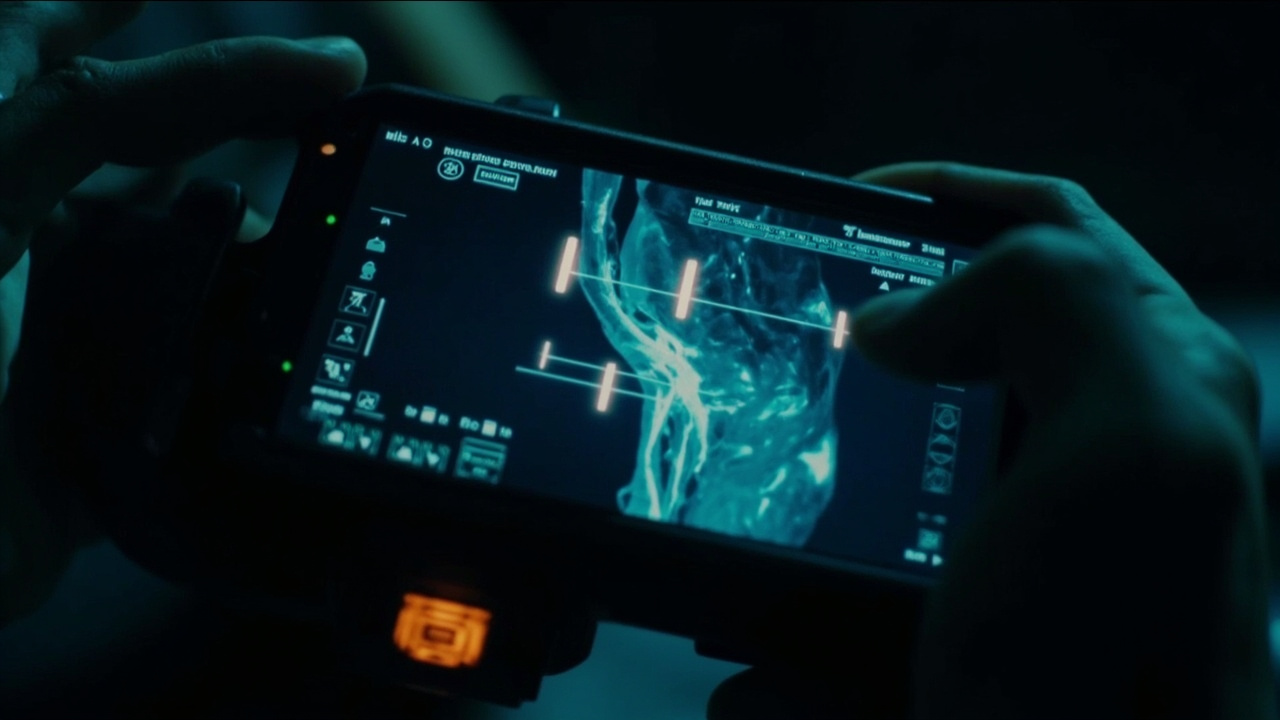
At first glance, AI-GUIDE looks unassuming: a handheld, foldable unit with a small screen. Behind that form factor is a tightly integrated robotic and AI system that automates one of medicine’s most error-prone manual procedures — vascular access.
Here is how the workflow runs. The operator places the device on the patient, roughly over the femoral region. Custom AI software developed at Lincoln Laboratory analyzes the ultrasound image stream in real time — at roughly 30 frames per second — to detect, segment, and localize the target blood vessel as the user moves the probe. A guidance display then walks the operator through each step: where to position, when the vessel is centered, and how to proceed. When the moment comes, the device robotically performs the vascular puncture, inserts a needle, and threads a preloaded guidewire using the classic Seldinger technique. From there, the user advances the catheter over the wire, and life-saving intervention can begin.
The design philosophy is “expertise in a box.” Rather than replacing human medics, AI-GUIDE compresses the perceptual and motor skills of an experienced interventionalist — skills that normally take a residency to build — into a device that a combat medic, paramedic, or rural nurse can reportedly operate after brief training. The system integrates with widely available commercial portable ultrasound machines rather than requiring bespoke imaging hardware, which matters enormously for cost and logistics in austere environments.
The evidence: 93% success for non-experts
An award is one thing; clinical performance is another. The timing of the FLC honor coincides with newly published user-validation research that addresses the question every trauma surgeon would ask: does it work when the operator has never really done this before?
The study examined the AI-GUIDE-LL handheld robotic device in the hands of clinicians with limited ultrasound experience. The findings were striking: these non-expert operators successfully localized the femoral vessels and achieved a 93% needle-insertion success rate on phantoms. Prior work from the team had already demonstrated the device’s efficacy in expert-operated animal (porcine) models; the new results extend the evidence toward the deployment scenario that actually matters — inexperienced human operators, under pressure, in settings far from a teaching hospital.
Context makes that number more meaningful. Manual femoral access without ultrasound guidance has historically been a coin flip in untrained hands, and even in-hospital ultrasound-guided femoral vein access by qualified staff runs at roughly an 86% first-attempt success rate in the published literature. A device that lifts novices to 93% on simulated tissue is not an incremental convenience; it is a categorical change in who can deliver frontline trauma care.
A regulatory tailwind
AI-GUIDE’s path has also been accelerated by regulators. In January 2026, the technology received FDA Breakthrough Device Designation — a status reserved for devices that address life-threatening conditions for which no approved alternative exists, or that offer significant advantages over current standard of care. The designation grants the developers more frequent interaction with FDA and prioritized review, a meaningful accelerant for a device intended for combat casualty care in what the military calls “austere environments.”
The military interest is explicit. Demonstrations of the system have been staged for Army medical modernization stakeholders, including a 2025 event at VelocityTX in San Antonio — a hub for Department of Defense medical innovation. The use case: a frontline medic under fire, with a casualty in hemorrhagic shock, needs percutaneous vascular access in minutes. Every failed needle attempt costs blood, time, and the casualty’s reserve.
Why the tech-transfer award matters
The FLC Excellence in Technology Transfer Award is not a research prize. It specifically honors the unglamorous middle mile of innovation: licensing, commercialization partnerships, transition agreements, and the paperwork that turns a laboratory prototype into a manufacturable product. Federal labs produce thousands of patented technologies; only a small fraction ever cross what innovators call the “valley of death” between demonstration and deployment.
By that standard, AI-GUIDE is a case study in doing it right. The team, led from Lincoln Laboratory’s Bioinstrumentation group with clinical partners at MGH, pursued a dual-track strategy: military transition for combat casualty care on one side, and civilian emergency-medicine commercialization on the other. The 2026 award citation explicitly recognizes the commercialization effort around trauma care for injured military personnel, while the underlying technology stack — real-time vessel segmentation, robotic needle insertion, procedural guidance software — has clear applications in civilian ambulances, rural hospitals, and mass-casualty preparedness.
The bigger picture: AI as a skill multiplier in medicine
AI-GUIDE sits at the intersection of two larger trends. The first is the quiet maturation of medical AI from diagnostic chatbots toward embodied, procedure-level assistance — AI that does not just tell you what is wrong, but physically helps you fix it. Real-time image segmentation guiding a robot arm is a fundamentally different engineering proposition from a language model summarizing charts, and arguably a more consequential one for frontline medicine.
The second is the democratization thesis: that AI’s greatest healthcare value lies not in replacing specialists at academic medical centers, but in exporting specialist-level capability to settings where no specialists exist. A 93% success rate for novices is precisely the kind of number that thesis needs — and exactly what regulators, military logisticians, and rural health systems will want to see replicated in human trials.
Challenges remain. Phantom studies are a stepping stone, not a destination; human vasculature is variable, patients are not phantoms, and the device’s real-world failure modes — morbid obesity, profound hypotension, pediatric anatomy — still need characterization. The transition from Breakthrough Device Designation to full FDA clearance will require exactly those data. And battlefield durability is its own engineering bar: dust, shock, temperature extremes, and decontamination protocols that no hospital ultrasound suite ever faces.
But the trajectory is unmistakable. What began as a Lincoln Laboratory engineering project in the early 2020s is now an award-decorated, regulator-flagged, clinically validated program marching toward the point of injury. For a field sometimes criticized for chasing benchmarks and chatbots, AI-GUIDE is a reminder of what the technology can do when pointed at a problem measured in minutes of survival time.
The 2026 FLC award winners were announced by the Federal Laboratory Consortium earlier this year, with AI-GUIDE honored alongside technologies from other federal institutions. For the medics who may one day carry it, the award is secondary to the promise: that the hardest minute of trauma care might soon no longer depend on the scarcest skill in the room.
Sources
- [1] https://news.mit.edu/2026/lifesaving-lincoln-laboratory-technology-wins-tech-transfer-award-0911
- [2] https://www.ll.mit.edu/news/life-saving-lincoln-laboratory-technology-wins-2026-excellence-technology-transfer-award
- [3] https://pubmed.ncbi.nlm.nih.gov/42728383/
- [4] https://www.jbsa.mil/News/News/Article/4393921/combat-casualty-care-technology-receives-fda-breakthrough-designation-for-the-a/
- [5] https://federallabs.org/communications/flc-press-releases/2026-flc-award-winners