Eight Devices, Five OEMs, One New OS: Google's Googlebook Showcase Takes Manhattan Today
Today in New York, Google finally pulls back the curtain on Googlebook — the Android-17-native laptop platform with a dedicated Gemini key, a mandatory Glowbar, and roughly eight devices from Acer, ASUS, Dell, HP and Lenovo. Here's everything confirmed before the embargo lifts.
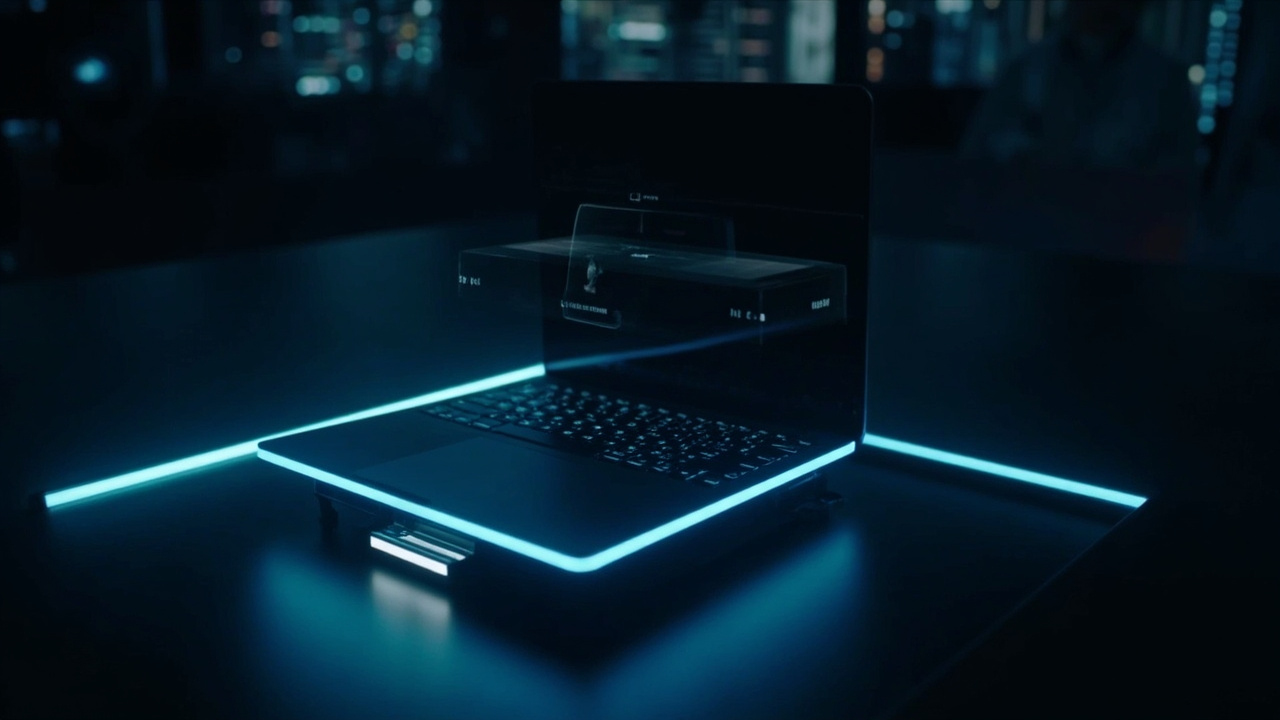
After four months of leaks, codenames, and certification-database archaeology, Google’s most consequential hardware bet of 2026 gets its official unveiling today. The Googlebook Showcase — a media-only event in New York City — is the moment Google stops describing its Chromebook successor in generalities and starts answering the questions that have accumulated since the platform was first previewed in May: what the operating system is really called, how five different manufacturers have interpreted the same specification, and whether an AI-native Android laptop can compete at premium prices against the MacBook Air and Copilot+ PCs.
There will be no live stream. Consumers can’t watch it happen. But the days immediately after today — once embargoes lift — are when independent benchmark data on the platform will exist for the first time. That makes this week the real decision point for anyone weighing a premium laptop purchase ahead of the holiday season.
Why a dedicated event, and why New York
Google deliberately bypassed IFA Berlin, the traditional September stage for laptop announcements, rather than let Googlebook get lost among competing OEM keynotes. Instead it booked its own platform-owned moment in Manhattan — the same city where Google unveiled the Pixel 11 line on August 12. The pattern is unmistakable: New York is where Google introduces the hardware it considers most important in 2026.
The confirmed itinerary has three segments. A keynote from Google leadership will formally introduce the platform’s software architecture — the vision of uniting ChromeOS’s browser productivity layer with a native Android codebase — and reveal the official name of the operating system known internally as Aluminium OS. OEM partner demo stations follow, with hands-on hardware from all five launch partners: Acer, ASUS, Dell, HP, and Lenovo. Finally, a media sandbox lets journalists photograph, film, and benchmark the first Googlebook systems — the first time the platform’s performance claims will be independently testable rather than leaked or inferred.
What Aluminium OS actually is
The single most important technical fact about Googlebook is what the new OS is not. It is not ChromeOS with Android features bolted on. It is Android 17 rebuilt from the ground up for laptop hardware.
ChromeOS ran Android apps for a decade through the Android Runtime for Chrome (ARC), a containerized compatibility layer that imposed a consistent performance ceiling and limited how deeply apps could reach system hardware — the well-documented source of “works, but worse than on your phone” Android apps on Chromebooks. Aluminium OS eliminates ARC entirely. The Play Store’s catalog of more than three million apps runs natively with full OS API access, with Jetpack WindowManager 1.5.0 handling desktop windowing and Material 3 Adaptive managing multi-pane layouts for keyboard-and-mouse use.
The consequences are visible even in leaked renders. The phone-style status bar across the top of the Lenovo Googlebook 15’s display isn’t a nostalgic design choice — it’s the natural output of building a desktop OS on Android’s native UI toolkit.
Gemini at the OS layer
Every Googlebook ships with a dedicated physical G key, occupying the spot where the Windows key has sat on PC keyboards for nearly three decades. One keystroke summons Gemini as a system-wide interface — not a browser tab, not an app — capable of reading screen context and acting across open applications.
The deeper integration is Magic Pointer, developed by Google DeepMind researchers Adrien Baranes and Rob Marchant. Wiggle the cursor near a date in an email and a calendar-event suggestion appears; hover over two images and Gemini offers to place them side by side. Unlike the Chrome browser version, the Googlebook implementation operates at the OS layer with far broader context access than any extension can reach.
Other confirmed features include Create My Widget (natural-language desktop dashboards wired into Gmail and Calendar), Cast My Apps (mirroring Android phone apps directly onto the laptop screen), and a context-sensitive Smart Cursor. The one mandatory hardware element across all five OEMs is the Glowbar — a thin LED strip on the lid that animates while Gemini is processing. Google already ships the same idea as HiLight on the Pixel 11; on Googlebook it becomes the single visual constant identifying the platform regardless of manufacturer.
The hardware: what has already surfaced
Roughly eight devices are expected today, spanning clamshells and at least one tablet.
Lenovo is furthest along. The Lenovo Googlebook 15 — confirmed via press renders — carries the Gemini key, a top notch with a physical privacy shutter, four Dolby Atmos speakers, and a port layout (HDMI, two USB-C, one USB-A, SD reader, 3.5mm jack) that outclasses most Chromebooks ever made. The hinge opens to 157.5 degrees. Adobe Premiere Pro appears in the taskbar dock — a deliberate signal that this platform targets creative workflows, not just browser-based work. Lenovo is also prepping a 13- or 14-inch sibling and a detachable 2-in-1 codenamed “Sapphire” on MediaTek’s Kompanio Ultra with stylus support. Its pole position is strategic: Lenovo held 25.3% of global K-12 Chromebook shipments in the first half of 2025 — 3.5 million units, growing 27% year over year.
ASUS has the most ambitious spec sheet. The CX9406, exposed by an iF Design award submission, is a 14-inch touchscreen under one kilogram (2.2 lbs) in a chassis of “Ultra-Ceramic Light Alloy” — claimed 34% lighter and 13% stronger than aluminum. An Energy Star certification confirmed 32 or 64GB of LPDDR5X, an Intel Core Ultra 7 355 (Panther Lake), Intel Xe3 graphics, and a 47 TOPS neural processing unit — squarely in Copilot+ PC territory.
Acer’s Googlebook 14 GP714-91N surfaced via a European retailer: Core Ultra 5 325, 16GB RAM, and a 14-inch 2.8K OLED panel. Dell (“Mica”) and HP (a 14c, “Quartz”) have kept everything under wraps. On silicon, Intel and Qualcomm supply processors across the lineup, with MediaTek powering Lenovo’s tablet.
What today won’t answer
Pricing. Google VP John Maletis has confirmed the initial wave targets premium buyers, and a $999 floor has been cited consistently since May — partly a consequence of brutal memory-component pricing in 2026. Whether anything lands below that floor, and how far flagships push above it, will decide how much of the premium market Googlebook can actually reach.
Education. Chromebooks own 60.1% of the global K-12 device market, with 38 million units active in classrooms and 93% of US school districts planning Chromebook purchases this year. A $999-plus launch platform has a structural gap with the market Google has dominated for a decade. Reporting points to a three-tier strategy — mass-premium and entry tiers following the flagship wave — but no timeline exists. Google has also confirmed some 2021-and-later Chromebooks will be eligible to transition to the new platform, with full details undisclosed, and existing Chromebooks keep receiving up to ten years of security updates.
Today’s showcase creates the record; the embargo lift in the days after is when it becomes actionable. For a platform asking developers to re-think Android for the desktop and buyers to bet on a third laptop OS, that independent data — not the keynote — is the real launch.
Sources
- [1] https://www.techtimes.com/articles/325128/20260820/googlebook-showcase-set-sept-15-os-name-eight-devices-
- [2] https://blog.google/products-and-platforms/platforms/android/meet-googlebook/
- [3] https://www.pcmag.com/news/googlebook-launch-event-confirmed-set-for-sept-15-in-nyc
- [4] https://www.tomsguide.com/computing/laptops/i-just-got-invited-to-the-googlebook-september-15-event-in-ny
- [5] https://googlebook.google/