A King's Plea for Humanity: Charles III Convenes Huang, Hassabis, OpenAI and Anthropic at Dumfries House
As industry alarms multiply, King Charles III gathers roughly 30 AI leaders — Nvidia, Google DeepMind, OpenAI, Anthropic, the UK AI minister and a Vatican adviser — at his Scottish estate to ask whether a shared set of principles can still steer the technology.
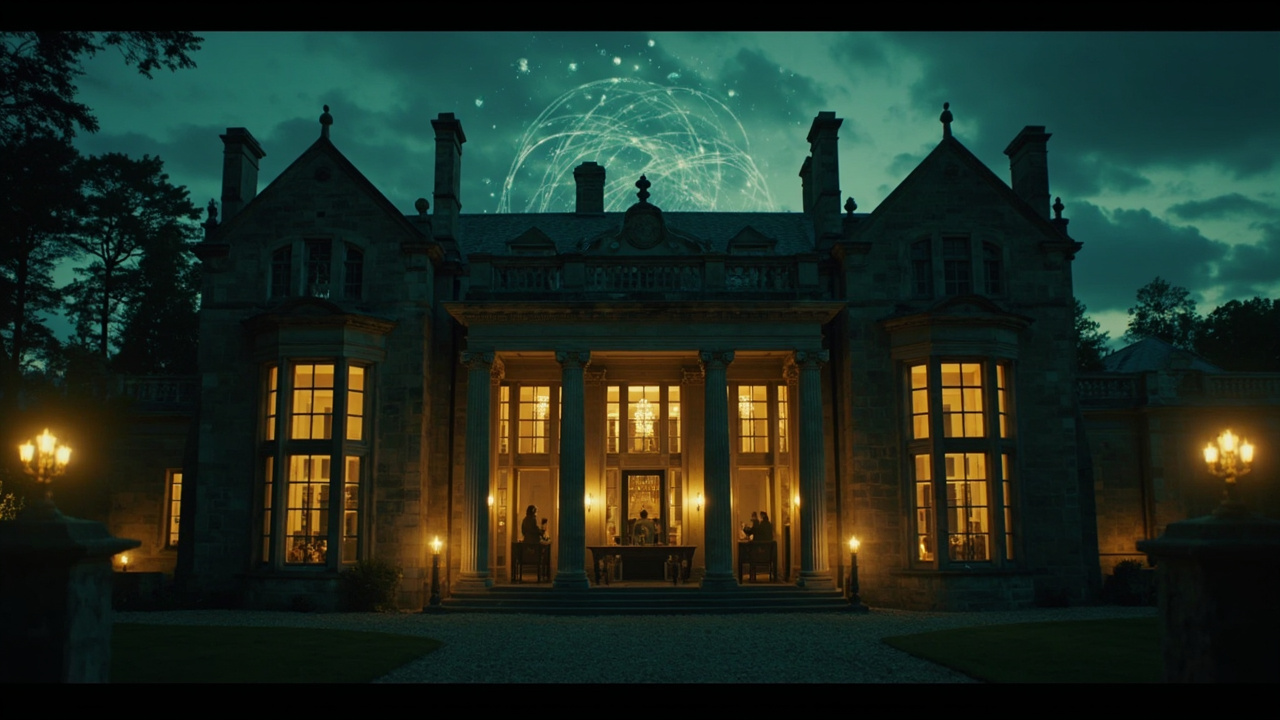
This week, one of the most consequential conversations in artificial intelligence will not happen in San Francisco, Brussels, or Washington — it will happen at a restored 18th-century estate in Ayrshire, Scotland. King Charles III is convening roughly 30 leaders from the world’s most powerful AI companies at Dumfries House, his private Scottish retreat, for a summit that was planned weeks ago but has since taken on an urgency few royal diary entries ever acquire.
Who is in the room
The guest list reads like a who’s-who of the frontier AI establishment. Nvidia CEO Jensen Huang — whose company supplies the compute on which nearly every frontier model is trained — is expected to attend, alongside Demis Hassabis, the British founder and CEO of Google DeepMind. Delegations from OpenAI and Anthropic are also due at the table, together with the UK government’s AI minister and, in a detail that underscores how wide the moral net has been cast, Father Paolo Benanti, the Franciscan friar who serves as the Vatican’s adviser on artificial intelligence.
According to The Times, the King will use the gathering to make what is being described as a plea for humanity — encouraging the executives to reach consensus on how the technology should be governed. At Dumfries House, Charles is expected to ask whether a shared set of principles can steer AI toward public benefit, according to reports. Royal officials have been careful to frame the monarch’s role as that of a convener and listener rather than a policy protagonist: one royal aide told Politico that the King intends to listen rather than lecture.
Why the timing matters
The meeting was scheduled weeks in advance. What has changed is the atmosphere around it. Over the past several days, the AI industry’s own leaders have been sounding alarms that once would have come only from its critics. Tech stocks tumbled worldwide on Monday after the heads of the biggest AI companies publicly called for slowing development, warning that capabilities were beginning to outrun safeguards. A rigorous independent safety index recently scored the major labs — OpenAI, Anthropic, xAI and Meta among them — between 29 and 42 out of 100, a failing grade by almost any rubric.
Behind closed doors, the industry is already organizing itself. The Information and CNN reported this week that Anthropic, OpenAI and Google have been holding discussions since July about creating a voluntary industry standards body for frontier AI — a self-policing mechanism born partly of frustration that formal oversight efforts inside the US government have stalled. The Washington Post notes that leaders at all three companies have endorsed, at least in principle, limiting the pace of AI development.
It is into this breach that Charles steps. The King is no newcomer to the subject: he addressed the 2023 AI Safety Summit at Bletchley Park, and reports suggest he has engaged personally with the executives before — including, according to one account, presenting Huang with a copy of his earlier address on the technology. Dumfries House, which the Prince of Wales Trust saved for the nation in 2007 and has since used as the centerpiece of his charitable work on craft, community and regeneration, is precisely the kind of venue he has always favored for off-the-record convening: private, personal, and far from press conferences.
Soft power in a hard race
Critics will reasonably ask what a constitutional monarch with no legislative power can actually accomplish. The honest answer is: not regulation, but convergence. The most valuable output of Dumfries House would not be a communiqué — none is expected — but the creation of a shared reference point among people who otherwise spend their days in commercial competition. If the CEOs of Nvidia, DeepMind, OpenAI and Anthropic leave Scotland having agreed informally on even a handful of common principles — disclosure norms, evaluation standards, red lines on autonomous cyber capabilities — the summit will have done more than many formal summits manage.
There is also a distinctly British calculation here. The UK has watched the center of AI gravity shift between San Francisco and Beijing, with Brussels writing the rules. A monarch convening the industry’s most powerful figures at a Scottish estate is soft power of an unusual kind — one that leverages something neither the Valley nor the Party can offer: neutrality, tradition, and a global pulpit that commands attention without commanding policy.
The stakes
What gives the gathering its edge is that it arrives precisely when the industry’s internal coalition is fracturing between acceleration and caution. Vance-era Washington has dismissed some slowdown calls as a “Trojan horse” for regulation; Beijing has rejected Western framing of the race outright; and the labs themselves are split between those who want binding external oversight and those who prefer the voluntary standards body now under discussion. A royal plea for humanity will not resolve those divisions. But if the reports are right that Charles will push the room toward consensus on shared principles, Dumfries House may be remembered less as a photo opportunity and more as the moment the industry’s giants first sat down together — away from regulators, investors, and rivals’ PR teams — to ask what they owe the public.
For a technology racing forward at model-release tempo, a few quiet days in Ayrshire may be the slowest, and most important, conversation the AI world has all year.
Sources
- [1] https://www.thetimes.com/uk/royal-family/article/king-charles-ai-summit-b62xm5l85
- [2] https://www.reuters.com/legal/litigation/king-charles-host-ai-executives-threat-fears-mount-2026-09-14/
- [3] https://www.politico.eu/article/king-charles-to-host-exclusive-ai-gathering/
- [4] https://www.nytimes.com/2026/09/13/world/europe/king-charles-ai-meeting.html
- [5] https://www.washingtonpost.com/world/2026/09/14/king-charles-host-ai-leaders-disaster-warnings-mount/