A Neck, Cooler Motors and a $14,000 Tag: Unitree's G1+ Makes Humanoids Practical
Unitree's G1+ adds a 2-DOF neck, 110% more shoulder torque, 72% cooler motors and far-field voice to its $14,000 humanoid — the platform refines itself toward real work.
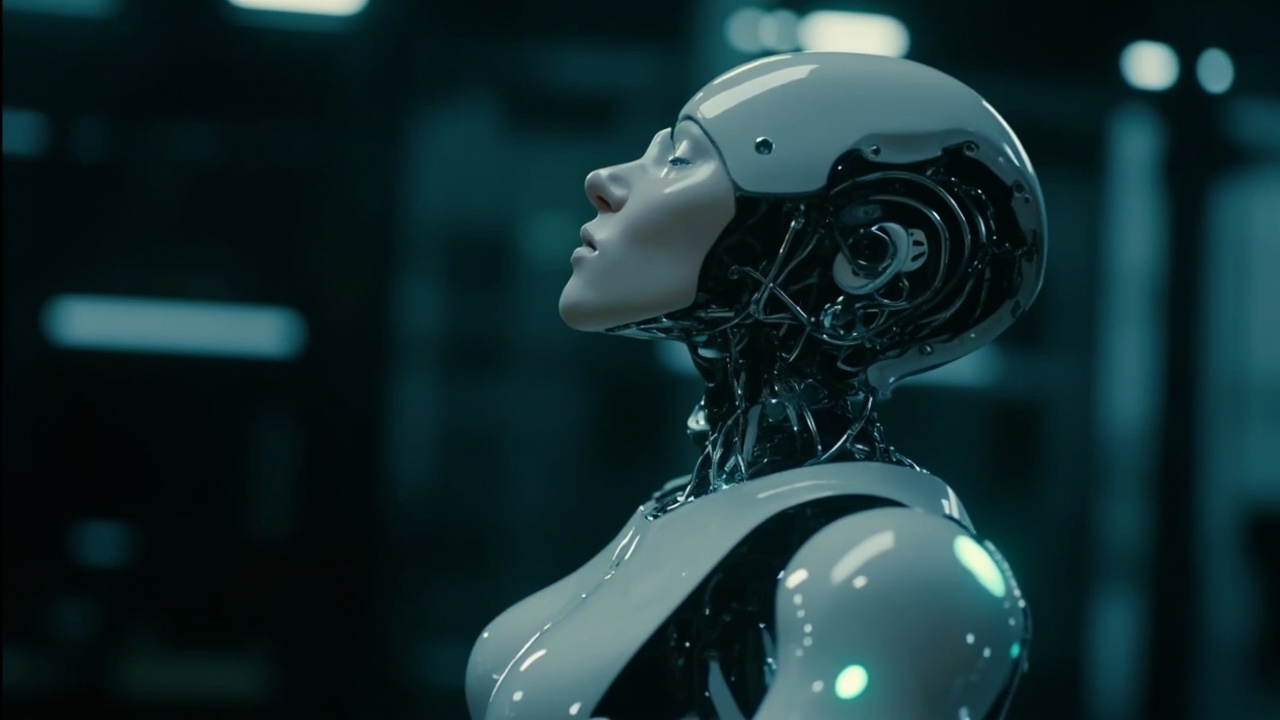
On September 14, 2026, Hangzhou-based Unitree quietly did something its Western competitors keep promising but haven’t delivered: it shipped a meaningfully upgraded humanoid robot at a price a research lab can actually pay. The G1+ takes the company’s 35 kg G1 platform — already the only humanoid on the market under $20,000 — and addresses six of its most practical weaknesses in a single revision, all while holding the line at ¥95,000 (roughly $14,000) for the standard version.
The upgrade reads like a wishlist assembled by anyone who has actually operated a G1 for more than an afternoon. And that’s precisely the point. Two years into the humanoid boom, the industry’s bottleneck has shifted from “can it walk” to “can it work a full shift without cooking its motors or forcing a charging break every 90 minutes.” The G1+ is Unitree’s answer, and it’s a pointed one.
The headline upgrade: a head that turns
The most visible change is the new two-degree-of-freedom neck. The G1+ can now tilt its head between -25° and +36° and rotate it ±110°. That sounds trivial next to torque figures and battery specs — until you watch a neck-less humanoid try to look sideways. Robots without articulated necks must swing their entire torso to redirect their cameras, a movement pattern that is mechanically expensive, visually unsettling, and slow.
With the new neck, the G1+ can track a moving person or scan a workspace the way a human does: with small, quick head movements rather than whole-body reorientation. For robots intended to interact with people — demo floors, research labs, retail pilots — this is the difference between a machine that feels like a machine and one that reads as present.
The engineering story: heat is the enemy
The deeper upgrade is thermal. Unitree overhauled the motor system across the body, and the numbers are striking. Peak torque on the shoulder and waist drives is up 110%, while heat generated under the same load drops 72%. Arm motors gain 43% more torque with 30% less heat; thigh motors run 28% cooler under equal load.
This matters more than any single spec suggests. Sustained heat is what kills humanoid robots in real deployment. Tesla’s Optimus and Boston Dynamics’ Atlas have both reportedly fought heat-shedding problems during extended real-world operation — joints that overheat mid-task force the robot to pause, throttle, or shut down. A 72% reduction in heat at equivalent torque doesn’t just make the G1+ more capable; it fundamentally extends how long the robot can operate continuously before physics intervenes.
The motors remain low-inertia, high-speed inner-rotor permanent-magnet synchronous designs — Unitree’s signature approach — now paired with localized air cooling, industrial-grade crossed-roller bearings on the output shafts, and dual encoders. The formula preserves the quick response the G1 is known for while adding the headroom for sustained loads.
Perception: four cameras, LiDAR, and a head that knows where you are
The G1+ pairs a binocular stereo camera with a wide-angle monocular camera. The stereo pair has a 60 mm baseline, 2-megapixel resolution, at least 500 LW/PH center resolving power, and a field of view of 110° horizontal by 80° vertical (125° diagonal). The wide-angle camera shoots 1920×1080 at 30 fps across 117° horizontal. A 3D LiDAR and a belly-mounted wide-angle camera round out the stack for close-range and spatial tasks.
The interaction layer got equal attention. Five high-sensitivity touch points on the head let a user start a conversation or trigger an action with a tap. A six-microphone array — four front, two rear — supports direction-of-arrival sound localization, noise suppression, and echo cancellation, with an optional wireless microphone rated for 50-meter range and 80 dB signal-to-noise. Dual 10W speakers at the waist handle output in noisy environments. In short: the G1+ can hear you across a room, find you, and answer — the basic interaction loop that most humanoids at any price still fumble.
Power: two hours, hot-swappable, and now externally feedable
Runtime comes from the same 9,000 mAh quick-release smart battery as before, good for roughly two hours of active use with a 54V/5A charger included. Two additions, however, change the practical math. First, the battery remains hot-swappable — downtime is measured in seconds, not hours. Second, and new: a DC 54.6V/5.7A external power port on the back. For research, exhibitions, and other long-duration stationary use cases, the G1+ can now run indefinitely off wall power. That single port transforms the robot from a two-hour demo device into something that can stand at a booth, a lab bench, or a monitoring post for an entire day.
Two versions, one open question
The standard G1+ keeps 25 degrees of freedom — 2 in the head, 6 per leg, 1 at the waist, 5 per arm — stands about 1,340 mm tall, and carries up to 3 kg per arm. The G1+ EDU expands to 25+45 DOF with an optional 3-DOF waist, optional 7-DOF dexterous hands with 2 additional wrist DOF, arm payload raised to about 4 kg, a choice of high-compute modules (including NVIDIA Orin), and an 18-month warranty versus the standard version’s 8. EDU pricing is unannounced.
Notably, no confirmed US or UK release date exists beyond general availability in China; if the original G1’s trajectory holds, international listings typically follow within months.
The context that makes this significant
Unitree shipped more than 5,500 G1 units in 2025 — compared to Tesla’s reported 150 Optimus units, all kept in-house. The G1 platform has climbed the 6,200-metre Chimborazo volcano (a Pemba variant, June 2026), hit 46 km/h, and jumped two metres from a standing start (August 2026). Earlier in September, Unitree also open-sourced UnifoLM-WLA-1.0, a foundation model for general-purpose humanoids that set SOTA marks across several open benchmarks.
Taken together, the picture is one of a company iterating on hardware at consumer-electronics cadence while competitors iterate on slide decks. The G1+ is not a research moonshot — it’s a product refresh, in the way phones get product refreshes. The neck, the cooler motors, the external power port: each is a small, unglamorous fix to a real complaint from real users.
That’s what makes the $14,000 tag the real headline. When capable humanoid hardware becomes a commodity that ships on schedule, the differentiator shifts decisively to software — to the foundation models and agent stacks that decide what the hardware can actually do. Unitree seems to understand this: it is now one of the few players pushing hard on both sides of that divide simultaneously.