Anthropic's First Australian Data Centre: A $32B, 2.16GW Claude Inference Bet in Queensland
Anthropic has signed its first data centre agreement in Australia — a long-term lease at Zerra DC's A$32 billion Western Downs Digital Park in Queensland, a 2.16GW campus built to serve Claude queries, not train them.
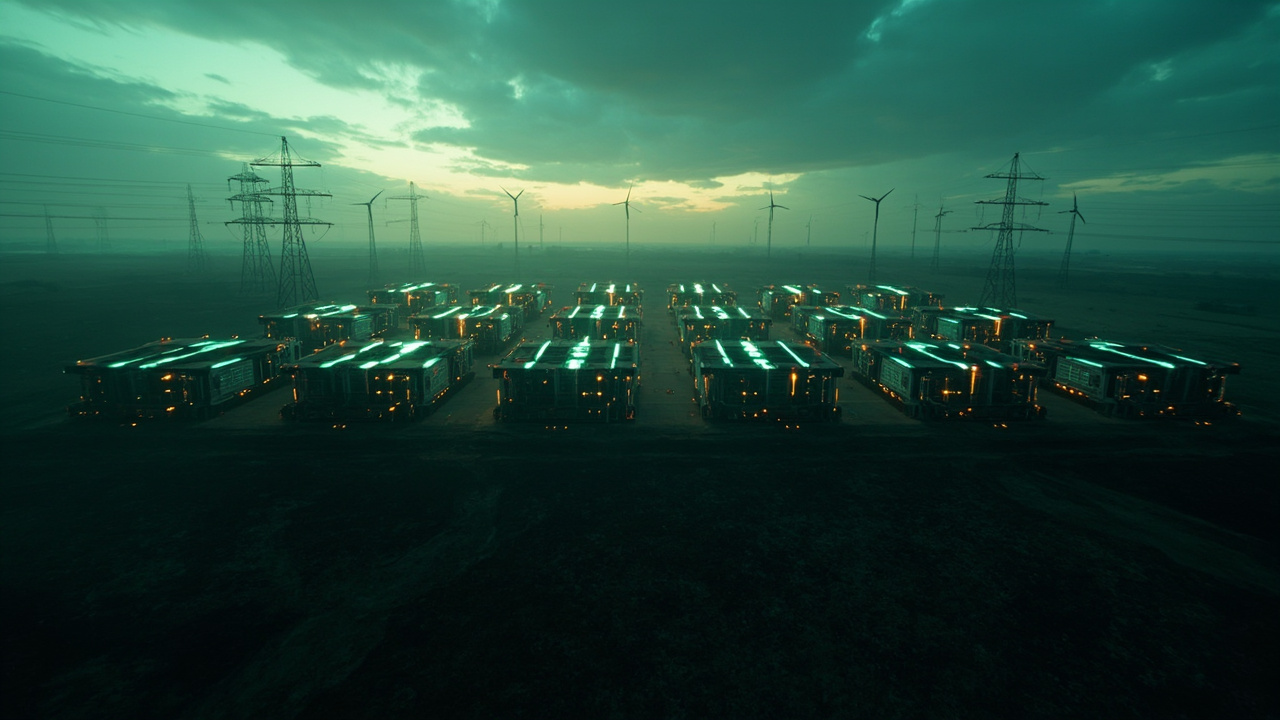
Anthropic has signed its first-ever data centre agreement in Australia, inking a long-term lease for capacity at a proposed A$32 billion campus on Queensland’s Western Downs. The deal, confirmed on September 16 by Reuters and by the Australian government, lands the Claude maker at Zerra DC’s Western Downs Digital Park near Dalby — a town of about 12,000 people roughly 250 kilometres west of Brisbane — and gives Anthropic a foothold in a campus whose planned capacity totals 2.16 gigawatts, on par with some of the largest AI infrastructure projects in the world.
The scale is the headline. A 2.16GW campus is not a server room; it is a small city’s worth of electricity devoted entirely to computation. The overall project, developed by Singapore-based Zerra DC, has been reported at roughly A$30–32 billion, making it one of the largest private infrastructure investments ever proposed in Australia. For Anthropic, the lease is the company’s first physical presence on the continent — and a signal that the race to lock up power and land for AI has officially gone global.
What Anthropic actually signed
Details emerging from Reuters, the ABC, and The Australian sketch the outline of the agreement:
- Tenant, not builder. Anthropic signed a long-term lease to use part of the campus, which Zerra DC is developing across up to four phases of AI-ready buildings. The developer filed plans with the Western Downs Regional Council in late August 2026.
- Inference, not training. The facility will handle inference — the rapid, prediction-based processing that answers user queries — for Claude, rather than training new models. Anthropic says the site will serve Claude for user requests starting in 2027.
- Regulatory gate. The arrangement remains subject to approval by Australia’s Foreign Investment Review Board (FIRB), the standard hurdle for foreign-backed infrastructure of this magnitude.
- Jobs and politics. The project is projected to create around 1,500 construction jobs and roughly 1,400 ongoing operational roles, figures Queensland’s Premier was quick to celebrate as news broke on Wednesday afternoon local time.
The “inference, not training” distinction matters more than it sounds. Training runs are bursts of intense, centralised computation that labs still concentrate in a handful of purpose-built clusters. Inference is the steady, distributed heartbeat of a deployed product — every Claude conversation, every API call. By siting inference in Australia, Anthropic can serve Asia-Pacific users with lower latency, keep certain workloads within closer regulatory reach of Australian customers, and hedge its global capacity as demand compounds. The company is effectively pre-buying the muscle memory of its own product.
The road to Dalby
The Queensland deal did not come from nowhere. It is the visible landing of a hunt that has been underway for months.
As far back as June 2026, CNBC reported that Anthropic was hiring for eight compute roles based in Australia or Japan as it raced to secure infrastructure. In July, the Australian Financial Review revealed that Anthropic — described in internal documents as seeking “at least 1.4 gigawatts” of Australian capacity — had told data centre owners it would buy whatever they could deliver by mid-2027. In August, the ABC reported that internal NSW government emails showed Anthropic exploring up to 5 gigawatts of data centre capacity in New South Wales alone. The 2.16GW Western Downs lease sits squarely inside that declared appetite, and rumours of further Australian deals are unlikely to die with this one.
The Australian push parallels Anthropic’s infrastructure sprint elsewhere: a 20-year lease at a TeraWulf data centre in Kentucky signed in July, a memory and storage supply agreement with Micron from June, and reported talks with Meta over a compute arrangement worth up to $10 billion. Frontier labs have concluded that differentiated access to power is now as strategic as differentiated model architecture — and Anthropic, which unlike Google or Microsoft lacks a hyperscaler parent, has to lease its way to that access deal by deal.
Why Queensland’s Western Downs
The location is not random. The Western Downs region has become one of Australia’s most contested energy geographies: a legacy coal and gas province that is now among the country’s richest renewable energy zones, with large-scale wind and solar already feeding the grid. Cheap land, existing transmission, and a state government hungry for post-mining investment stories make it exactly the profile AI developers hunt for — the same calculus drawing data centre proposals to former industrial and energy sites worldwide.
For Australia, the deal is a double-edged trophy. A A$32 billion investment, thousands of jobs, and a seat at the table of the AI buildout are unambiguous wins for a country that has mostly watched the frontier pass overhead. But 2.16GW is a serious claim on the National Electricity Market, and it arrives amid an increasingly loud public backlash — from Mason, Michigan to Philadelphia — over data centres’ strain on grids, water, and rural communities. Whether Western Downs locals embrace being the server farm for the Asia-Pacific’s Claude traffic, and whether the FIRB process raises questions about a US lab anchoring critical national infrastructure, will shape how fast the rest of Zerra DC’s phases actually get built.
The inference era goes global
Strip away the geography and the deal tells one clear story: the AI industry’s capital expenditure is rotating from training clusters to inference networks. Serving hundreds of millions of queries a day, around the clock, close to users, is becoming the dominant cost and the dominant infrastructure problem — and it is the part of the stack that wants to be everywhere at once.
Anthropic choosing Australia for its first continental expansion outside its core markets is a bet that inference demand in the Asia-Pacific will grow fast enough to justify gigawatts, years ahead of the electricity actually flowing. It is also a bet on Queensland’s grid delivering on its renewable promises, on a Singaporean developer executing one of the largest projects in the country’s history, and on Australian regulators waving through a foreign AI anchor tenant at unprecedented scale.
Every one of those bets is plausible. None of them is small. When the first Claude tokens are served from Dalby in 2027, they will be running on one of the boldest — and least photogenic — investments of the AI boom: a paddock west of Brisbane, a very large power bill, and a lease signed in September 2026.
Sources
- [1] https://www.reuters.com/world/asia-pacific/anthropic-signs-first-australia-data-centre-agreement-2026-09-16/
- [2] https://www.abc.net.au/news/2026-09-16/queensland-data-centre-anthropic-dalby/107160640
- [3] https://www.straitstimes.com/asia/australianz/anthropic-signs-deal-for-australia-data-centre-government
- [4] https://ground.news/article/anthropic-lands-massive-data-centre-deal-but-not-to-train-claude
- [5] https://www.theaustralian.com.au/business/technology/anthropic-signs-mega-data-centre-deal-in-queensland/news-story/51f18e54b8fa4fd57ca7a54c8c98941b