The Phone Becomes the Agent: Nubia's NaviX Ultra Goes on Sale Today With Doubao at Its Core
ZTE's Nubia launches the NaviX Ultra today — the world's first mass-produced AI-agent smartphone, with ByteDance's Doubao assistant woven into the OS, on-device inference, MCP/A2A app integration, and 380,000+ pre-orders.
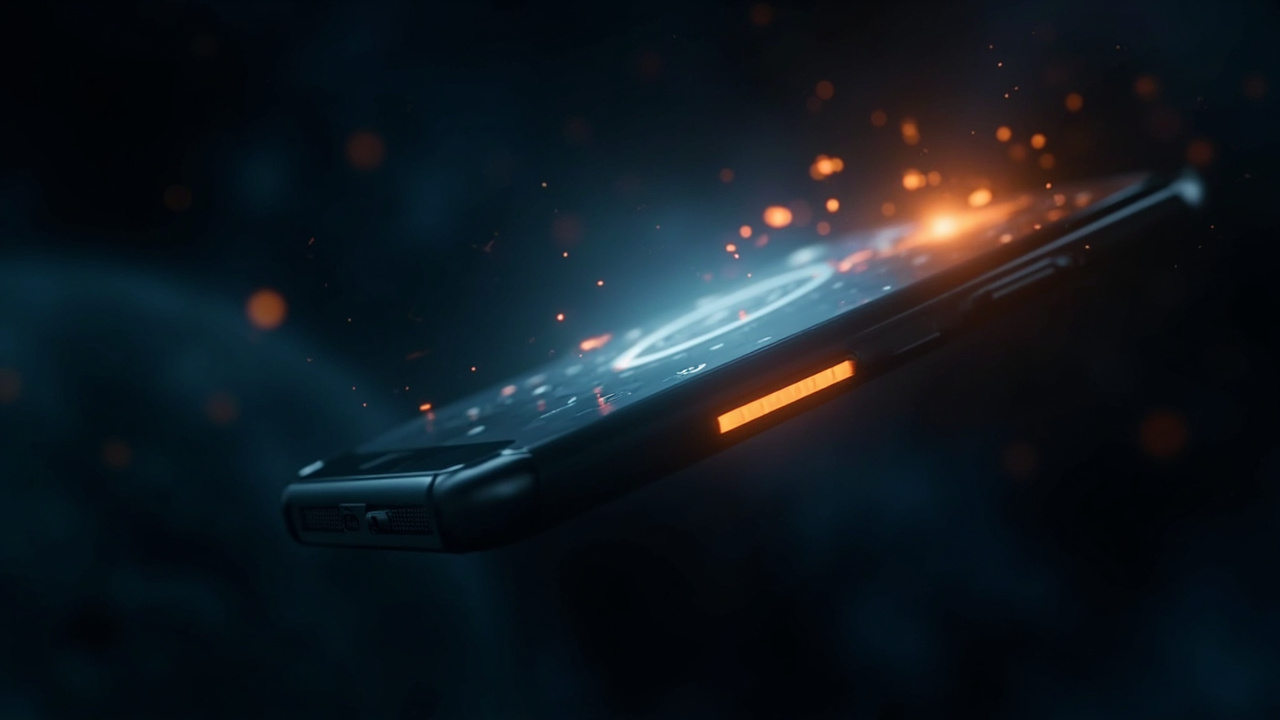
At 2 p.m. Beijing time today, ZTE’s smartphone brand Nubia will take the stage in China to launch the NaviX Ultra — a device the company calls the world’s first mass-produced AI-agent smartphone. After months of teasing that began at the World Artificial Intelligence Conference in Shanghai in July, the phone goes on sale the same day with more than 380,000 pre-registrations already logged across Chinese e-commerce platforms. It is the clearest commercial test yet of a question the entire industry is wrestling with: what happens when the phone itself becomes the agent?
Not an AI phone — an agent phone
The distinction is the whole pitch. Every flagship of the past two years has shipped with “AI features” — photo editing, call transcription, circle-to-search. Nubia argues those are exactly that: features tacked onto hardware. The NaviX Ultra, co-developed with ByteDance and powered by the Doubao AI Phone Assistant, integrates the model at the system level rather than as a standalone app.
“The essential difference is this: previous AI phones were ‘hardware with AI features tacked on’. An AI-agent phone has the phone itself becoming an intelligent assistant,” said Ni Fei, president of ZTE’s terminal business division.
The consumer version of the Doubao Phone Assistant was officially released on September 14, with the NaviX Ultra as its debut device. Users wake the assistant by voice or via a dedicated orange physical button on the side of the phone — a button that includes fingerprint authentication, so sensitive actions can verify identity at the moment of invocation.
What the agent actually does
Nubia frames the device around four core capabilities: understanding natural language, executing tasks across apps, remembering user preferences, and ensuring security. Under the hood sits a system-level Graphical User Interface agent architecture that can read what is on screen and then carry out multistep, cross-application tasks — comparing prices, filling in order forms, completing payments — all triggered by a single voice command, without the user manually hopping between apps.
The crucial engineering detail is how the agent touches those apps. Nubia’s first attempt at this concept, the limited-edition M153 engineering prototype released in December, used simulated human touch to drive third-party apps — a technique that worked technically, sold out instantly, and commanded steep secondary-market markups, but eventually got the device blocked by major platforms. It was automation by brute force.
For the NaviX Ultra, Nubia and ByteDance have moved to the standardized Model Context Protocol (MCP) and A2A (agent-to-agent) protocols — in the company’s own words, shifting “from forced entry to requested access.” Partner apps must proactively expose MCP services and open their data and operational capabilities before the Doubao assistant can interface with them. More than ten partner platforms are already integrated, including Douyin, Luckin Coffee, Qunar, Meituan, and Didi.
That is a meaningful architectural statement. The phone-industry vision of agentic computing only works if apps opt in rather than get hijacked, and MCP — the same protocol standard gaining traction across the server-side AI ecosystem — is becoming the connective tissue.
On-device inference, on-device trust
Another defining choice: core AI model computations run entirely on-device. User data does not need to be uploaded to the cloud, which Nubia says significantly reduces privacy risk. In the Chinese market, that design also slots neatly into the regulatory apparatus — the device completed the full compliance journey from large language model filing with the Cyberspace Administration to terminal network-access certification from the Ministry of Industry and Information Technology, which granted approval on September 1.
The hardware is built to carry that workload. The NaviX Ultra runs on Qualcomm’s Snapdragon 8 Elite Gen 5, paired with high-bandwidth LPDDR5X memory running at 10,667 Mbps from Chinese memory maker CXMT (ChangXin Memory Technologies) — a notable win for domestic suppliers in a flagship-tier device. The rest of the sheet reads like a genuine Ultra: a 6.78-inch 1.5K flat display at 144Hz, a 7,100mAh battery, and four 50-megapixel cameras (three rear covering primary, ultra-wide, and telephoto, plus a 50MP front shooter), in blue, pink, black, and white colorways.
Official pricing will be announced at today’s event, though industry reporting in the run-up — including IT之家 — has converged on a starting price around ¥6,999, reflecting the sector-wide cost pressure from the ongoing memory-supply squeeze. JD.com is already offering pre-order incentives including 24-month interest-free installment and trade-in subsidies of up to ¥1,500.
Why this matters beyond one phone
The launch lands in a shrinking market with an AI-sized exception. IDC forecasts global smartphone shipments could decline 13.9% year-on-year in 2026, driven by memory shortages and component inflation. Yet within that downturn, AI-capable phones are expected to account for 53% of China’s smartphone market this year — roughly 147 million units. AI is no longer a spec-sheet line; it is the differentiator absorbing the industry’s margin pressure.
Analysts see a bigger inflection. “The year 2026 can be regarded as the ‘first year of the agent smartphone’,” Lin Keyu, senior analyst at Counterpoint Research, told China Daily. CITIC Securities argued in a recent research note that AI agents represent a core scenario for AI application deployment, and that their proliferation on end devices will drive a revaluation of the entire consumer electronics supply chain.
There is also a competitive subtext. The NaviX Ultra is effectively the “Doubao phone” — ByteDance’s consumer AI footprint extended from super-app into operating system — and it arrives as Western labs from OpenAI to Meta chase their own hardware gambits. If the agent-phone thesis is right, the battle for the next computing platform may not be won by the best chatbot, but by whoever first makes the device in a billion pockets act on its user’s behalf — with permission, on-device, and in plain sight.