Thirteen Thousand Households, One Delivery Date: UBTECH's U1 Humanoid Companions Reach Their First Buyers
UBTECH begins shipping its UWORLD U1 full-size bionic companion robots to Chinese consumers today — 13,361 pre-orders, 88 degrees of freedom, emotion-recognition AI, and a price ladder running from ¥119,800 to ¥990,000.
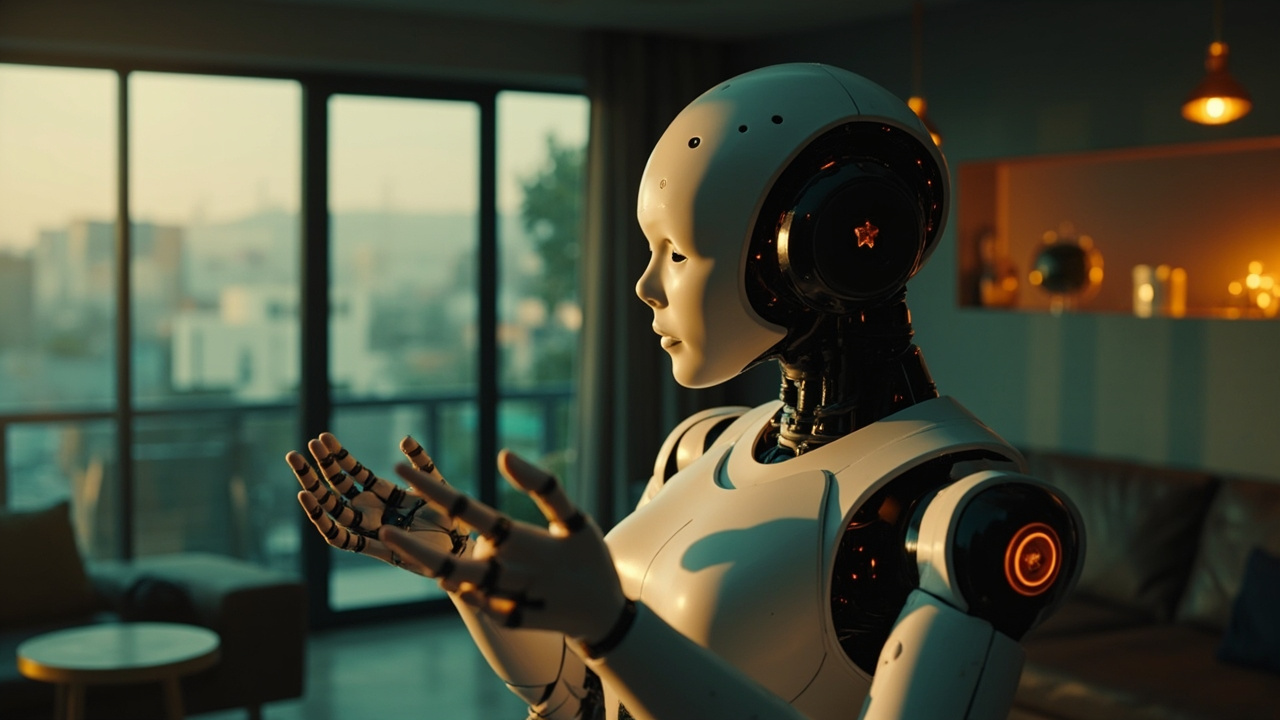
On September 16, 2026, a delivery truck leaves a UBTECH facility in China carrying something no mass-market logistics network has ever moved at scale: a full-size humanoid robot built not to work in a warehouse, but to live in a home. The UWORLD U1, unveiled at the company’s Global Launch Event in Shenzhen on June 30, begins reaching its first buyers today — the opening salvo of a fulfillment campaign covering 13,361 pre-orders, one of the largest consumer humanoid order books ever assembled.
What exactly is shipping
The U1 series is a family of full-size “hyper-bionic” humanoid companion robots, offered in male and female configurations. The male model stands 183 centimeters tall and weighs 42 kilograms; the female model is 168 cm and 35.2 kg. Both share the same mechanical foundation: 88 degrees of freedom across the body and face, soft silicone skin, and an articulation system designed to make gestures, posture, and facial expression read as human rather than robotic.
Three trims span a striking price ladder. The U1 Lite starts at ¥119,800 (about $17,650) — deliberately within reach of upper-middle-class Chinese households, and the configuration most early buyers ordered. The U1 Pro sits in the middle of the range. At the top, the U1 Ultra reaches ¥990,000 (roughly $140,000), a price point that positions it closer to a luxury car than a gadget. UBTECH has said it plans to produce more than 10,000 units in 2026.
The AI inside
What separates the U1 from earlier “companion” robots — largely stationary smart speakers with faces — is the software stack. UBTECH promotes four capabilities as the core of the product:
- Autonomous conversation: the robot initiates and sustains dialogue rather than only responding to wake words.
- Persistent memory: it remembers prior conversations, preferences, and household routines across sessions.
- Emotional inference: on-device models recognize what the company describes as more than 20 distinct human emotions from voice, word choice, and facial cues, and adapt tone accordingly.
- Proactive interaction: the robot can approach a person, suggest activities, or check in when a household member’s pattern deviates from the norm.
Notably, UBTECH emphasizes on-device data processing for sensitive interactions — a design choice aimed squarely at the privacy anxiety that would otherwise attach to a microphone-and-camera-equipped humanoid parked in a living room. Battery life is rated at up to 4 hours of active interaction per charge, with Wi-Fi connectivity throughout.
Why the order book matters more than the robot
Thirteen thousand pre-orders is a number that forces a rethink of the consumer robotics market. For comparison, most social robots in the Western canon — Jibo, Kuri, the consumer Pepper experiment — died in the hundreds-to-low-thousands of units. The U1’s order book is two orders of magnitude larger, and it was assembled in roughly two weeks between the June 30 unveiling and the close of initial pre-sales on JD.com.
Three structural factors explain it. First, demographics: China’s aging population and high urban density of single-person and elderly households create demand for companionship hardware that Western markets distribute across pets, services, and family structures. Second, price discipline: the ¥119,800 entry point is brutal for a full-size humanoid, made possible by UBTECH’s vertical integration and its industrial-line economics — the same company builds the Walker series of labor humanoids, so actuators, joints, and skin systems amortize across product lines. Third, cultural framing: the U1 launched as a household member, not a productivity tool, sidestepping the “what does it actually do?” objection that has stalled Western home robots.
The honest caveats
The gap between a compelling launch and a durable product category remains wide. Reviewers who have spent time with the U1 note that “88 degrees of freedom” produces genuinely expressive movement but that sustained conversation still hits the brittleness ceiling common to all current LLM-based companions. Battery life of four hours means the robot spends most of the day docked. And the emotional-companionship positioning has drawn exactly the skepticism you would expect — UBTECH itself concedes the robot “cannot replace real human relationships,” framing it instead as a supplement for lonely users, elderly people living alone, and families wanting an in-home presence.
There is also a delivery reality check: September 16 opens the fulfillment window, but 13,361 units will not land in a single day. Early batches skew toward the U1 Pro configuration, and industry trackers characterize September as the China delivery window rather than a global launch — international availability remains unconfirmed.
What to watch
The U1’s commercial arc over the next two quarters will test three open questions for the entire humanoid industry. Can companion robotics — the lowest-hanging consumer use case — actually convert pre-order enthusiasm into retention, or does the novelty curve collapse after week three, as it did for every previous generation? Will the emotion-recognition stack and memory system prove genuinely adaptive, or will owners hit the repetitive script wall? And perhaps most consequentially: if a $17,650 companion humanoid sells five figures in China, how long before Western vendors — Meta with its glasses-and-agents strategy, or the Home robot efforts rumored at Apple and Amazon — treat the home humanoid as a serious battleground rather than a novelty?
The factory-to-doorstep journey that starts today is small in the context of the AI industry’s trillion-dollar infrastructure bets. But it may be the more telling signal. Data centers build capability; a robot in the hallway tests whether that capability has anywhere to live.
Deliveries began September 16, 2026, following the June 30 unveiling at UBTECH’s Global Launch Event in Shenzhen. Sources are listed in the article metadata.
Sources
- [1] https://technode.com/2026/07/01/ubtech-unveils-consumer-humanoid-robot-u1-says-orders-secure-11000-ahead-of-first-deliveries/
- [2] https://humanoid.guide/ubtech-lines-up-september-deliveries-for-u1-home-humanoids/
- [3] https://www.chinadailyhk.com/hk/article/635739
- [4] https://www.indexbox.io/blog/chinese-consumers-to-receive-companion-robots-starting-september-16/