Think Small: Anthropic and OpenAI Hunt 20–30 MW Data Center Deals While the Gigawatt Campuses Wait
CNBC reports both frontier labs are sounding out 20–30 MW deployments in the U.K., the Nordics and possibly the U.S. — turning compute procurement into portfolio management as inference demand outruns gigawatt timetables.
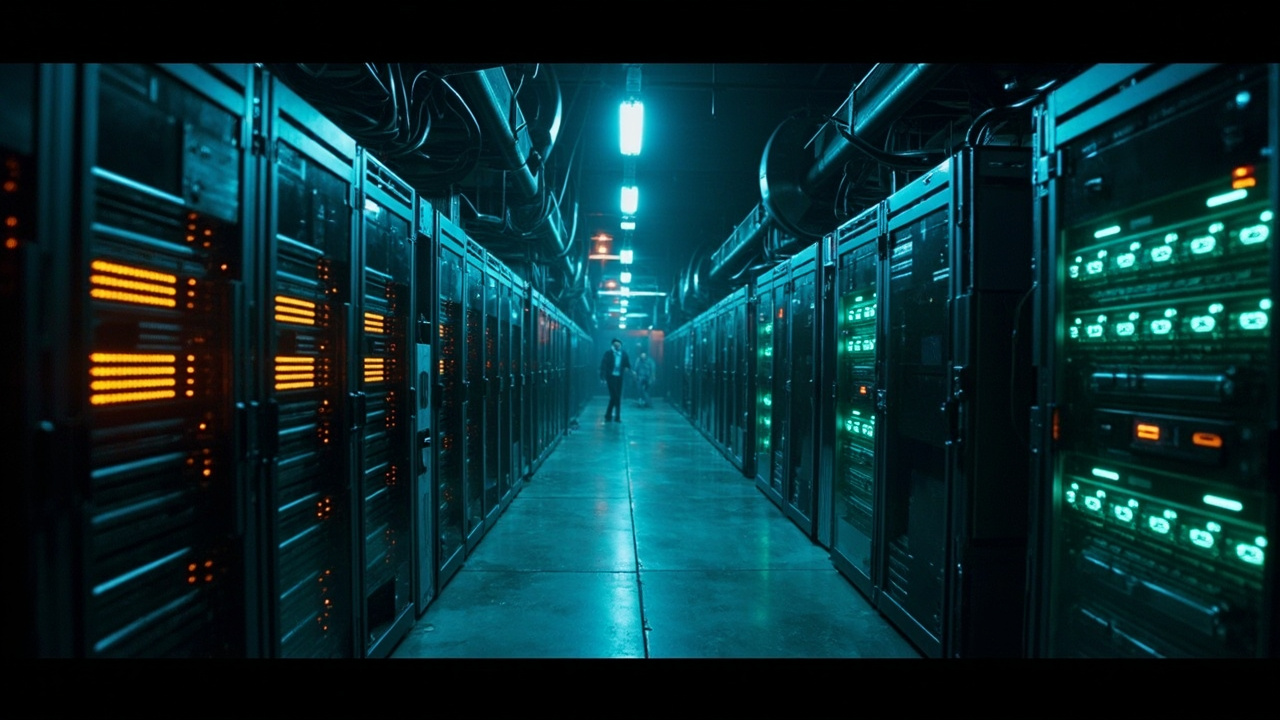
For two years the AI infrastructure story has had one direction: bigger. Gigawatt campuses, hundred-billion-dollar leases, state-sized power draws. On September 18, CNBC reported the opposite move — Anthropic and OpenAI, the two most aggressive compute buyers on the planet, are quietly shopping for data center deals as small as 20 to 30 megawatts.
According to four people familiar with the private discussions, Anthropic has sounded out agreements in that range across the United Kingdom and the Nordic countries. Two sources said OpenAI has explored similar opportunities in the Nordics, and one described conversations involving both labs about U.S. capacity at the same scale. No agreement has been confirmed, and the talks concern potential capacity rather than completed transactions. But the signal is clear: the frontier labs are diversifying how they buy compute, not just how much they buy.
Why small suddenly makes sense
The driver is the changing shape of AI workloads. Training a frontier model requires enormous numbers of chips communicating tightly inside one concentrated cluster — that physics hasn’t changed. But inference, the work a deployed model does every time it answers a user’s request, can be divided and routed across many smaller, geographically separate clusters.
That gives the labs freedom to place production capacity wherever power and space already exist, rather than waiting years for a purpose-built megacampus. Jabez Tan, head of research at Structure Research, framed the appeal to CNBC as “speed to usable capacity”: a few megawatts at an existing powered site can be activated far faster than a large block still waiting on land, permits, transmission lines, and construction.
The demand side of that equation is scaling fast. JLL’s 2026 Global Data Center Outlook projects that inference will rise from 9% of global data center workloads in 2025 to 37% by 2030, overtaking training as the dominant AI workload sometime in 2027. When most of your compute is serving customers rather than gradient descent, a scattered fleet of small sites stops being a compromise and starts being a strategy.
Small is relative
It’s worth calibrating what “small” means here. In an August analysis, cloud provider Nscale — citing NVIDIA executive Rod Evans — estimated that a 20 MW cluster holding roughly 10,000 GPUs can cost nearly $2 billion to stand up. These compact deals are small only next to the gigawatt-scale commitments that dominate headlines.
And those megaprojects are still very much coming. OpenAI says its Stargate program has already surpassed its original 10-gigawatt U.S. infrastructure target. Anthropic announced agreements for up to 5 GW of new capacity with Amazon and another 5 GW of next-generation TPU capacity with Google and Broadcom, expected to begin arriving in 2027. In August, CNBC confirmed a separate arrangement under which Anthropic will rent roughly 460 MW from Nscale at a West Virginia development, valued at around $45 billion. The smaller searches supplement these pillars — none of them replaces anything.
The geography is telling, too. Analysts project Nordic data center capacity will grow roughly twice as fast as Europe’s traditional FLAP hubs (Frankfurt, London, Amsterdam, Paris), where land and power are scarce. The Nordics offer cheap, clean electricity and shovel-ready sites — exactly what a lab in a hurry wants.
The grid is the real bottleneck
Behind the shift sits an uncomfortable reality about physical infrastructure timelines. Lawrence Berkeley National Laboratory reported in June that rapid data center load growth has created bottlenecks slowing large-load grid connections, and RAND has warned that permitting and regulatory delays could prevent some new grid infrastructure from being completed by 2030 at all. The carnage is already visible: at least $156 billion in data center projects were cancelled or delayed in 2025, per Data Center Frontiers data cited by CNBC.
When transmission queues stretch past your product roadmap, an existing 25 MW hall with live power looks like a lifeline. OpenAI’s own footprint illustrates the pressure — the company said its computing capacity more than tripled in 2025 to roughly 1.9 GW, and by mid-2026 it had reportedly added over 3 GW in a single 90-day stretch. Demand for inference keeps compounding while interconnects do not.
Compute as portfolio management
The deeper read is organizational. At Anthropic, compute procurement is a co-founder-level function — Tom Brown, co-founder and chief compute officer, runs the technical organization responsible for securing and scaling the company’s compute. Both labs, each reportedly steering toward potential IPOs with valuations in the trillions, now treat compute the way a hedge fund treats assets: a portfolio of large anchored positions (Amazon, Google, Broadcom, Nscale, Stargate) plus liquid, fast-maturing tactical ones (20–30 MW sites near demand).
Distributed inference also carries real trade-offs. Splitting workloads across regions can improve latency and resilience — Google Cloud’s deployment guidance explicitly recommends multi-region inference for reliability and accelerator availability — but nothing replaces the tightly coupled fabric a training run needs. The open question is how far inference can tolerate being spread out before performance and coordination costs bite.
What to watch
Three indicators will tell us whether this is a trend or a one-off land grab:
- First confirmed 20–30 MW deals — watch UK and Nordic operators’ announcements for frontier-lab tenants; structure (lease vs. capacity contract) will reveal how the labs price flexibility.
- Inference share milestones — if JLL’s 2027 crossover arrives on schedule, expect the small-site market to institutionalize fast, with brokers and powered-shell specialists emerging to serve it.
- Who else follows — if Google, Meta, or xAI begin similar small-lot searches, it marks a structural reordering of how AI capacity gets built: many medium sites woven around a few giant ones.
For now, the era of the gigawatt campus isn’t ending — it’s being hedged. The labs that spent 2025 racing to sign the biggest power deals have discovered that a deal signed today for 2028 doesn’t serve a user in October. Twenty megawatts here, thirty there, close to fiber and substations: unglamorous, fast, and exactly the kind of infrastructure that answers requests while the monuments are still under construction.
Sources
- [1] https://www.cnbc.com/2026/09/18/anthropic-openai-small-ai-data-center-deals.html
- [2] https://runtimewire.com/article/anthropic-openai-smaller-data-center-deals-inference-capacity
- [3] https://superpowerdaily.com/posts/openai-and-anthropic-explore-smaller-data-center-deals-cnbc-reports
- [4] https://invezz.com/news/2026/09/18/anthropic-openai-quietly-chase-smaller-ai-data-centre-deals-report/
- [5] https://blockspace.media/insight/anthropic-openai-data-center-deals/
- [6] https://www.cnbc.com/2026/08/26/anthropic-and-nscale-strike-45-billion-cloud-deal-sources-say.html