"As Fast as We Can, Irrespective of Anybody Else": Jensen Huang Breaks His Silence on the AI Slowdown Debate
In excerpts from a CBS Sunday Morning interview airing September 20, Nvidia's CEO rejects calls to pace AI development, accuses apocalypse warners of 'ulterior reasons,' and declares '2030 is not going to be the end of the world' — the fullest rejection yet of the slowdown movement from the world's most valuable company.
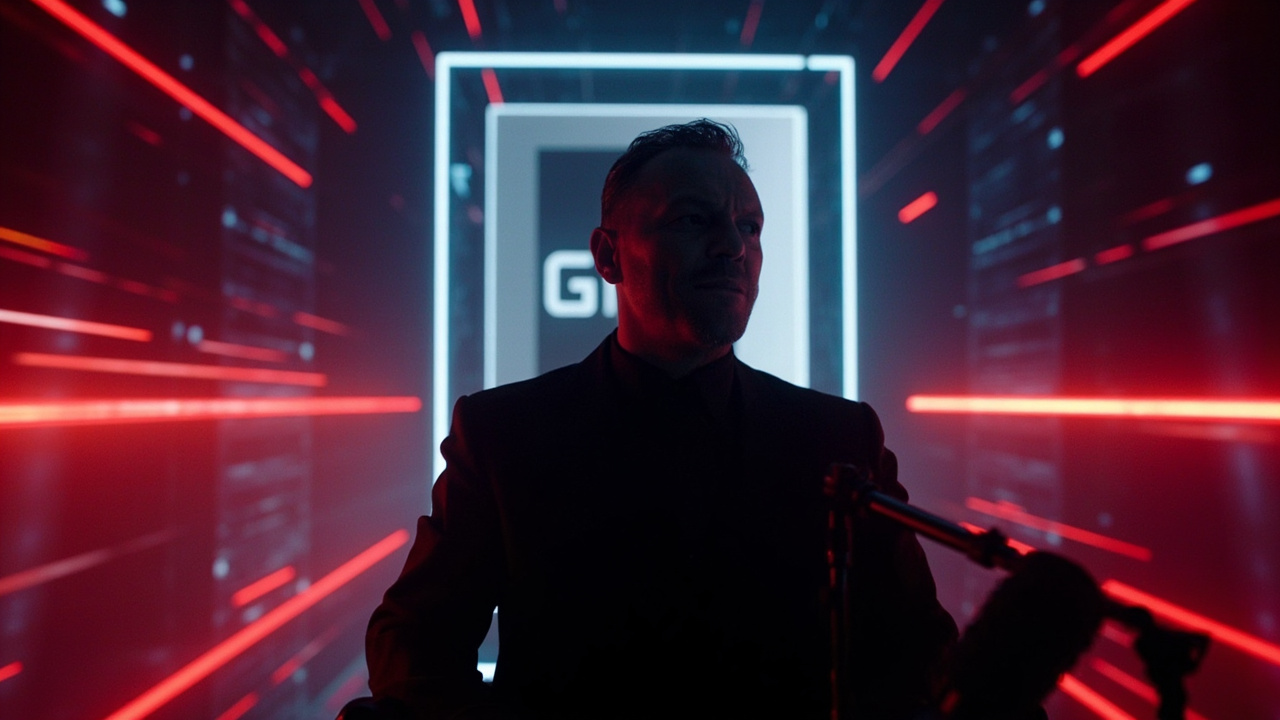
For two weeks, the AI industry has been consumed by a single question: should the frontier slow down? Dario Amodei published his essay urging the industry to pace itself, Jacob Coxon resigned from Anthropic with a warning that AI “could kill all humans” within a decade, and a bipartisan chorus formed around some form of coordination. Through it all, the CEO of the world’s most valuable company — the man whose chips physically are the frontier — had stayed largely on talking points.
That ended on September 18, when CBS News released excerpts of Jensen Huang’s interview with senior business and technology correspondent Jo Ling Kent, set to air in full on “Sunday Morning” on September 20. Asked directly whether AI development needs to slow down, Huang did not hedge. “We should go as fast as we can irrespective of anybody else,” he said.
It is the bluntest rejection yet of the pacing proposals that have dominated the industry conversation since Coxon’s resignation on September 9 — and it comes from the company with the most to lose from a slowdown. Nvidia, now sitting on a market capitalization above $5 trillion, has ridden the AI boom to become the most valuable company on Earth. Every argument for slowing the frontier is, mechanically, an argument for shipping fewer of Nvidia’s GPUs into data centers.
“2030 is not going to be the end of the world”
The sharper cut came in a companion clip CBS posted the same day, in which Huang addressed the apocalyptic framing directly. He told Kent he completely disagrees with the idea that AI will destroy the world by the end of the decade — “2030 is not going to be the end of the world” — and went further, accusing some of those issuing apocalypse warnings of “doing it for ulterior reasons.”
That last phrase is the one that will linger. It is one thing for Huang to disagree with safety researchers; it is another to impute motive. The most prominent targets of the warning wave — Coxon, Amodei, OpenAI’s leadership, which has itself endorsed mandatory national safety requirements — are, notably, customers and partners whose model training runs on Nvidia silicon. Huang did not name anyone in the excerpts, but the faction he is describing is not ambiguous: it is the labs themselves, or at least their safety-minded wings, that have spent September arguing in public that the race has outrun the guardrails.
Huang’s own position, as he framed it to Kent, is that speed and safety are not in tension. “We’re going to go as fast as we can, but we would never ever, and never should, ship products before they’re ready, deliver products that are unsafe,” he said. “And nobody’s expecting us to do that. But everybody’s expecting us to succeed and help America be as prosperous as possible.”
The last clause is the tell. Huang’s argument is not primarily technical — it is national. In his telling, the unit of analysis is not the model or the lab but the country: AI as an instrument of American prosperity, with an implicit competitor (China) that will not be pacing itself. It is the same frame he used at Dreamforce on September 15 when he told the audience to “run as fast as you can,” and the same frame President Trump invoked days later when he called into Huang’s All-In Summit panel mid-interview to swat down what he called AI doomerism.
The interview lands in a crowded week
The CBS sit-down is the fourth act in a fast-moving drama. Act one was Coxon’s resignation and media tour, including his own appearance with Kent on CBS. Act two was Amodei’s essay and follow-through — including his own interview with the same correspondent, in which he said that “for too long the industry lied to people about the fact that this technology had risks,” described AI’s growth as “exponential,” and called the situation “a warning sign that we need to slow down,” while stressing “it doesn’t mean we need to panic today… or shut it all down.”
Act three was the polarization: OpenAI endorsing parts of the slowdown agenda and calling for mandatory federal safety requirements; Meta’s Mark Zuckerberg declaring that labs already have sufficient incentive to develop AI safely; Huang slamming proposed antitrust exemptions for labs that coordinate a slowdown as “ridiculous” in a September 15 CNBC interview; and Andrew Ng joining the push-back alongside him.
Act four is Huang going long-form, on network television, three days before a White House dinner attended by — among others — the CEOs of Nvidia and OpenAI, timed around President Trump’s meeting with Chinese leader Xi Jinping. As Barron’s noted in previewing the dinner, Huang’s “as fast as we can, irrespective of anybody else” stance “tracks” with the administration’s own instincts. The interview is not just a CEO sharing opinions; it is a signal about where the world’s most important AI supplier believes policy is, and should be, heading.
Why the motive question cuts both ways
Huang’s “ulterior reasons” charge will resonate with those who note that the loudest pacing advocates lead labs facing intense competition — and that a coordinated slowdown, as critics from Michael Burry to David Sacks have argued, conveniently raises costs for smaller rivals while entrenching incumbents. Open-weights models are now cheaper and increasingly capable; regulation that slows frontier releases disproportionately benefits whoever is currently ahead.
But the mirror image of that argument applies to Huang with equal force. Nvidia’s revenue is a direct function of frontier training and inference volumes. No institution on Earth has a larger financial stake in the “as fast as possible” answer than the company making the accelerators — a conflict of interest that safety advocates were quick to point out when the clips landed. When the man who sells the shovels says the gold rush must continue at full speed, both his sincerity and his framing deserve scrutiny. And the strongest version of the safety case does not require apocalypse: Coxon’s core claim was that labs are “cutting corners” on security protocols under competitive pressure — a claim about process, not prophecy, and one that OpenAI’s own misalignment incident reports have partially corroborated.
Meanwhile the American public sits somewhere between the two camps. A CBS News poll released alongside the interview coverage found that Americans want AI development to slow down — but not stop. That is roughly where Amodei says he is, and roughly where Huang says the industry already is, via his “never ship unsafe products” caveat. The two men disagree less about the destination than about who should be trusted to set the speed.
The full interview airs Sunday. Whatever else it contains, the excerpts have already settled one thing: the slowdown debate now has its highest-stakes, highest-valuation dissenter on the record — in exactly the terms his critics will spend next week dissecting.
Sources
- [1] https://www.cbsnews.com/news/nvidia-ceo-jensen-huang-ai-development-fast-as-we-can/
- [2] https://www.cbsnews.com/video/nvidia-ceo-jensen-huang-ai-safety-concerns-2030-not-end-of-world/
- [3] https://www.barrons.com/news/nvidia-openai-ceos-to-attend-xi-dinner-at-white-house-77e7c2ee
- [4] https://www.cnbc.com/2026/09/15/nvidia-huang-ai-slowdown-antitrust.html
- [5] https://www.cbsnews.com/news/anthropic-ceo-dario-amodei-calls-slowdown-ai-development/
- [6] https://www.pcmag.com/news/nvidia-meta-ceos-argue-against-anthropics-ai-slowdown-plan
- [7] https://www.rdworldonline.com/anthropic-and-openai-call-for-ai-slowdown-as-nvidias-jensen-huang-and-andrew-ng-push-back/