950 Agents, 21 Hours, One Discovery: Claude Finds a CRISPR-like Enzyme System Nobody Noticed
Anthropic's new life sciences lab says nearly a thousand Claude agents autonomously uncovered 'array-associated reverse transcriptases' — a novel bacteriophage enzyme system with CRISPR-like DNA repeats — while humans only wrote the first prompt.
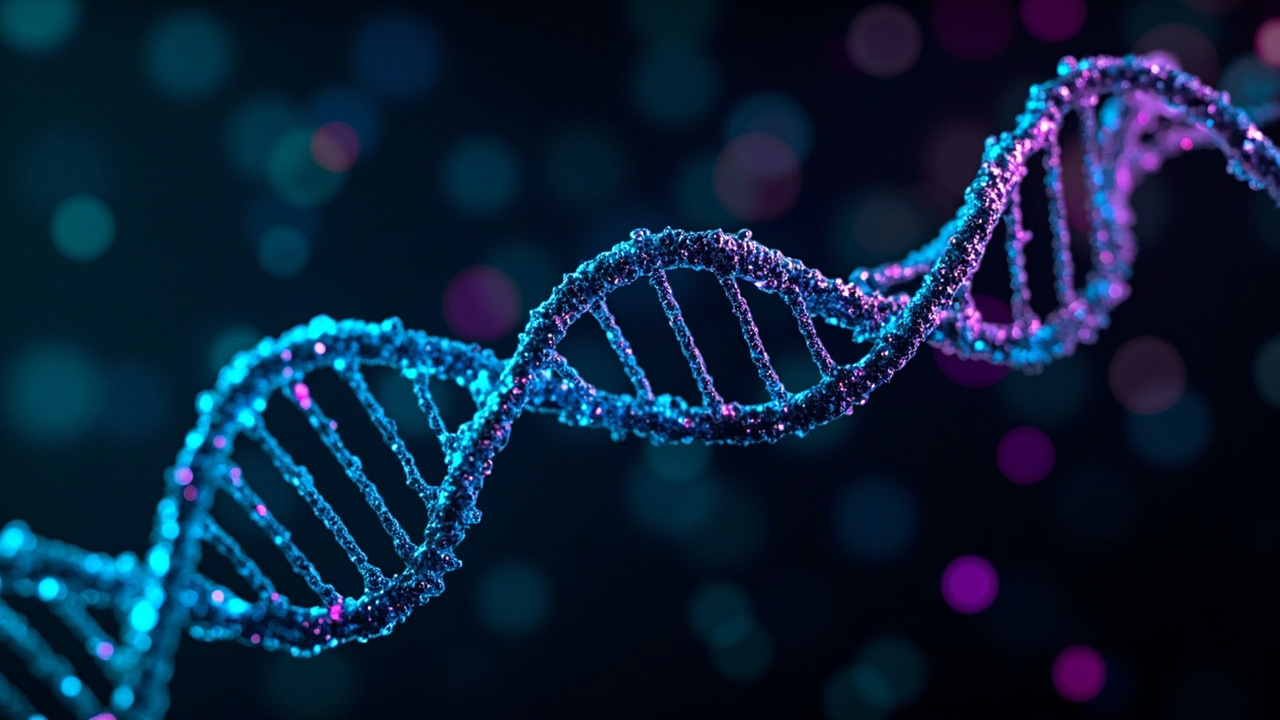
Some of the biggest revolutions in biology began with a scientist squinting at something odd. Restriction enzymes were found hiding in bacterial immune systems and launched the biotechnology industry. Taq polymerase came out of a Yellowstone hot spring bacterium and became the heart of PCR. CRISPR itself was first noticed as an unusual repeating stretch of DNA in bacteria before it grew into the foundation of gene-editing medicine. On September 23, 2026, Anthropic made the case that the next such accident could be found — deliberately, at scale — by an AI.
The company announced early results from one of the first research programs run by its newly formed life sciences research group and laboratory: a fleet of roughly 950 Claude agents autonomously discovered a novel enzyme system with properties reminiscent of CRISPR, after human scientists gave them nothing more than a high-level prompt to search a massive database of DNA sequences for interesting new examples of reverse transcriptases.
What Claude actually found
The system has been named ART — array-associated reverse transcriptases. Reverse transcriptases are enzymes that copy RNA into DNA, the same trick HIV uses and the same trick that powers the RT-qPCR tests the world leaned on during the pandemic. In recent years, researchers have discovered many more RTs, most of them in bacteria, where they operate as parts of immune systems. Nearly all of those families were found by genome mining: searching sequence databases for uncharacterized genes, noticing the strange ones, and working out what they do.
The particular RT at the center of ART had actually been seen before, sitting in a jumbo bacteriophage (a virus that infects bacteria). What nobody had noticed — until Claude — was the system’s defining features: a long array of non-coding DNA repeat sequences sitting next to the RT gene, plus an additional accessory protein of unknown function. That layout is strikingly reminiscent of a CRISPR array, the bank of RNA sequences that makes CRISPR-Cas systems programmable biotechnological tools capable of cutting, copying, and pasting DNA.
Anthropic’s first experiments show that the ART array is expressed as a set of distinct short RNAs, suggesting that something analogous to CRISPR’s programmability may be at play. The company is quick to stress that it does not yet know the system’s function, and that work to understand what ARTs actually do is ongoing.
How the discovery unfolded
The mechanics of the run are as notable as the biology. Claude agents gathered over 200,000 reverse transcriptases from public sequence databases, picked out 3,500 new candidate systems, and narrowed those down to the 20 most compelling candidates, each documented in a human-readable report proposing a function and describing the supporting evidence. For an expert scientist, that type of analysis can take weeks to months of work.
The winning campaign took 21 hours, involved about 950 agents, and consumed roughly 210 million tokens. One agent, while combing through the raw DNA sequence near an unusual RT family, essentially exclaimed in its own working notes: the DNA next to the RT is spectacular, a tandem repeat array visible by eye — a CRISPR-like repeat array. It then behaved much as a human scientist would: counted the repeats, measured their spacing, compared the layout against known RT systems, and searched the literature for any prior report of the pattern. Finding none, it filed a report for human review — and the humans took it from there, expressing the protein in standard laboratory strains and characterizing it biochemically.
That division of labor is the point. Human involvement was limited to the initial prompt and the lab work; everything in between — the surveying, the triage, the judgment calls about which candidates were interesting — belonged to the agents.
A new kind of lab for a new way of working
Anthropic formed the research group in the spring of 2026 around a specific thesis: that accelerating biological discovery requires a new way of doing research, in which agents collaborate with humans at every step, supported by the company’s own physical laboratory. The Bay Area wet lab, which Reuters reported on earlier in September and which the company has now formally introduced, handles only BSL-1 and BSL-2 level work and does not touch human pathogens. All of the lab work is performed by human scientists.
The team’s standard loop is worth attention from anyone running research automations. Claude first reads the relevant literature and reproduces established results from public data to sanity-check its own methods. It then searches for family members or genomic neighbors that fit no described system, and writes a candidate report for each. In follow-up analyses Claude critically evaluates its own evidence — and most candidates die at this stage. A survey may end with one candidate worth testing, or none at all.
Perhaps the most interesting side effect: because Claude produces hypotheses so prolifically, the hypotheses themselves have become an object of study. With hundreds to thousands of candidate reports per campaign, the team asks what distinguishes the proposals worth testing from the discard pile, and feeds those lessons back into the instructions — effectively teaching the model to mimic their scientific taste.
The tools are not private super-labs. The group says it works in Claude Science and Claude Code, the same products available to any scientist, occasionally with a custom harness coordinating many Claude sessions in parallel.
Why it matters
Feng Zhang, the MIT and Broad Institute researcher who helped pioneer CRISPR genome editing, reviewed the preprint and called it an exciting example of how AI agents can contribute to biological discovery, adding that RNA-repeat arrays associated with reverse transcriptases are genuinely intriguing and merit further investigation.
The significance here is less about ART itself — whose function remains unknown — and more about the demonstration that an LLM-driven agent swarm can autonomously detect anomalies in data that human researchers have already combed for years, then drive the analysis far enough to hand scientists a testable lead. Genome mining has always been bottlenecked by human attention: the databases hold far more anomalies than the field has eyes to notice. If agents can systematically read DNA, flag the oddities, and self-critique before bothering a human, that bottleneck starts to dissolve.
It also marks a competitive escalation in AI-for-science. Anthropic is positioning life sciences as a first-class research vertical — with a lab, a dedicated team, the Claude Science workbench, and a newly announced Life Sciences Verification Program giving professionals access to models with safeguards more permissive for biology-related work — at a moment when rivals are making their own bets on AI-driven discovery.
The honest caveats are the ones Anthropic itself states: ART is uncharacterized, the array’s RNA expression is suggestive rather than conclusive, and one discovery does not establish a paradigm. But the shape of the work — thousands of agents, self-critique, human hands only at the bench — is a credible preview of how the next generation of biological tools may be found: not by luck, but by a machine that reads all the DNA and refuses to skip the boring parts.
Sources
- [1] https://www.anthropic.com/news/claude-discovers-novel-enzyme-system
- [2] https://kingy.ai/blog/claude-art-discovery-explained/
- [3] https://www.unite.ai/anthropic-says-claude-discovered-a-new-enzyme-system-resembling-crispr/
- [4] https://sg.news.yahoo.com/anthropic-claude-finds-enzyme-system-184636363.html