Four TPUs in Orbit: Google's Project Suncatcher Flies Its First AI Satellite on October 1
Google's moonshot to move AI compute off-planet reaches its first real milestone: a prototype satellite carrying four TPUs launches on SpaceX's Transporter-18 rideshare on October 1, kicking off a year-long engineering audit of chips in space.
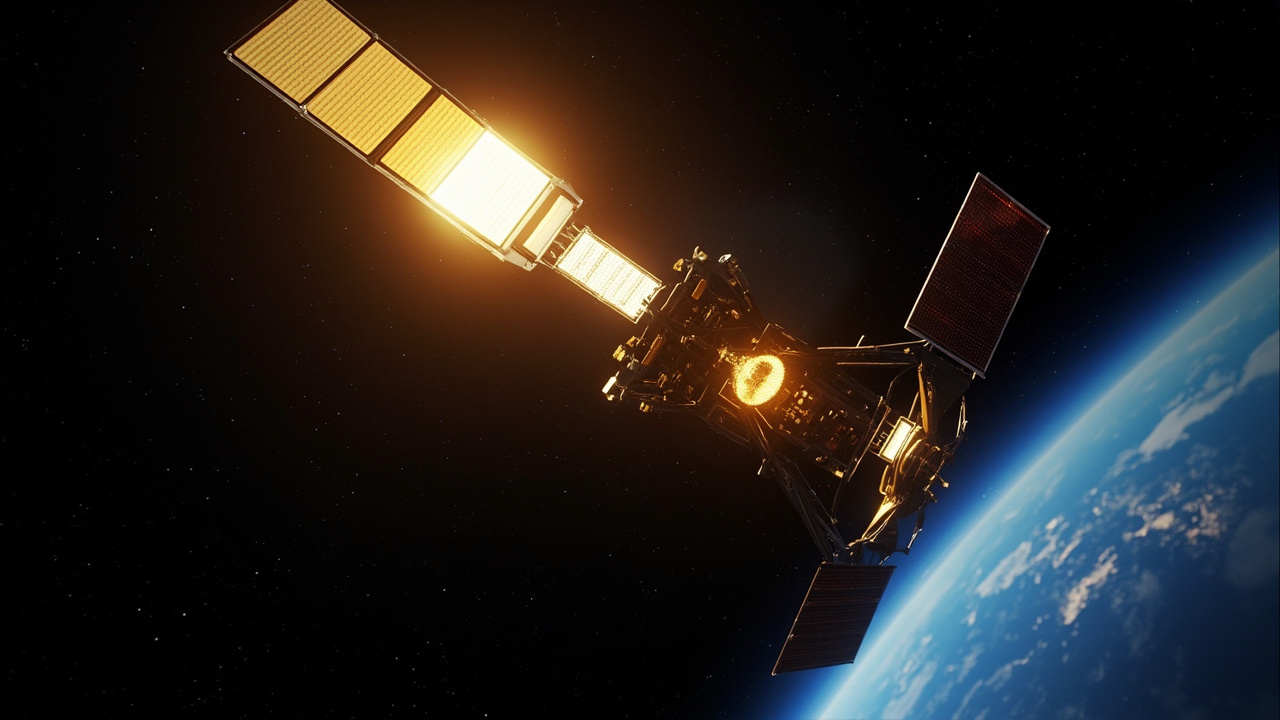
On October 1, a SpaceX Falcon 9 will lift off from the California coast carrying an unassuming rideshare payload: a prototype satellite built with Planet Labs that carries four of Google’s Tensor Processing Units. If everything goes to plan, those chips — the same silicon family that trains and serves Gemini — will spend roughly a year in low Earth orbit being deliberately stressed, cooked, and irradiated. This is the first orbital flight of Project Suncatcher, Google’s moonshot to answer a question that sounded absurd two years ago and now has a business case: can AI data centers work in space?
What exactly is launching
The mission is flying on SpaceX’s Transporter-18 rideshare mission, the workhorse carpool service that has become the de facto launch provider for small satellite experiments. Google developed the payload in partnership with Planet Labs, the Earth-imaging operator that was an early pioneer of aggressively cheap, mass-produced satellite buses. The spacecraft carries four TPUs — a modest count compared to the tens of thousands of accelerators inside a terrestrial AI factory, but the point of this flight is not compute capacity. It is telemetry.
Google describes the first Suncatcher mission as a learning exercise designed to gather in-orbit data and identify potential failure points, not to demonstrate an operational orbital data center. The satellite is expected to operate for about a year, streaming back measurements of how the chips respond to the three killers of space electronics: launch loads, radiation, and heat.
Three ways space tries to kill a chip
The Google engineering team, writing in the project’s announcement, laid out the gauntlet the hardware has to survive.
Launch. The ride to low Earth orbit lasts about ten minutes, during which the spacecraft sustains vibration and acceleration loads up to 10 g. Individual components — including the TPU packages themselves — can see forces of 50 to 100 g. The team shook the satellite on all three axes in ground testing to mimic the frequency profile of a Falcon 9 ascent, and reports being “pleasantly surprised” that the hardware held up.
Radiation. Above the atmosphere, solar events and cosmic rays corrupt electronics in ways terrestrial data centers never worry about, including single-event upsets — the bit flips that silently flip a 0 to a 1 in a weight tensor. Google pre-tested its TPUs in a proton beam at UC Davis’s Crocker Nuclear Laboratory while actually running AI workloads, but the company concedes that some failure modes can only be observed in the real orbital environment. That is precisely what this flight buys.
Cooling. This is the hardest problem. TPUs concentrate enormous heat in a small area, and on Earth that heat is carried away by air or liquid. In a vacuum there is no airflow at all; the only way to dump heat is to radiate it into space, which requires large radiator surfaces and an entirely different thermal architecture. Google’s approach combines heat pipes and radiators, and the orbital test will validate how the new cooling design performs when the chips are actually running. The Verge’s report on the mission notes the current constraint bluntly: as configured, the chips can run for only about 15 minutes before they must be powered down to cool off — a number the team obviously wants to push much higher.
Why bother putting AI in orbit at all
The economic logic is energy. In low Earth orbit, a satellite has access to near-constant sunlight — Google calculates up to eight times more harvestable solar power per unit area than a ground-based installation, with no night cycle, no weather, no land acquisition, and no interconnection queue. At a moment when AI’s electricity demand is colliding with grid constraints, permitting fights, and local opposition across the United States, an orbital site that never petitions a county zoning board has obvious appeal. Space also solves, or at least defer, the water problem: orbital radiators need no cooling water, an increasingly political issue for terrestrial AI buildouts.
The long-term architecture Google has sketched is a constellation: clusters of satellites, each carrying dozens of TPU chips, flying in formation and linked by free-space optical interconnects — high-bandwidth lasers acting as the “network fabric” that a data center normally implements with copper and fiber. In its original design publication, the team envisioned arrays on the scale of 81-satellite clusters spanning roughly a kilometer. The precision required is extraordinary: the satellites must continuously know both their own position and their neighbors’, and hold laser links steady over very short distances at very high bandwidth, a regime most existing optical communication systems — optimized for long range and low bandwidth — were never designed for. The 2027 follow-up mission, two prototype satellites, is specifically tasked with testing those inter-satellite laser links.
Google is not alone in the bet. SpaceX has floated much larger orbital data center concepts, and startups such as Starcloud are pursuing the same thesis. The Standard’s coverage notes the view of outside experts: the concept remains years from commercial viability given launch costs, engineering constraints, and satellite production bottlenecks.
The honest caveats
It is worth being clear about what October 1 is not. It is not a data center, it is not even a node — it is four chips on a diagnostic bus. The 15-minute duty cycle, the unproven laser links, and the sheer launch mass economics of scaling compute in orbit all stand between this mission and anything resembling a production workload. Radiation-hardened compute also usually means slower, older process nodes; Google is implicitly betting that consumer-grade TPUs can survive with error correction and redundancy rather than exotic fabrication.
But the direction of travel matters more than the starting point. Every transformative Google platform — the company cites autonomous driving and quantum computing — began with exactly this pattern: work backward from an audacious end goal, then methodically de-risk it, one hard problem at a time. Suncatcher’s first flight is the “does the hardware even survive” step. If the year of telemetry comes back clean, the 2027 two-satellite laser-link mission follows, and only then does anyone have to answer the genuinely hard question of whether orbital AI compute can ever hit a competitive dollar per token.
For an industry already spending trillions on terrestrial infrastructure, a hedge that costs one rideshare slot on a Falcon 9 is remarkably cheap optionality. The servers are not leaving Earth this week — but for the first time, one of the big three AI labs is flying real silicon to find out if they eventually could.
Sources
- [1] https://blog.google/innovation-and-ai/models-and-research/google-research/google-project-suncatcher-facts/
- [2] https://www.theverge.com/tech/1000015/google-ai-satellite-space-project-suncatcher
- [3] https://www.thestandard.com.hk/innovation/article/343795/Google-plans-first-test-of-AI-chips-in-space-under-Project-Suncatcher
- [4] https://www.nytimes.com/2026/09/24/technology/google-suncatcher-ai-data-center-space.html
- [5] https://research.google/blog/exploring-a-space-based-scalable-ai-infrastructure-system-design/