Four Devices and a Pendant: Inside Meta Connect 2026's Hardware Gamble
Meta's Connect keynote delivered a controller-free VR glasses, camera-free Ray-Ban Audios, Gen 3 Ray-Bans, and a surprise Muse Charm pendant — plus Muse agents that can now use your Mac.
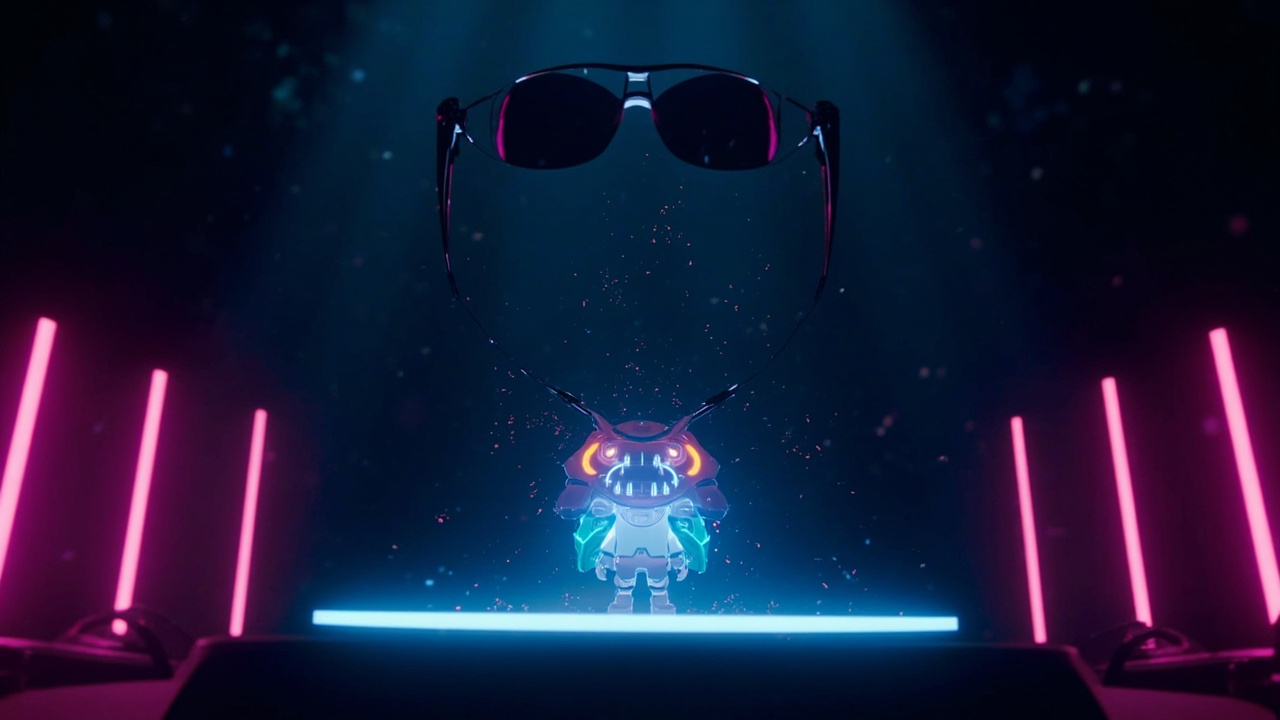
The leaks got the outline right, but not the ending. When Mark Zuckerberg took the stage at Meta’s Menlo Park headquarters on the evening of September 23 for the opening keynote of Meta Connect 2026, everyone expected three things: a thin mixed-reality headset, camera-free audio glasses, and news about Muse, the company’s two-week-old personal AI agent. Meta delivered all three — and then, in classic “one more thing” fashion, delivered a fourth device nobody had on their bingo card: a pendant.
Four Devices, One Thesis
The hardware slate anchors the company’s argument that the agent era needs a physical body, and that the body should be worn, not carried.
Meta VR Glasses (Project Phoenix, shipped early). The headline hardware is the device everyone was calling Phoenix: an ultra-thin VR headset that Zuckerberg framed as aimed at entertainment and productivity — and that Tom’s Guide’s on-the-ground reporter, after a pre-keynote hands-on, declared the moment when “clunky headsets are officially dead.” No controllers: every interaction runs through hands, voice, and eyes, orchestrated by AI built into the operating system. More than 75 “hands-enhanced” VR titles will launch alongside it, including a new version of Beat Saber. Content partnerships lean hard into spectacle: immersive versions of Avengers and Star Wars: A New Hope, plus spatial broadcasts of college football and NBA games that put you on the field. The rumored 2027 timeline was pulled forward, and full-body hologram calling — the Codec Avatars dream rendered consumer-ready — was demonstrated live.
Ray-Ban Meta Audio: the anti-surveillance glasses. The most strategically loaded launch is also the simplest: Ray-Ban glasses without a camera. After a year in which Meta’s smart glasses picked up the “pervert glasses” epithet — a controversy over covert recording that spawned thousands of lawsuits, anti-glasses detection apps, and a genuine consumer backlash — Meta’s answer is a version of its hardware that physically cannot record video. They ship with six microphones and classic Clubmaster frames, and exist to answer one question: can you sell AI glasses to people who don’t want to be seen as creepy, or near anyone who is?
Ray-Ban Meta Gen 3: iteration, not revolution. The camera glasses get a refresh: thinner frames, one additional hour of battery life, a new AI-specific action button, spatial audio recording, a classic Aviator frame, a cat-eye frame called Zena, and a collaboration with Blackpink’s Lisa featuring two styles with stars on the arms, collectible charms, and a special case. Unmentioned on stage but buried in the fine print: the new Hearing Enhancement feature — narrow-focus listening for people with mild to moderate hearing loss — will require a $149.99 one-time fee or a Meta One subscription.
Muse Charm: the surprise. The genuine shocker of the night. A small pendant-style device containing the Muse AI, activated via a fingerprint sensor along its edge, answering questions with no phone connection needed. It carries a screen with the customizable Muse mascot — the character you can already name, customize, and address directly through your glasses. Zuckerberg said only a few units have been built so far, with plans to ship “in time for the holidays.” It is either a charming stocking-stuffer or the first consumer device whose primary interface is an AI agent, depending on who you ask.
The Agent Got a Body — and Your Mac
The hardware was only half the story. The keynote’s middle section was a sustained showcase of Muse, the personal AI agent Meta launched on September 8 that has already displaced ChatGPT as the top free app on the US App Store — and dragged Zuckerberg past Google’s Sergey Brin to become the world’s fifth-wealthiest person on the stock-market bump.
The new capability that matters most: computer use on Mac. Building on the Muse Mac app released last week, the agent can now operate any application on a Mac — and keep working after you walk away. On the productivity side, Muse integrations now span Box, GitHub, and other platforms. On the commerce side, the retailer list has grown dramatically: Walmart, Best Buy, Sephora, Wayfair, Ulta, Gap, Dick’s, Fanatics, and others join Shopify checkout via Stripe’s Link payment system — meaning Muse never touches your credit card itself. An MMA fighter demonstrated Muse building a multi-week workout plan; other vignettes covered branding kits and travel booking.
The business model is blunt: Muse is free for a huge number of tokens, and Meta takes a small fee from transactions. Zuckerberg’s framing — “Muse is going to grow into the personal super intelligence” — is the clearest statement yet that Meta sees the agent, not the glasses, as the actual platform.
Privacy as Product Feature
Facing the smart-glasses backlash head-on, Zuckerberg devoted a meaningful chunk of the keynote to privacy claims. Muse will have privacy “built-in,” including a new secure server architecture that “even Meta can’t look at” — a WhatsApp-style architecture extended to agent memory, with on-glasses “privacy processing” of visual data. He also pointed to the capture LED on Meta glasses as an accountability mechanism.
The timing is not accidental. Beyond the lawsuits and the detection apps, Meta was recently reported to have filed a patent for a hardware kill switch for smart-glasses sensors — a tamper-resistant privacy mute circuit. The camera-free Audios, the privacy-server claims, and the hardware-mute patent all point the same direction: Meta has concluded that privacy anxiety is the single biggest threat to its wearables business, and it is now engineering and marketing against it explicitly. Tom’s Guide’s live-blog poll asked readers whether the keynote did enough to allay privacy concerns — which tells you the company has not yet closed that sale.
The Context That Makes This Keynote Unusual
Three facts frame why this event landed differently than a normal product showcase.
First, the market is expanding faster than the controversy. Global AI-glasses shipments surged 263% year over year in the first half of 2026, and Zuckerberg committed to offering AI glasses in over 100 different styles by the end of the year across Oakley, Ray-Ban, and Meta frames.
Second, the agent-access war is live. Amazon blocked Muse from shopping on Amazon.com last week, citing data-security concerns — and Meta spent this keynote answering with a coalition of the willing: every retailer mentioned above, plus Shopify’s Shop Pay wiring Muse in by default. The agent economy is splitting into fenced ecosystems in real time, and Connect was Meta’s bid to make its fence the biggest.
Third, this keynote happened against the loudest AI-safety week of the year — with US–China AI talks underway in Washington and frontier-lab leaders briefing the UN Security Council. Zuckerberg explicitly positioned Meta as “optimistic versus the doomsdayers of AI in other parts of Silicon Valley.” In a week when his frontier-lab peers were asking governments for guardrails, Meta’s CEO was on stage selling a holiday pendant with an AI inside it.
What to Watch
Day two of Connect (September 24) brings the Developer State of the Union, where the four tracks — VR, AI glasses, AI, and Horizon — get their developer-facing details. The open questions worth tracking: actual pricing and ship dates for the VR Glasses, whether Muse Charm production scales beyond “a few units” by the holidays, whether the camera-free Audios actually rehabilitate the social standing of face-worn computers, and — the quiet big one — what Meta says about its open-weights model strategy now that Muse, not Llama, is the consumer brand carrying the company’s AI story.
The through-line of Connect 2026 is that Meta has stopped selling gadgets and started selling a species of companionship: an agent with a name, a face, a voice you can tune, and now a small screen hanging around your neck. Whether that is the next platform or a very well-produced party trick will be decided not on a keynote stage, but in whether people trust it enough to let it spend their money and see through their eyes.