A Face for the Machine: Gemini 3.8 Live Avatar Puts Real-Time Video Personas Into the Enterprise
Google couples near real-time video generation with speech in Gemini 3.8 Live with Live Avatar — lip-synced personas across 97 languages, asynchronous tool calling, and SynthID watermarking, generally available in Gemini Enterprise.
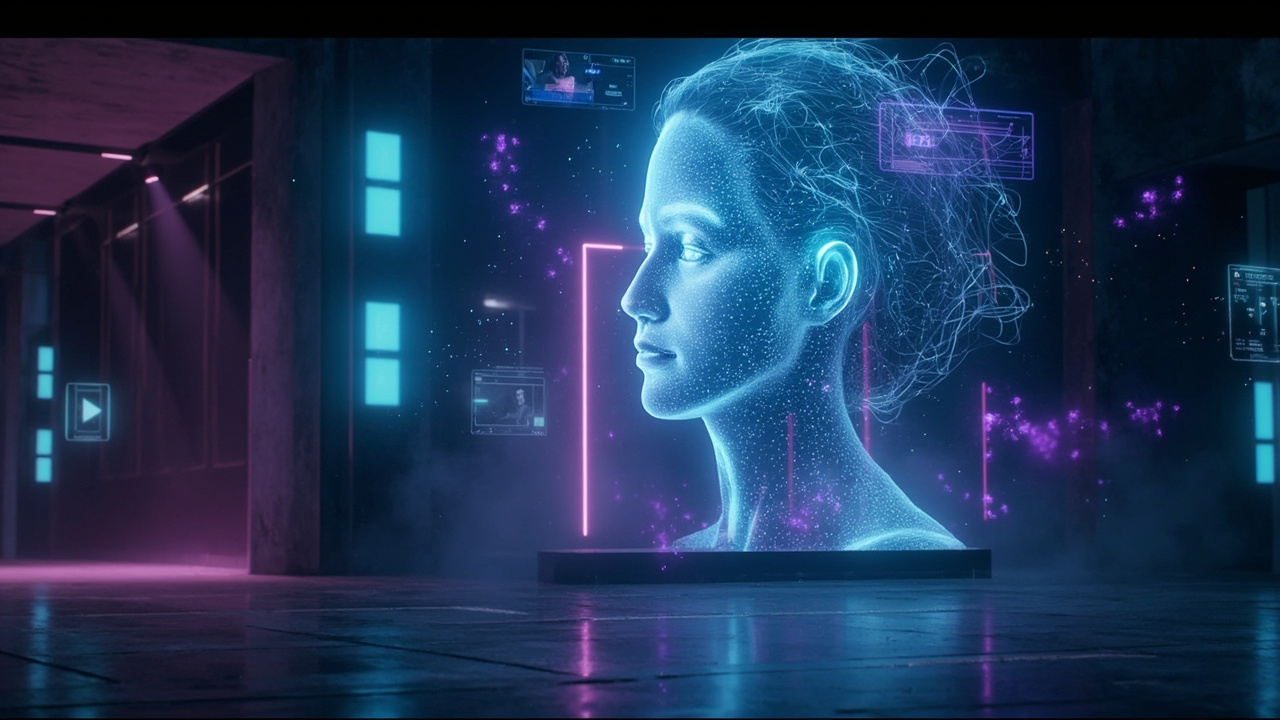
Voice assistants have spent a decade as disembodied audio. On September 24, 2026, Google gave its conversational models a face. Gemini 3.8 Live with Live Avatar, announced by the Gemini Audio Team’s Shuo-yiin Chang and CJ Zheng and made generally available in Gemini Enterprise the same day, couples the company’s native live dialogue stack with low-latency streaming video generation. The result is an AI persona that listens, sees, speaks — and visibly reacts — in near real time.
The release lands one week after Google shipped the underlying Gemini 3.8 Live and Gemini 3.8 Live Extended Thinking models on September 15, which rolled out through the Gemini API, Google AI Studio, the Gemini app, Google Workspace, and Search Live. Live Avatar is the visual layer built on top of that foundation, and it signals where Google thinks enterprise conversational AI is heading: from chat windows and voice menus toward something that looks much more like a talking head — and behaves much more like an agent.
What Live Avatar actually does
At its core, Live Avatar is a streaming video generation system synchronized to a speech model. It processes visual and audio inputs simultaneously — camera feeds, screen shares, and microphone audio — and responds with expressive audio and video in near real time. Google’s demonstrations show precise lip-syncing, natural facial expressions, and fluid turn-taking, including the ability to handle interruptions gracefully without dropping conversation context or backend transactions.
The most technically striking claim is linguistic. Google says Live Avatar features native multilingual speech-to-speech synchronization, dynamically adapting its lip-sync and expressions as the conversation moves across 97 languages — without degrading video fidelity or introducing visual drift. In one published video, the avatar converses in English and Japanese, with mouth movements tracking each language correctly as it switches mid-conversation. Language detection and transition happen automatically, with no manual toggling.
Under the hood, the feature is backed by Gemini’s reasoning stack. Asynchronous tool calling lets the avatar trigger backend actions and fetch data while the dialogue continues uninterrupted — Google’s demo shows it checking a guest into a hotel, pulling up reservation details in the background while keeping the conversation alive. A separate Google Cloud demonstration shows an insurance claims intake agent filling in a claim notebook as a customer shows vehicle damage on camera, while an agent team built with Google’s Agent Development Kit verifies the policy, applies intake rules, and assembles the adjuster packet behind the scenes.
Deployment targets span web, mobile, and interactive kiosks — a hint that Google envisions these avatars living in lobbies, retail counters, and support portals rather than only in a browser tab.
The model card details
The Gemini 3.8 Audio model card, published by Google DeepMind in September 2026, fills in the technical picture. The family — Gemini 3.8 Live, Live Extended Thinking, Flash TTS, and Flash-Lite TTS — is based on Gemini 3 Pro rather than a smaller or specialized architecture. That matters: Google is pushing its flagship-tier model into real-time conversational serving, betting that inference economics have improved enough to make that viable at enterprise scale.
Inputs for the Live variants are audio, images, video, and text with a context window of up to 128K tokens. Outputs are audio and text with a 64K token limit — but when Live Avatar is enabled, output becomes audio, video, and text with a tighter 24K token cap, presumably to keep video generation within latency budgets. The model card notes that the Live Avatar variants “generate expressive videos of natural head movements and speech synchronization based on configured images and audio inputs,” and candidly lists a session limit: a few minutes of continuous interaction rather than extended hours. General foundation-model limitations — hallucinations, jailbreak resistance, occasional slowness — carry over, though Google says Frontier Safety mitigations were recently strengthened.
Organizations can pick from a library of diverse preset avatars or generate custom ones. From a single high-quality reference image, developers can produce a fully animated, responsive avatar that preserves reference likeness, brand styling, or character identity. Custom avatar creation is gated behind enterprise allowlisting, which Google frames as an identity safeguard and misuse control. The Extended Thinking variant with Live Avatar remains in private preview.
Watermarks and trust
Google embedded transparency measures directly into the feature. Every audio and video stream Live Avatar produces is watermarked with SynthID, the company’s imperceptible provenance signal woven into output pixels and audio. For a system whose entire purpose is generating convincing human faces, this is not a footnote — it is the difference between a customer-service innovation and a deepfake pipeline. Google also says Live Avatar was built with safeguards “designed to respect identity,” and the allowlisting process for custom avatars functions as a verification layer on top.
The skepticism writes itself: an enterprise-grade machine that generates photorealistic talking humans, lip-synced across 97 languages, is exactly the technology misuse scenarios are made of. Google’s answer is that detection infrastructure ships with generation infrastructure — SynthID on every stream, allowlists on custom likenesses, and enterprise-grade data governance on the endpoints. Whether that balance holds as the tech diffuses beyond allowlisted customers will be one of the defining governance questions of the next year.
Why this matters
The timing is telling. Live Avatar was first previewed at Google Cloud Next 2026, and its general availability now — with US and EU endpoints, provisioned throughput, and enterprise compliance — positions it squarely against the wave of “digital human” startups while leveraging infrastructure few competitors can match. Running real-time video generation on top of a Gemini 3 Pro-class model requires inference capacity that only a handful of players possess.
It also reframes the interface race. OpenAI’s ChatGPT voice mode made audio conversational; Meta’s smart glasses put assistants on faces; Apple keeps reimagining Siri. Google’s move is to make the assistant itself the face — a branded, expressive persona that can man a kiosk, walk a customer through an insurance claim, or check you into a hotel while quietly orchestrating agent teams in the background.
The limitations are real: minutes-long sessions, a 24K output cap with video enabled, and an enterprise-only fence around the most powerful capabilities. But as a statement of direction, Live Avatar is unambiguous. The era of conversational AI as a faceless voice is ending, and the enterprise front desk is where it ends first.
Sources
- [1] https://blog.google/innovation-and-ai/models-and-research/gemini-models/gemini-3-8-live-with-live-avatar/
- [2] https://www.theverge.com/tech/1000328/google-gemini-ai-live-avatar-face
- [3] https://www.unite.ai/google-brings-live-avatar-visual-presence-to-gemini-3-8-live/
- [4] https://deepmind.google/models/model-cards/gemini-3-8-audio/