1.44 Million GPUs and a 1.2 GW Power Plant: SpaceXAI's Colossus Nears the Finish Line
SpaceXAI is adding 660,000 GB300 GPUs this year to reach 1.44 million in operation, backed by its own 1.2-gigawatt power plant in Mississippi — the endgame of Musk's two-year million-GPU bet.
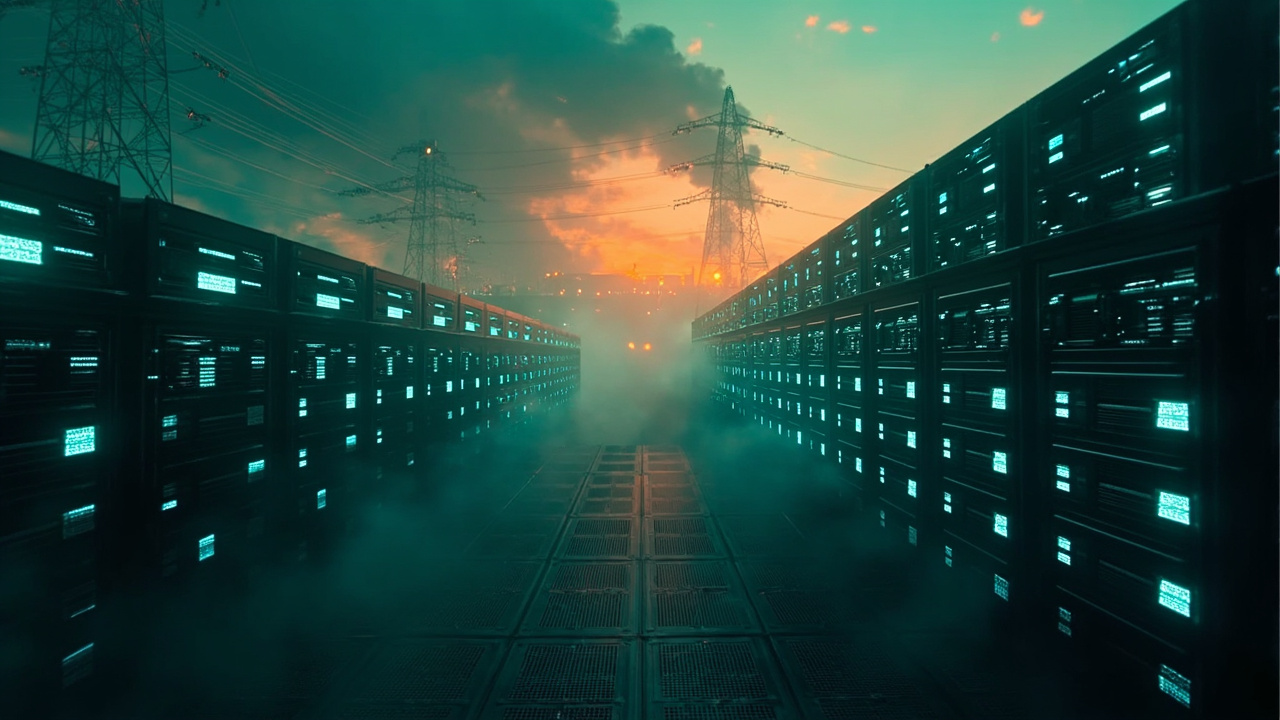
Nearly two years after Elon Musk first announced plans to expand the Colossus supercomputer past the one-million-GPU mark, the end goal is finally in sight. SpaceXAI is adding another 660,000 AI GPUs this year, which will bring its total fleet in operation to roughly 1.44 million units — and the company is building a dedicated 1.2-gigawatt power plant in Mississippi to bring all of those systems fully online.
The numbers behind the milestone
The breakdown, as reported by Tom’s Hardware, is a snapshot of just how quickly the Memphis–Southaven corridor has become the densest concentration of AI compute on Earth:
- Colossus 1 (Memphis, Tennessee): 150,000 Nvidia H100, 50,000 H200, and 30,000 GB200 GPUs.
- Colossus 2 (Southaven, Mississippi): 110,000 GB200 and 440,000 GB300 GPUs already operating, with another 220,000 GB300s said to be operational “by next week,” a further 220,000 coming online in November, and — “if we get lucky,” in Musk’s words — yet another 220,000 by late December.
Add it all up and SpaceXAI’s GB300 fleet alone would reach 1.1 million units, with total GPUs in operation hitting 1,440,000. Epoch AI’s independent data center tracker already lists Colossus 2 as an operational facility hosting an estimated 1,112,000 H100-equivalents of AI compute — a figure that will only climb as the remaining tranches land.
There is a strategic wrinkle in the older hardware too: Colossus 1’s H100 fleet is no longer reserved for training frontier models. According to the report, that capacity has effectively been rented out to Anthropic for inference workloads, turning the original site into a revenue-generating inference farm while Colossus 2 — which runs exclusively on Blackwell-generation GPUs — handles the training push without Hopper-era bottlenecks.
Power: the hard part SpaceXAI decided to own
Getting a million GPUs was, somewhat remarkably, never the hardest part of this project. Musk famously lobbied Nvidia CEO Jensen Huang directly for early allocations, and the silicon is now flowing. The genuinely scarce resource is electricity, and SpaceXAI’s answer has been to bring its own.
That approach has not been without controversy. The company was fined for running unpermitted gas turbines near the site, a dispute that ended with an agreement to keep the turbines running for only one more year — precisely the window in which its own 1.2-GW power plant is scheduled to come online. To put that capacity in perspective: 1.2 gigawatts is roughly comparable to the output of a large nuclear plant, dedicated almost entirely to feeding accelerators in a two-building campus straddling the Tennessee–Mississippi border.
The plant is being built in Mississippi, adjacent to the Colossus 2 site in Southaven, and is the reason Musk can credibly promise that the final 660,000 GPUs will be “fully operational” rather than merely installed. In an industry where many gigawatt-scale projects are stalled behind grid interconnection queues, owning generation outright is SpaceXAI’s structural advantage.
Not alone in the million-GPU race — but ahead of schedule
SpaceXAI is not the only player chasing seven-figure GPU counts. Broadcom said back in 2024 that it had three hyperscale customers each gunning for a million GPUs by 2027, though it never named them. The difference is timing: SpaceXAI is closing in on the target in 2026, a full year ahead of that horizon, and on a single contiguous site rather than spread across regions.
For Musk, this milestone is explicitly a beginning rather than an endpoint. He has said SpaceXAI will increase its data center capacity sevenfold by 2027, and he has floated a target of 50 million H100-equivalent GPUs by 2030 — a number that, taken literally, would require energy infrastructure on the scale of a small nation. The plans are not limited to the ground either: SpaceX has discussed an Orbital Data Center System that could eventually involve on the order of a million satellites, an idea Nvidia’s Jensen Huang has charitably called “a dream.”
What it means
Three takeaways worth watching as the final tranches come online:
- Compute concentration is accelerating. A single company controlling 1.44 million GPUs — over a million of them Blackwell-class — represents a meaningful share of world AI compute, and it is being used to train Grok-family models while monetizing legacy capacity through the Anthropic inference deal.
- Energy has become the binding constraint, and vertical integration is the response. Between the gas-turbine controversies, the purchased-overseas power plant, and the 1.2-GW Mississippi build, SpaceXAI’s real differentiation is less about GPUs (which rivals can also buy) and more about how fast it can energize them.
- The competitive bar has moved. When Broadcom’s three anonymous customers hit their million-GPU marks in 2027, they will be arriving at a milestone SpaceXAI will have passed the year before — with Musk already promising a 7x expansion on top of it.
For now, the next checkpoints are concrete and near-term: 220,000 GB300s live within days, another 220,000 in November, and the last tranche — luck permitting — before the year is out. The million-GPU era of AI infrastructure is no longer a roadmap slide; it is a construction site on the Mississippi border, with its own power plant next door.
Sources
- [1] https://www.tomshardware.com/tech-industry/data-centers/elon-musks-spacexai-to-add-another-660-000-ai-gpus-this-year-nearing-a-total-of-1-44-million-in-operation-firm-is-building-1-2-gigawatt-power-plant-to-bring-systems-fully-online
- [2] https://epoch.ai/data/ai-data-centers/directory/colossus-2
- [3] https://en.wikipedia.org/wiki/Colossus_(data_center)
- [4] https://x.ai/colossus