Tenfold Ramp, Ten Thousand Snags: Tesla's Optimus Meets the Hardest Part to Build — the Hand
The Information reports Optimus output is up roughly tenfold to several hundred robots a week, but the humanoid's intricate 50-actuator hands have become the primary manufacturing bottleneck standing between Tesla and its 1,000-a-week goal.
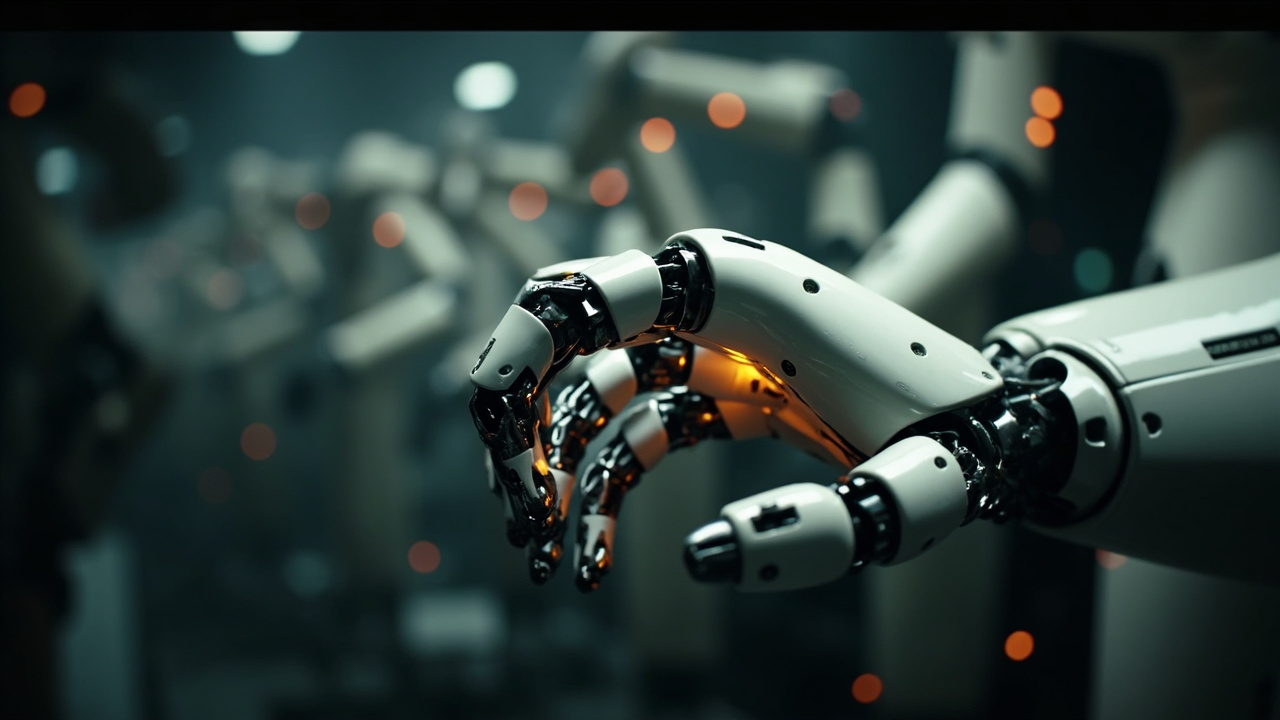
At a moment when Wall Street has largely priced Optimus as a 2027–2030 story, the robot has quietly entered the phase Tesla knows best and dreads most: production hell. According to a report in The Information published September 25, Tesla has increased production of its Optimus humanoid roughly tenfold in recent months — from several dozen units a week in the second quarter to several hundred a week as of last week. But the same report details why the ramp is grinding: the robot’s intricate hands have become the primary manufacturing bottleneck, and suppliers are struggling to keep pace with the parts that make them work.
The headline number is genuinely impressive on its own. A tenfold production increase in a matter of months is the kind of curve Tesla has drawn before — first with the Model 3 in 2017–2018, then with the Model Y ramp during the pandemic. Several hundred humanoids a week also puts Tesla among the highest-volume humanoid makers on the planet, at a moment when most competitors are still celebrating triple-digit annual totals. Whatever else is true, Optimus is no longer a trade-show prop program.
The hand is the hard part
The problem is what sits at the end of both arms. Optimus’s hands are extraordinarily complex for a mass-manufactured product — on the order of 50 actuators and 22 degrees of freedom per hand in recent designs, with tendon-driven fingers that must be both strong enough to manipulate tools and delicate enough not to crush them. Every one of those actuators is a precision assembly of micro-gearboxes, sensors, and wiring that has to survive thousands of manipulation cycles.
The Information’s reporting describes the hands as posing “major manufacturing and durability challenges.” In practice, that means assembly complexity that resists automation, parts that wear out faster than expected under real workloads, and failure rates that would be acceptable in a prototype lab but are ruinous on a line trying to hit four-digit weekly output. Independent analysis estimates that at true mass scale Tesla would need north of 50 million micro-gearboxes — a demand profile that simply does not exist anywhere in today’s supply chain, and would stress even established precision-gear suppliers.
It is a physical replay of a familiar Tesla pattern. The Model 3’s “production hell” was, at its core, a battery-module automation story. The Cybertruck’s slow ramp was a stainless-steel exoskeleton story. Optimus’s ramp is a hand story — and the hand is the component where Tesla has the least precedent to borrow from, because no one has ever mass-produced a manipulator this dexterous at this volume.
Suppliers can’t keep up
The second front in the report is the supply chain. Complex hand assembly is hard enough inside Tesla’s own factories; the parts pipeline feeding it is harder. Supplier constraints and failures of automated assembly equipment are reportedly challenging Tesla’s goal of building 1,000 Optimus robots per week — the near-term milestone the company has set for itself — and the report describes that figure as merely a step toward an eventual target of 20,000 robots per week, a number that would require a supply chain an order of magnitude beyond anything the robotics industry has ever assembled.
Context matters here. Tesla is preparing to end Model S and Model X production at Fremont and convert those lines to Optimus, and Musk has talked about a million robots a year at the plant at full build-out. Earlier this year reports surfaced of component orders in the hundreds of millions of dollars and a Nomura analysis suggesting Tesla had raised its internal Optimus volume expectations. The tenfold ramp suggests those plans are real. The bottleneck reporting suggests the physical world is imposing its usual veto — on Tesla’s schedule, if not its destination.
What it means
Three takeaways worth separating from the noise.
First, the bottleneck is informative, not disqualifying. Every mass-manufactured complex machine has a binding constraint at this stage, and finding it is what a ramp is for. Tesla’s particular skill has historically been iterating through constraints faster than incumbents believe possible. The bear case isn’t “the hands are hard”; it’s “the hands are hard and the durability problem doesn’t converge” — units that wear out in the field create a service burden that compounds with fleet size.
Second, watch the supplier ecosystem as much as Tesla. If Optimus is real at scale, the shortage won’t be AI talent — it’ll be precision actuators, micro-gearboxes, tendon materials, and tactile sensors. The companies that solve those at automotive-grade volume become picks-and-shovels beneficiaries regardless of which humanoid wins. That thesis now has a dated, public data point behind it.
Third, the stock reaction tells you the narrative has shifted. Shares fell as the hand story overshadowed Tesla’s Semi launch coverage in the same news cycle — a sign investors are now marking Optimus progress week by week rather than treating it as a free call option. Musk has said he expects the majority of Tesla’s value to eventually come from Optimus. That cuts both ways: the program now moves the stock on manufacturing scuttlebutt, not just keynote demos.
None of this changes the long-term question — whether a general-purpose humanoid can be built at consumer-electronics cost and automotive-industry volume. It does tell us where the fight currently is: not in the neural nets, and not in the actuators of the legs or torso, but in the last thirty centimeters of the arm. The hand, as it turns out, is the robot.
~900 words
Sources
- [1] https://www.theinformation.com/articles/teslas-optimus-hits-snags-hands-suppliers-scale-up-begins
- [2] https://www.investing.com/news/stock-market-news/tesla-faces-production-challenges-with-optimus-robot-hands-report-says-4917600
- [3] https://gadgetsnow.indiatimes.com/tech-news/tesla-optimus-production-reaches-several-hundred-robots-a-week-but-hands-and-suppliers-remain-a-challenge/articleshow/134488626.cms
- [4] https://eletric-vehicles.com/tesla/tesla-stock-falls-as-optimus-hand-snags-overshadow-semi-launch/