The Jet That Never Spun: Crusoe Walks Away From Its $1.25 Billion Boom Turbine Deal
Crusoe has scrapped its plan to power AI data centers with Boom Supersonic's jet-derived gas turbines, ending a $1.25 billion launch partnership and resetting the playbook for behind-the-meter AI power.
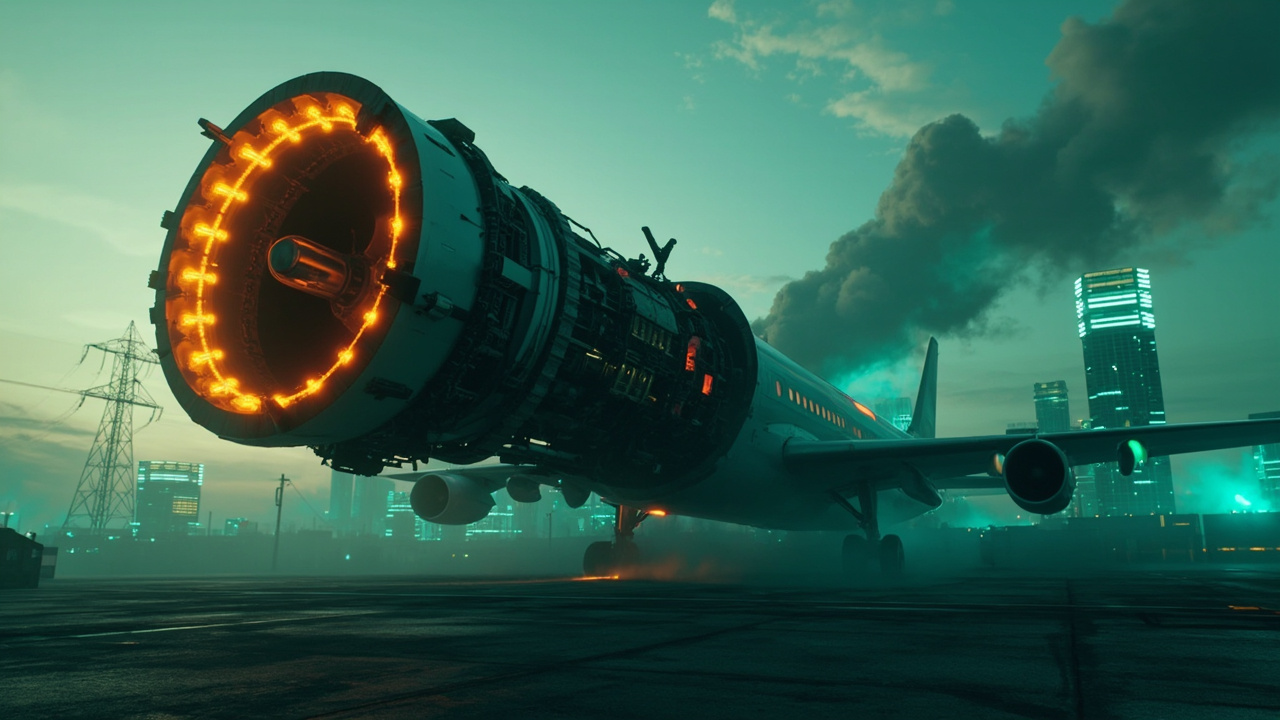
One of the more colorful bets in the AI power gold rush just came apart. Crusoe, the Denver-based data center developer whose Abilene, Texas campus supplies computing power to OpenAI, has ended plans to use Boom Supersonic’s stationary power plants at its AI data centers — unwinding a $1.25 billion agreement that was supposed to anchor an entirely new category of energy hardware: the jet engine repurposed as a grid-optional gas turbine.
The news landed quietly on Friday, in a post on X from Boom CEO Blake Scholl, who congratulated Crusoe founders Cully Cavness and Chase Lochmiller on their recent $3.9 billion raise before delivering the kicker: the two companies are no longer moving forward with the turbine launch partnership. “The TL/DR is that turbines are no longer part of Crusoe’s near term primary power mix at Abilene/etc., so a launch partnership just didn’t make sense,” Scholl wrote. He was quick to add that other customers remain in Boom’s pipeline — about 250 megawatts of Superpower turbines are slated for delivery to other sites next year, with a 1-gigawatt target for 2028.
A deal born of desperation for speed
To understand why this deal existed at all, you have to rewind to late 2025, when the binding constraint on AI infrastructure was not chips but electricity. Grid interconnection queues in the United States routinely stretch to five or seven years, and data center developers were desperate for power they could stand up on their own schedule, behind the meter.
Enter Boom Supersonic — a company founded to build a supersonic passenger jet called Overture. Boom had designed a jet engine, Symphony, and realized that a ground-based variant could be sold as a natural gas-fired stationary power plant. The “Superpower” turbine shares roughly 80% of its parts with the airborne engine. Each unit delivers 42 megawatts, and in December 2025 Crusoe signed on as the launch customer: 29 turbines, more than a gigawatt of capacity (1.21 GW), $1.25 billion in contract value, with first deliveries planned for 2027. Boom raised $300 million largely on the strength of that order, with a stated plan to use turbine profits to fund development of the Overture airliner itself.
For Crusoe, the logic was equally compelling. Founded in 2018 as a bitcoin miner that ran on excess natural gas from oil fields, the company has remade itself into one of the biggest builders of AI data centers in the country. Its 1.2-gigawatt Abilene campus — built for Oracle and OpenAI as part of the Stargate buildout — is powered by the grid, with a gas-turbine plant on site used strictly for backup. A second, 900-megawatt Abilene campus under construction for Microsoft will rely on on-site gas turbines. On-paper, jet-derived turbines looked like a way to replicate that energy-first playbook at new sites without waiting on utilities.
“The right energy for each site”
Crusoe confirmed the split to TechCrunch, framing it as portfolio management rather than a falling-out. “We build AI factories from the power up, and we’re bringing new campuses online across the country, powered by innovative energy sources,” spokesperson Andrew Schmitt said in an email. “As our portfolio grows, we stay flexible, choosing the energy solutions that are right for each site as its needs evolve — including turbines, along with wind, solar, batteries and the grid. While Boom has been a great partner, the partnership isn’t the right fit today.”
Read closely, that statement says something interesting about how the power market has shifted in nine months. When Crusoe signed the Boom order, the prevailing assumption was that every new AI campus would need to generate its own electricity because grid power simply wouldn’t arrive in time. Since then, utilities and grid operators facing political pressure over data center growth have moved faster, and large customers have proved more willing to pay premium rates for firm interconnection. On-site gas has gone from the default answer to one option in a menu that increasingly includes wind, solar, batteries, and — crucially — the grid itself.
There is also a scheduling reality: Boom’s first turbine deliveries were not due until 2027. For a company like Crusoe, which just raised $3.9 billion at a $30.9 billion valuation and is racing competitors to bring capacity online, committing over a gigawatt of future campuses to an unproven, first-of-a-kind product carries real risk. Mature aeroderivative and industrial turbines from established manufacturers can be procured today, with known performance curves and delivery guarantees.
What it means for Boom
Losing a launch customer is a genuine setback for Boom’s power ambitions. The Crusoe order represented the majority of Boom’s publicly disclosed turbine backlog, and it served as the reference design partnership that validated the whole Superpower concept — adapting an engine designed for supersonic flight into a product that could be manufactured at scale in Colorado and shipped to data center campuses.
Scholl’s post argues the business remains healthy: 250 MW delivering next year to other sites, 1 GW targeted in 2028. But until those customers are named, Superpower goes from “proven by its biggest buyer” back to “promising but unproven.” The stakes are higher than they look, because Boom’s strategy was explicitly to use stationary power revenue to cross-subsidize Overture development. A slower turbine ramp means more fundraising pressure on the aviation side, or a longer road to cash-flow independence.
The bigger picture: AI’s power plans are getting boring — and that’s a signal
The most telling detail in the whole story is buried in Crusoe’s own description of Abilene: the flagship 1.2 GW campus runs on grid power, with gas turbines only for backup. That is a quiet reversal from the 2025-era narrative in which frontier AI campuses were expected to be energy islands, sourcing their own gas, building their own solar, and severing themselves from utilities altogether.
If the lesson of the past year holds, the winners of the AI buildout will not be those who bet on any single exotic power source, but those who kept optionality — grid deals where the grid is fast, on-site turbines where it isn’t, batteries to bridge, and contracts flexible enough to swap the mix as economics change. Crusoe walking away from a billion-dollar-plus commitment rather than letting a 2025 bet constrain its 2027 campuses is arguably the most rational move in the story.
For an industry that spent two years treating electricity as an afterthought behind model releases and GPU counts, the maturity is showing. Power is now a board-level procurement decision, renegotiated quarter by quarter. Jet-engine turbines may still find their niche — Scholl insists other sites are waiting — but the era of betting a gigawatt campus on a single startup’s first product appears to be over.
The AI data center boom is not slowing down. It is just growing up, one canceled deal at a time.
Sources
- [1] https://techcrunch.com/2026/09/26/crusoe-abandons-1-25b-plan-to-use-boom-turbines-at-ai-data-centers/
- [2] https://finance.yahoo.com/technology/ai/articles/crusoe-abandons-1-25b-plan-231110885.html
- [3] https://techcrunch.com/2025/12/09/boom-supersonic-raises-300m-to-build-natural-gas-turbines-for-crusoe-data-centers/
- [4] https://techcrunch.com/2026/09/17/crusoe-raises-3-9b-to-build-massive-data-centers-and-small-modular-ai-factories/
- [5] https://www.datacenterdynamics.com/en/news/crusoe-orders-121gw-of-natural-gas-turbines-from-prototype-airliner-co-boom-supersonic/