The $1.25 Billion Turbine Divorce: Crusoe Drops Boom's Supersonic Engines Weeks After Raising $3.9B
Weeks after closing a $3.9B Series F, Crusoe has cancelled its $1.25B order for 29 Boom Supersonic gas turbines — the clearest signal yet that AI's power crunch is entering its consolidation phase.
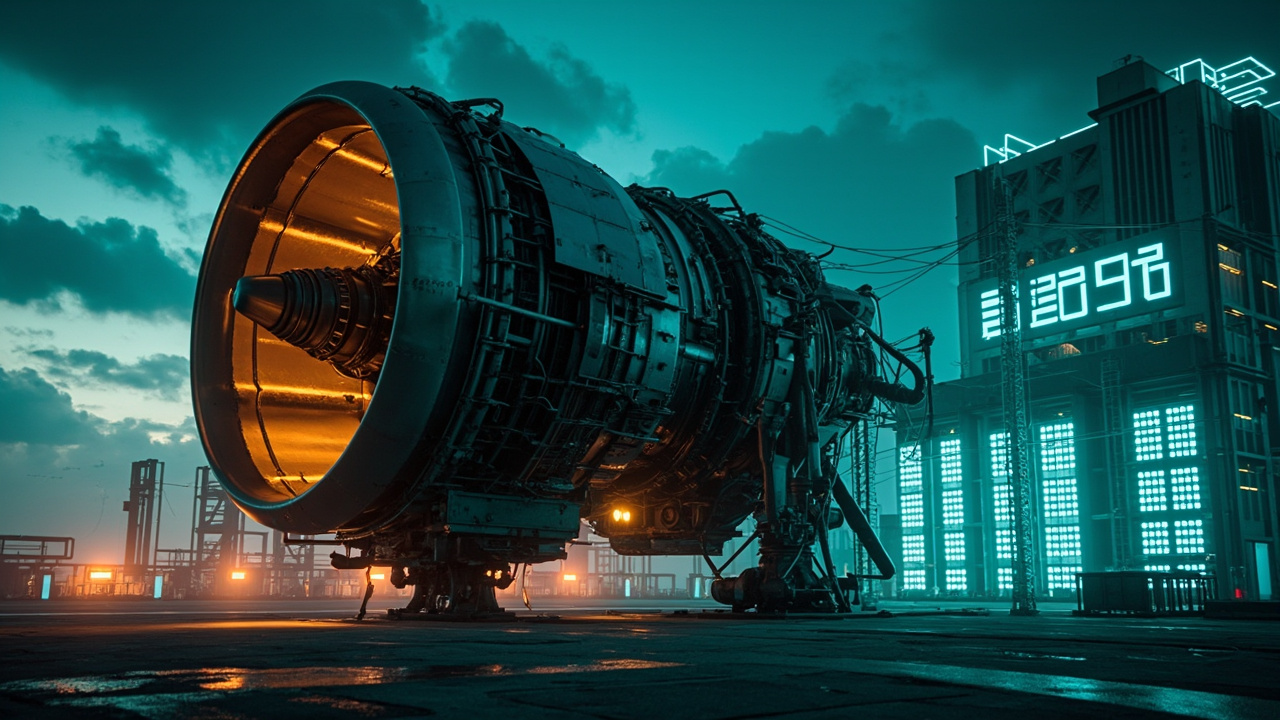
Nine months ago it was the perfect symbol of the AI buildout: Boom Supersonic, the startup building a supersonic airliner, would adapt its jet engine into a 42-megawatt stationary gas turbine, and Crusoe — the Denver company building some of the largest AI data centers in America — would buy 29 of them for $1.25 billion, becoming the launch customer for a product line called Superpower. On September 25, 2026, that marriage quietly ended.
What happened
Boom founder and CEO Blake Scholl broke the news himself, in a post on X at 22:37 UTC: “Crusoe and Boom are no longer launching our Superpower turbine together.” Scholl added that Boom “will be delivering about 250MW of Superpowers next year to other sites, and we’re targeting 1GW in 2028.” TechCrunch, which first reported the cancellation, summarized his explanation bluntly: the stationary power plants were simply “no longer in Crusoe’s near-term plans.”
The cancelled order was enormous by any standard. Twenty-nine turbines at 42 megawatts each works out to roughly 1.21 gigawatts of generation capacity — enough to power a mid-sized city, and enough to make Crusoe the anchor tenant of Boom’s entire new energy business. Boom had raised a $300 million funding round in December 2025 specifically around the Superpower launch, with Crusoe’s order as its centerpiece, and Baker Hughes had separately secured a 1.21-gigawatt generator order to support the program.
Notably, this is a deferral at Crusoe, not a collapse at Boom. Boom says it still expects to deliver around 250 MW of turbines to other customers in 2027 and scale to roughly 1 GW of deliveries in 2028, though it has not named those customers. The product line survives. What died is the flagship deal that was supposed to prove it.
The timing is the story
What makes the cancellation remarkable is when it landed. Crusoe announced the initial close of a $3.9 billion Series F on September 17, 2026, at a $30.9 billion post-money valuation, with Nvidia among the investors. The round was framed around Crusoe’s “vertically-integrated AI infrastructure” — data centers, power, and cloud, with contracted capacity reportedly topping 6 GW.
Eight days later, it walked away from a $1.25 billion power procurement it had publicized heavily. The same month, reporting emerged that Crusoe had stepped back from a planned Wyoming AI campus — a 1.8-gigawatt project that Bloomberg reported it was pressured to leave after Google raised concerns about costs and timetable, and which Crusoe publicly characterized as a “pause.”
Read together, the pattern is hard to miss: a company with $3.9 billion of fresh capital is trimming its most experimental commitments. The AI infrastructure layer is starting to behave like every other capital-intensive industry before it — ruthlessly prioritizing projects with signed offtakers and predictable delivery, and shelving bets on unproven hardware.
Why the deal made sense in the first place
To understand why Crusoe signed, and why it pulled back, you have to understand the physics of the AI buildout. Frontier training clusters now consume hundreds of megawatts each, and grid interconnection queues in the United States routinely stretch five years or more. Data center developers have responded by going “behind the meter” — generating their own power on-site, usually with natural gas.
Boom’s pitch was elegant: the company was already developing the Symphony engine for its Overture supersonic airliner. Packaging a derivative of that engine as a 42-MW, water-free, quickly deployable turbine let Boom sell into a market with effectively unlimited demand, while Crusoe got generation capacity on a timeline the grid could never match. The deal was announced with a straight line from jet engine to AI megafactory, and it worked as narrative precisely because both companies were doing audacious things.
The problem with audacious timelines is that they collide with audacious customers. Crusoe’s flagship Abilene, Texas campus — built to serve Oracle and OpenAI’s Stargate program, and expanded toward 1.2 GW — is running against aggressive schedules, with independent analysts at Epoch AI estimating earlier this year that only a fraction of the site’s capacity was energized and that the campus was tracking months behind its original mid-2026 target. When your end customers are OpenAI and Oracle, you optimize for the generation you can energize now, from vendors with delivery track records — GE Vernova’s aeroderivative turbines, for instance, which Crusoe has also ordered — not the vendor whose product is still scaling toward its first full-year shipments.
What it means for the AI power stack
The boring interpretation is the most likely one: Crusoe has more options than it did in December 2025. It has $3.9 billion more, a $30.9 billion valuation, and a live relationship with Nvidia. It doesn’t need to take early-adopter risk on a novel turbine to prove it can power its sites. That is a luxury of strength, not distress.
But there is a broader read too. The first phase of the AI infrastructure race rewarded anyone who could promise power. We are now entering the phase where the promises get audited. Treasury yields at multi-year highs have raised the cost of the debt that funds these projects; Goldman Sachs sized the AI capex cycle at $1.2 trillion through the decade. In that environment, unproven generation hardware is the easiest line item to cut — and the companies that survive consolidation will be the ones whose power mix leans on delivered megawatts, not press releases.
For Boom, losing a launch customer stings, but the demand fundamentals behind Superpower have not changed: interconnection queues are still years long, and every AI campus still wants on-site generation yesterday. If Boom can name replacement customers for its 250 MW of 2027 deliveries, the Superpower program will be judged a slower success. If it can’t, September 25 will look like the moment the AI power bubble’s first anchor deal came loose.
Either way, the divorce is a milestone: the first billion-dollar-plus power deal of the AI era to be publicly unwound — not because the power isn’t needed, but because the buyer decided the risk no longer fit.
Sources
- [1] https://techcrunch.com/2026/09/25/crusoe-abandons-1-25b-plan-to-use-boom-turbines-at-ai-data-centers/
- [2] https://boomsupersonic.com/press-release/boom-supersonic-to-power-ai-data-centers
- [3] https://x.com/bscholl/status/2103614826862010443
- [4] https://techcrunch.com/2026/09/17/crusoe-raises-3-9b-to-build-massive-data-centers-and-small-modular-ai-factories/
- [5] https://www.crusoe.ai/resources/newsroom/crusoe-announces-series-f-funding
- [6] https://www.datacenterdynamics.com/en/news/crusoe-orders-121gw-of-natural-gas-turbines-from-prototype-airliner-co-boom-supersonic/