Starship Reaches Orbit at Last: Flight 14 Clears the Path for Space-Based AI Compute
SpaceX's Starship completed its first-ever orbital insertion on Flight 14, deploying 26 Starlink V3 satellites and unlocking the launch capacity behind orbital AI data centers.
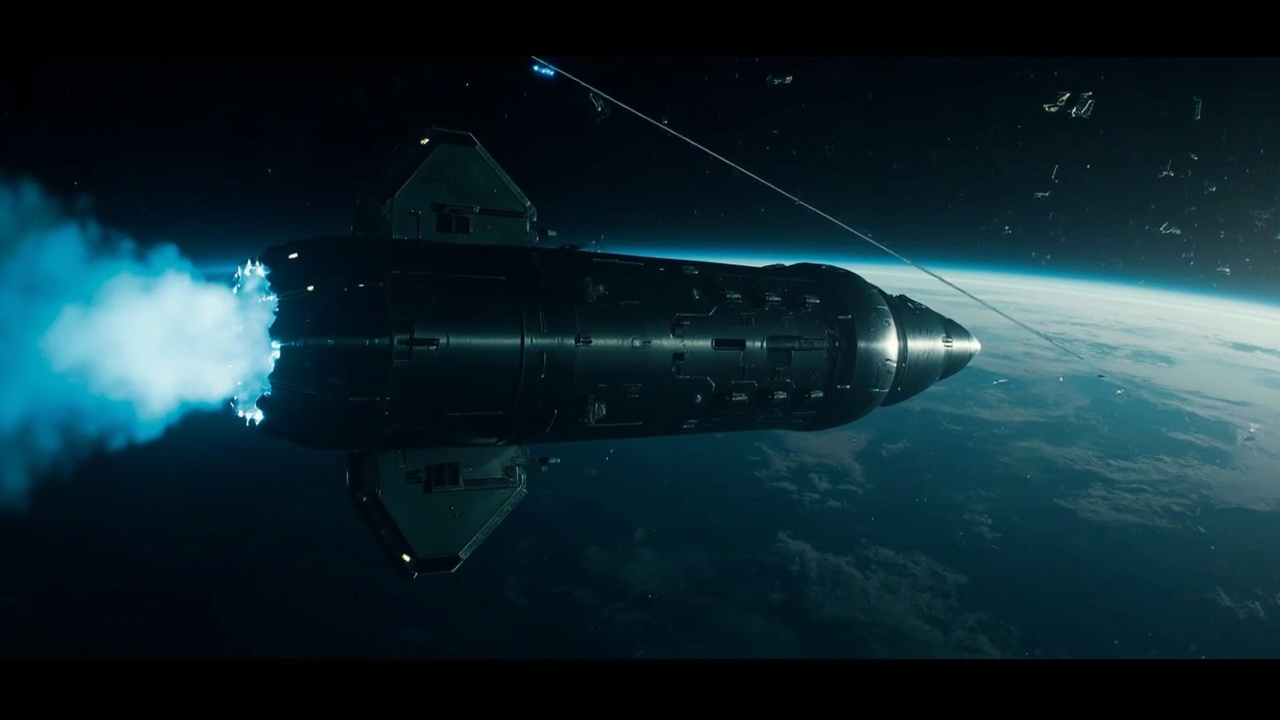
For five years, SpaceX has promised that Starship would someday deliver “Mars-class” cargo capacity to orbit — and for five years, the giant stainless-steel rocket kept falling short of the one milestone that matters most: reaching orbit. On September 28, 2026, that wait ended. On its 14th test flight, Starship’s upper stage performed an orbital insertion burn, entered orbit around Earth for the first time, deployed 26 Starlink V3 satellites, and then survived a scorching re-entry before a controlled splashdown in the Indian Ocean.
For the space industry, it is a historic first. For the AI industry, it is something more concrete: the removal of the single biggest logistical bottleneck standing between today’s ground-bound GPU farms and the orbital data centers that SpaceXAI, Nvidia, and a wave of startups are betting on.
What happened on Flight 14
Flight 14 lifted off from Starbase, Texas, during a 75-minute window that opened at 7:15 a.m. local time, after a short slip to 8:48 a.m. EDT. For the second flight in a row, all 33 Raptor engines on the Super Heavy booster lit cleanly and burned for full duration during ascent — the kind of routine, boring reliability that SpaceX has spent 13 previous flights grinding toward.
The booster separated cleanly, and hot-staging of the ship went as planned. The Super Heavy booster then attempted its landing burn over the Gulf of Mexico, where only 8 of the 13 planned engines reignited before a hard splashdown — the one notable anomaly of the day, and one SpaceX will scrutinize ahead of the tower-catch attempt on a future flight.
The ship, however, flew a near-textbook profile. After coasting through space, the upper stage ignited an orbital insertion burn — a 19-second firing that placed Starship in orbit around Earth for the first time in the program’s history. “Starship performs its orbital insertion burn and enters orbit of Earth for the first time,” SpaceX posted as the burn completed.
From orbit, Starship got down to its first real job: deploying 26 Starlink V3 satellites, the rocket’s first “active” commercial payload. The V3 generation is a generational leap over today’s Starlink satellites — each one capable of 1 Tbps downlink capacity, laser interlinks measured in terabits, and, crucially for this story, enough onboard compute and thermal headroom to act as a node in a distributed orbital network. Payload deploy was confirmed complete with all 26 satellites in orbit.
The flight then wrapped up a roughly two-hour-plus mission profile that included a deorbit burn started successfully at T+2:12:11, atmospheric entry, and a transonic pass before splashdown — with the ship surviving a re-entry that, for the first time, occurred in conditions closer to a true orbital-velocity return.
Why the AI industry was watching
It is easy to file this under “space news.” It isn’t. Starship is now the load-bearing wall of an entire architectural bet on where AI compute lives.
Since SpaceX acquired xAI in February 2026 — folding Grok, the X platform, and the AI division into what is now SpaceXAI — the company’s stated direction has been unmistakable: vertical integration from silicon to orbit. Orbital data centers promise something ground-based AI factories cannot: essentially unlimited solar power without weather or night, radiator-grade heat rejection into a 3 Kelvin sky, and no land, water, or grid-interconnection queues to fight over. Musk has argued that Starship’s 100+ ton reusable payload capacity is what converts orbital AI compute from a slide-deck fantasy into an engineering roadmap.
The pieces are already being assembled. SpaceXAI has announced Starmind, a joint project with Nvidia to build AI data centers in orbit using space-based efficiencies. Starcloud, a Sequoia-backed startup, demonstrated a GPU satellite in orbit in 2025 and has been building out the laser-linked backbone that would let orbital clusters behave like a single distributed machine. And each Starlink V3 satellite launched today is itself a small compute-and-bandwidth node — a platform that scales toward the million-satellite orbital data center concepts SpaceX has filed for with regulators.
None of that scales without cheap, high-cadence, heavy-lift launch. A single Starship V3 flight in fully reusable configuration is designed to loft over 100 metric tons to low Earth orbit — roughly 50 V3-class satellites per launch. The napkin math that makes orbital AI data centers even arguable depends on launch costs falling an order of magnitude, and that depends on Starship flying, reusing, and flying again. Today it flew — to orbit.
The competitive context
The timing is sharp. The same day, Nvidia authorized a record $150 billion addition to its buyback — a statement of just how much cash is sloshing through the AI supply chain — while Washington debated AI policy and Goldman Sachs sized the AI capex supercycle at $1.2 trillion. Nearly all of that capital is currently destined for ground-based AI factories in Texas, Malaysia, and Finland.
SpaceXAI’s wager is that this is a transitional architecture. If Starship’s cadence scales the way Falcon 9’s did — from a once-a-year gamble to more than one launch per week — the economics of putting compute above the atmosphere start to invert within a decade. Philip Johnston, CEO of Starcloud, has argued space becomes “the primary location for AI compute infrastructure” within ten years; Ars Technica’s reporting on the engineering suggests much of the needed technology is already flying in prototype form on Starlink satellites.
There are skeptics, and they have real arguments: radiation hardening, on-orbit servicing, thermal engineering at GPU densities, and the sheer mass of cooling systems all remain unsolved at scale. Today’s flight also carried reminders that Starship is still a test program — the booster’s hard splashdown shows the reuse loop is not closed yet, and a single orbital flight does not establish the weekly cadence that the business models require.
But the direction is now demonstrated rather than promised. The vehicle that orbital AI compute depends on has proven it can do the one thing it had never done: reach orbit, deliver a payload, and come home.
What comes next
SpaceX has said it will attempt a tower catch of the Super Heavy booster on a forthcoming flight — the final piece of full reusability for the booster — while iterating toward Starship V3, the version sized for 100+ ton reusable payloads. On the SpaceXAI side, expect Starmind demonstration missions and progressively larger orbital compute payloads to ride on exactly this vehicle.
For an AI industry already straining against power interconnection queues and land-use fights, the message from Starbase today was blunt: the ceiling on AI infrastructure may not be the sky. It may just be launch cadence.
For now, one milestone is banked. Starship has been to orbit — and the first 26 Starlink V3 satellites it carried are already up there, quietly routing traffic as the earliest scaffolding of a network that may one day host the compute behind the models you use every day.
Sources
- [1] https://www.spacex.com/launches/starship-flight-14
- [2] https://www.reuters.com/business/media-telecom/spacexs-starship-launches-14th-flight-first-headed-orbit-2026-09-28/
- [3] https://www.nytimes.com/2026/09/28/science/space/spacex-starship-first-orbital-flight.html
- [4] https://www.forbes.com/sites/jamiecartereurope/2026/09/28/spacexs-starship-reaches-orbit-for-first-time-in-historic-flight-14/
- [5] https://www.cnn.com/2026/09/28/science/live-news/spacex-starship-flight-14-launch
- [6] https://en.wikipedia.org/wiki/Starship_flight_14
- [7] https://www.leonarddavid.com/spacex-starship-flight-14-mission-details-outlined/
- [8] https://arstechnica.com/space/2026/07/how-hard-is-it-to-build-orbital-data-centers-actually/