From Chips to Concrete: Samsung Puts $1 Billion Into KKR's Helix as the AI Infrastructure Race Goes Vertical
Samsung Electronics and five affiliates are committing a combined $1 billion to Helix Digital Infrastructure, the KKR-launched AI data center venture backed by NVIDIA and Vistra — the conglomerate's biggest step yet beyond selling components and into owning a slice of the AI buildout itself.
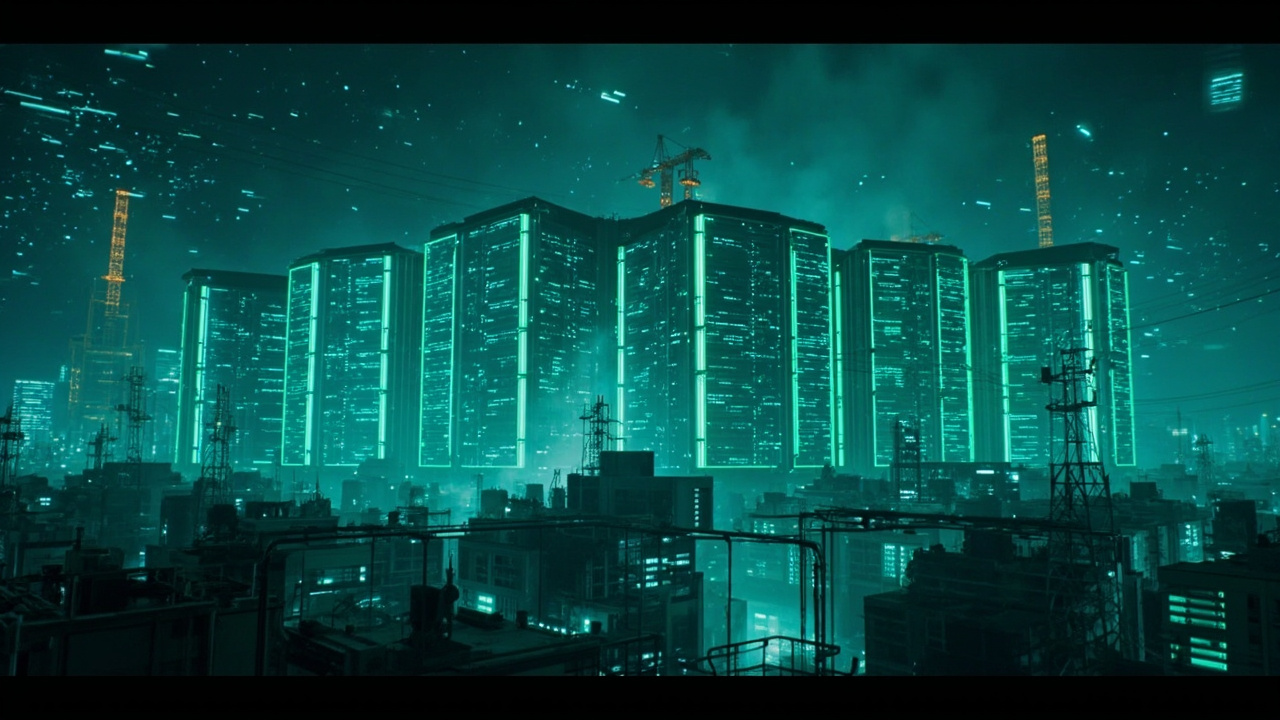
On September 29, 2026, Samsung did something it has almost never done in the AI era: it bought equity in the buildings instead of just supplying the parts. Samsung Electronics and five of its affiliates — Samsung C&T, Samsung SDS, Samsung SDI, Samsung Electro-Mechanics, and Samsung Heavy Industries — announced a combined commitment of $1 billion into Helix Digital Infrastructure, the AI data center venture that global investment firm KKR launched in June 2026 with anchor backing from NVIDIA, power producer Vistra, and the Kuwait Investment Authority.
Samsung Electronics itself will put in roughly $500 million, with the five affiliates providing the rest, according to Nikkei Asia. The deal makes the Samsung group a strategic investor in Helix’s global pipeline of AI data centers and the power systems that feed them, alongside the more than $10 billion in long-duration capital that founding investors committed at Helix’s launch.
Why a chip giant is buying into concrete and power
For most of the AI boom, Samsung’s role has been upstream: HBM memory for NVIDIA’s accelerators, foundry capacity, and networking components. But the economics of the buildout have shifted. WSJ reports that cumulative global spending on AI-related infrastructure is projected to total $10.3 trillion between 2025 and 2032 — a number that dwarfs any single company’s component revenue. The value chain is consolidating vertically: the hyperscalers own clouds, NVIDIA owns the silicon, private equity increasingly owns the shells and the megawatts, and pure component suppliers risk being squeezed into commodity margins at the bottom of the stack.
Samsung framed the investment explicitly as a strategic move to expand “from a hardware and component supplier into a larger role in AI infrastructure,” as TechNode Global reported. That is a notable admission for a conglomerate that has historically preferred to sell into buildouts rather than own them. The affiliate lineup tells the story of where Samsung sees the adjacent revenue: Samsung C&T (construction and trading) for data center engineering and construction, Samsung SDS for IT services and data center operations, Samsung SDI for batteries and energy storage that smooth power-hungry AI campuses, Samsung Electro-Mechanics for power modules and thermal components, and Samsung Heavy Industries for large-scale EPC capability. Every affiliate maps onto a layer of the data center stack.
What Helix actually is
Helix Digital Infrastructure was established by KKR in June 2026 as a dedicated AI infrastructure platform. At launch it brought together KKR, the Kuwait Investment Authority, NVIDIA, and Vistra Corp. with more than $10 billion in total long-duration capital commitments, as HPCwire reported at the time. The model is the now-standard “powered land bank” play that defines the current cycle: acquire and entitle sites, secure generation and grid interconnects, and develop hyperscale AI data centers on a multi-gigawatt scale over a decade-plus horizon.
Vistra’s presence is the tell. AI data centers are increasingly power-constrained before they are land- or chip-constrained, and pairing a merchant power producer with a private equity developer and an anchor GPU maker is the emerging template for cracking that bottleneck. NVIDIA’s involvement gives Helix a direct line to the silicon that defines what a modern AI campus must be designed around; KKR and KIA bring the balance-sheet patience that a ten-year buildout requires.
Samsung adds a third dimension: not just capital, but an integrated equipment and engineering stack. Helix gains a shareholder with incentives to supply memory, storage, batteries, power electronics, and construction services at scale — and Samsung gains a seat at the table where decisions about multi-billion-dollar AI campuses are actually made.
The strategic read
Three implications stand out.
First, the money is moving down the stack. The most sophisticated AI supply-chain players are no longer content to sell picks and shovels; they are buying stakes in the mine. Samsung’s $1 billion is small against its balance sheet, but it is directionally loud — the same signal sent by every chipmaker-adjacent investor piling into infrastructure vehicles this year. Component suppliers who stay pure-play face a future of negotiating against customers who own alternatives.
Second, sovereign-adjacent capital is quietly reshaping AI infrastructure. Helix’s cap table now spans a US private equity giant, a Gulf sovereign wealth fund, a chip architect, a power utility, and now a Korean conglomerate. AI compute is becoming an asset class governed by long-duration institutional money — which means decisions about where AI campuses get built are increasingly capital-allocation decisions, not just engineering ones.
Third, Korea is hedging its position in the AI stack. Samsung already bet on the model layer indirectly through memory. This investment secures exposure to the infrastructure layer as well, ensuring that regardless of which model providers win, the buildings, electrons, and components that run them remain partly a Korean franchise. It also deepens Samsung’s already tight relationship with NVIDIA, which co-anchors Helix and is Samsung’s largest AI customer for HBM.
The skepticism worth holding
A $1 billion commitment spread across six Samsung entities is a hedge, not a transformation. It represents a fraction of the $10 billion-plus Helix raised at launch, and a rounding error against the $10.3 trillion infrastructure spending forecast through 2032. Samsung’s core AI economics still run through HBM pricing and foundry utilization, and those will move its earnings far more than this stake ever will.
There is also execution risk on Helix’s side. Powered-shell platforms live and die on grid interconnection timelines, which in most US markets are measured in years, and on keeping gigawatt-scale pipeline commitments from outrunning actual tenant demand. The 2026 cycle has already produced more announced AI capacity than confirmed offtake; if the gap corrects, infrastructure vehicles with decade-long horizons and utility partners are the ones best positioned to wait it out — but they are not immune.
Still, as a signal of where the industry believes value is accruing, the deal is unambiguous. When the world’s largest memory maker starts buying equity in data center developers, the AI buildout has officially gone vertical — and the companies that only sell into it are being put on notice.
Sources
- [1] https://news.samsung.com/global/samsung-to-invest-usd-1-billion-in-ai-infrastructure-company-helix
- [2] https://www.reuters.com/business/samsung-electronics-commits-1-billion-kkr-backed-helix-digital-ai-buildout-2026-09-28/
- [3] https://www.cnbc.com/2026/09/29/samsung-investment-nvidia-kkr-ai-helix-digital.html
- [4] https://asia.nikkei.com/business/technology/artificial-intelligence/samsung-joins-ai-infrastructure-race-with-1bn-helix-deal
- [5] https://www.hpcwire.com/off-the-wire/kkr-launches-helix-digital-infrastructure-with-10b-to-accelerate-ai-infrastructure-buildout/