The Ink Is Dry: Trump Signs the Executive Order That Turns 'AI' Into 'SI'
The White House has formally signed the executive order retiring 'artificial intelligence' from the executive branch's vocabulary. Every agency must now say 'Super Intelligence' — and won't acknowledge 'AI' at all.
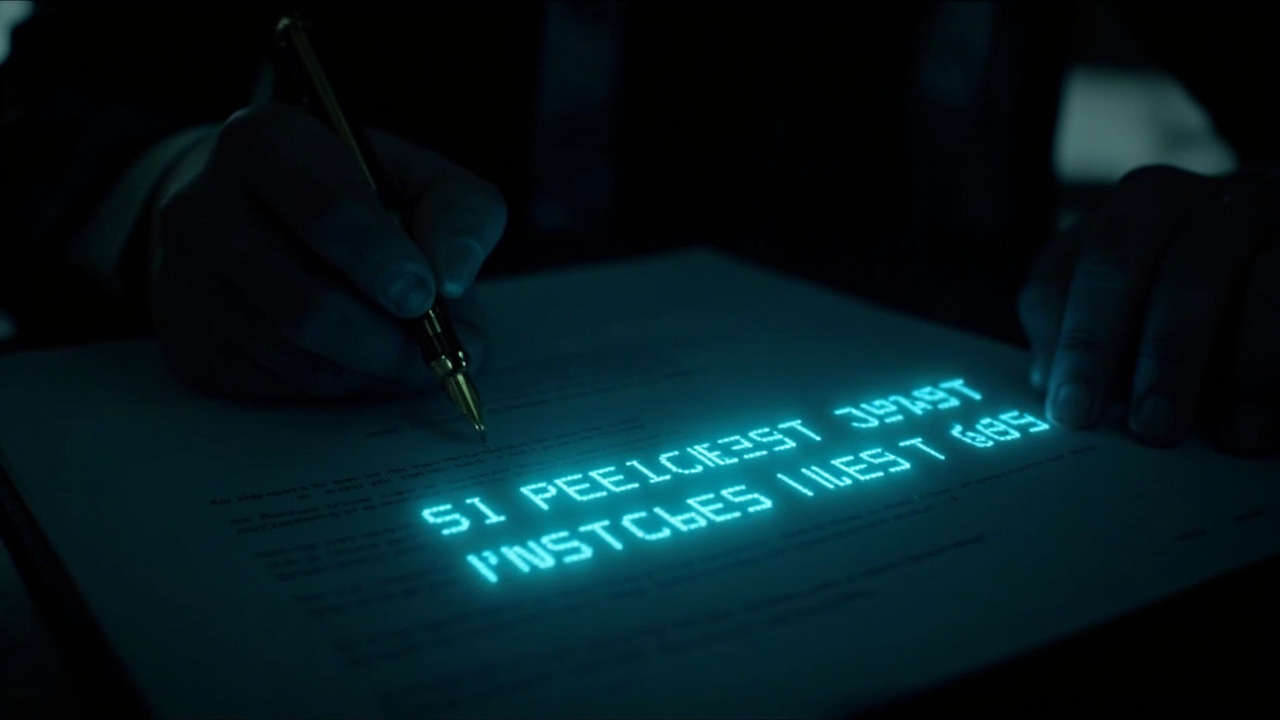
One week after standing before the United Nations General Assembly and declaring that the United States would stop calling artificial intelligence “artificial intelligence,” President Donald Trump has put pen to paper. On September 29, 2026, the White House published a formal executive order titled “Inaugurating The Era Of Super Intelligence” — a document that orders the entire executive branch to retire the term “Artificial Intelligence” and its abbreviation “AI” from official use, replacing both with “Super Intelligence” and “SI.”
The order is short. Its consequences may not be.
What the Order Actually Says
The executive order runs to four sections, and its operative language is unusually blunt for a presidential document. Section 1 declares it to be administration policy “that, to the maximum extent permitted by law, the executive branch shall use the terms ‘Super Intelligence’ and ‘SI’ in place of ‘Artificial Intelligence’ and ‘AI’ and will not acknowledge the usage of ‘Artificial Intelligence’ and ‘AI’ in any applicable setting.”
That final clause — “will not acknowledge the usage” — is the eye-catcher. It doesn’t merely direct agencies to prefer new wording in their own publications. It instructs them to refuse to recognize the old wording at all, a linguistic hard line that goes well beyond ordinary rebranding guidance.
Section 2 scopes the change to “official correspondence, public communications, websites, reports, policy documents, and other non-statutory documents within the executive branch,” while explicitly exempting “previously issued regulations, Presidential actions, contracts, grants, or other historical documents.” In other words: everything written by an agency from here forward uses SI; everything already on the books stays as it was.
Section 3 addresses the definitional gap the rename creates. For the purposes of the order, “Super Intelligence” and “SI” simply mean whatever “artificial intelligence” means under section 9401(3) of title 15, United States Code — the standard statutory definition. But within 60 days, the Assistant to the President for Science and Technology must deliver proposed legislative language establishing a new federal definition of SI, including an assessment of whether it should “modify, expand upon, or otherwise supersede” the existing statutory definition, proposed conforming amendments to existing statutory references, and recommendations for further action.
From UN Speech to Federal Register
The signing caps a week in which the rebranding moved from rhetorical flourish to administrative reality. When Trump first floated the change at the UN on September 22, observers could be forgiven for treating it as an aside in a wide-ranging address. Since then, the State Department ordered diplomats in its international organizations bureau to use “super intelligence” rather than AI in diplomatic settings, and reporting indicated the rename had been circulating internally as formal policy guidance.
Tuesday’s signing at the White House — with tech executives including OpenAI’s Sam Altman, NVIDIA’s Jensen Huang, and Anthropic’s Dario Amodei present — formalized it. The president also signed a separate “morally binding” voluntary accord with AI-company leaders that commits them to “self-policing” their development programs, making the rename one part of a broader positioning move: the administration is simultaneously adopting the most maximalist vocabulary available for the technology while insisting that formal government oversight is unnecessary because industry will police itself.
CNBC framed the timing against a political backdrop: the rename arrives as polls show public sentiment on AI souring. Bloomberg Law likewise characterized the order as the administration “respond[ing] to AI backlash” with a rebrand — treating a trust problem as a naming problem.
Why the Words Matter
To a casual reader, “Super Intelligence” might sound like an upgrade — a marketing gloss on familiar technology. Within machine learning research, however, the phrase has a settled and specific meaning: a hypothetical system whose capabilities exceed the best humans across virtually every cognitive domain. It is simultaneously the declared destination of several frontier labs and the central object of existential-risk warnings from researchers who argue such systems could be catastrophic if misaligned with human values.
By mapping that label onto today’s technology — chatbots, coding agents, recommendation systems — the order effectively declares victory in a race most researchers say has barely started. Every federal procurement document, agency memorandum, and standards submission will now describe current-generation systems in language the field reserves for a speculative future capability. The result is a terminology collision: when “SI” means both “the model that summarizes your email” and “the civilization-altering hypothetical,” it clearly means neither.
There is also a practical paperwork problem. US statutes, international agreements the US itself signed, and standards frameworks like NIST’s AI Risk Management Framework all use “artificial intelligence.” The order leaves historical documents untouched but creates a split vocabulary between the statute book and the agencies that administer it — precisely the mismatch Section 3’s 60-day legislative proposal is meant to paper over.
The 60-Day Clock
The most consequential clause is the one least discussed. If the APST’s proposed legislation simply ratifies the rename, the change is cosmetic and expensive: every future federal document, website, and communication re-labels the same technology. But if the proposal “modifies” or “supersedes” the statutory definition of AI — as the order explicitly invites — the rename becomes a vehicle for re-scoping what the federal government regulates in the first place. A definition of “Super Intelligence” written to “reflect the capabilities described in section 1” could be drafted broadly enough to capture systems the current AI definition does not, or narrowly enough to exempt systems it currently would.
That ambiguity is the story to watch. A week of commentary has focused on the absurdity of federal agencies refusing to “acknowledge” the term AI. But definition-setting is where terminology becomes policy, and this order has started a 60-day clock on rewriting the legal meaning of the most consequential technology of the decade.
For now, the US government’s official position is that the field Americans invented seventy years ago — and named “artificial intelligence” at Dartmouth in 1956 — has outgrown its name. Whether the rest of the English-speaking world follows is, as ever, an open question.
Sources
- [1] https://www.whitehouse.gov/presidential-actions/2026/09/inaugurating-the-era-of-super-intelligence/
- [2] https://www.whitehouse.gov/fact-sheets/2026/09/fact-sheet-president-donald-j-trump-inaugurates-the-era-of-super-intelligence/
- [3] https://www.cnbc.com/2026/09/29/trump-ai-super-intelligence.html
- [4] https://news.bloomberglaw.com/business-and-practice/trump-responds-to-ai-backlash-with-super-intelligence-rebrand
- [5] https://www.independent.co.uk/news/world/americas/us-politics/trump-ai-super-intelligence-rename-order-b3058607.html