The Dead Man Who Spoke: Arizona Appeals Court Vacates Sentence Over AI Victim Video
A unanimous Arizona appellate panel threw out a 10.5-year manslaughter sentence because the judge relied on an AI video of the deceased victim — the first ruling of its kind, drawing a hard line on synthetic voices in courtrooms.
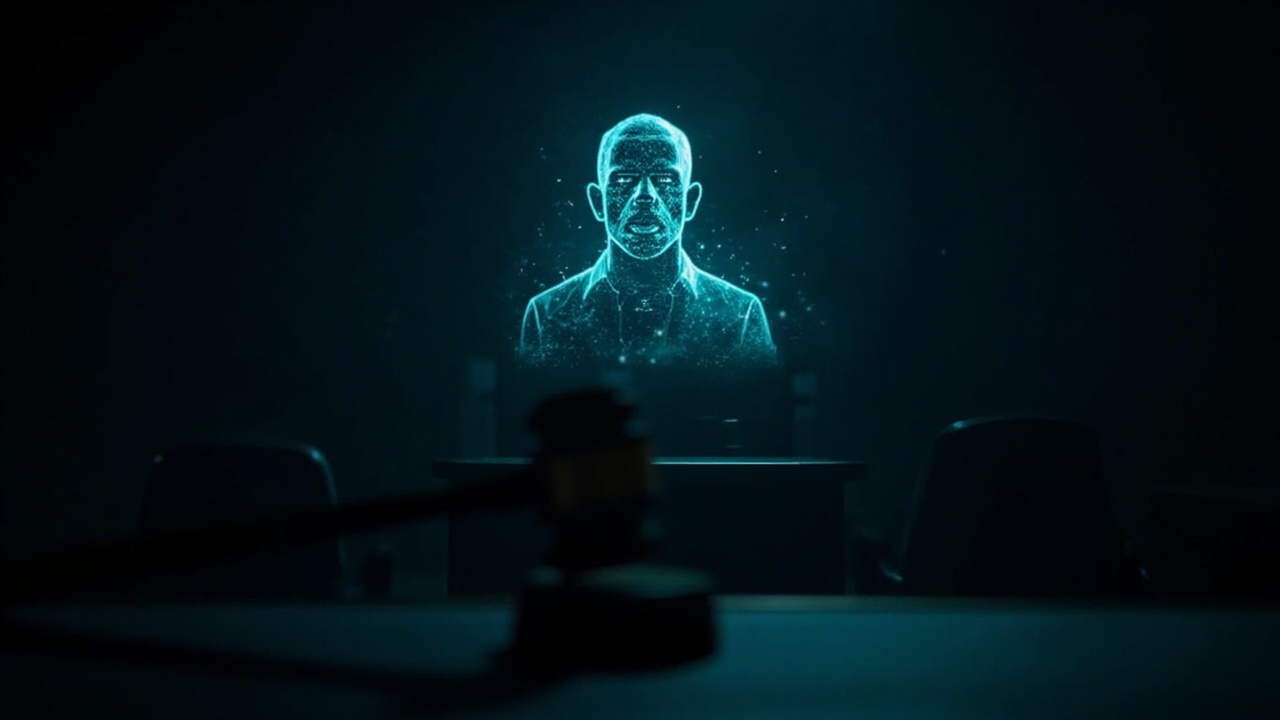
In a unanimous published opinion issued September 30 in State v. Horcasitas, the Arizona Court of Appeals, Division One, vacated Gabriel Paul Horcasitas’ 10.5-year manslaughter sentence and ordered a new sentencing hearing — because the trial judge relied on an AI-generated video that recreated the deceased victim, Christopher Pelkey, speaking from beyond the grave. The conviction itself stands. The sentence does not.
It is the first Arizona appellate ruling to address an AI-generated depiction of a victim offered as victim impact evidence, and it may be the most consequential courtroom decision on synthetic media anywhere in the United States to date.
What happened in that courtroom
The case traces back to a 2021 road-rage shooting. Horcasitas’ first manslaughter conviction was set aside after the trial court found prosecutors had failed to timely disclose evidence recovered from Pelkey’s phone — material that actually supported Horcasitas’ self-defense claim. A second jury convicted him again in 2024.
At the 2025 sentencing, Pelkey’s family presented a video built with generative AI. It reconstructed the dead man’s face from photographs and cloned his voice from recordings, and the synthetic Pelkey addressed the court directly. The recreation identified itself as an AI version created from his photograph and voice profile. It spoke to his family. Then it turned to the man who killed him — and expressed forgiveness. The words were scripted by Pelkey’s sister, reflecting what she believed her brother would have said had he been able to stand in that courtroom.
Maricopa County Superior Court Judge Todd Lang was visibly moved. According to the appellate opinion, Lang said he “loved that AI,” described the recreation as “genuine,” and referred to Pelkey’s apparent forgiveness of Horcasitas as coming from his “heart.”
The numbers that followed matter. The family asked for the maximum. Prosecutors — who had alleged no aggravating factors — sought a slightly mitigated nine-year term. The defense requested seven. The presumptive sentence was 10.5 years, which was also the maximum available. Lang imposed the full 10.5, acknowledging on the record that it exceeded even what the prosecution had requested.
Why the appellate court reversed
The legal tension here is genuine. Under Arizona’s Victims’ Bill of Rights, crime victims have broad protections, including the right to be heard before sentencing. Victim impact statements are not ordinary testimony: victims do not testify under oath, they cannot be cross-examined, and sentencing judges enjoy wide discretion to consider information that would never be admissible before a jury.
But that discretion has a floor. Sentencing information must carry at least a minimal level of reliability, because defendants have a due process right to be sentenced on accurate information. The panel held that the synthetic portions of the video failed that standard — decisively.
The court’s reasoning cuts to the heart of what generative AI does. The recreated Pelkey did not document anything the real Christopher Pelkey ever said or did. It presented his sister’s conception of his views, delivered through his reconstructed face and voice. In the panel’s words, it eliminated the distance between the family’s understanding of his views and his actual views — a distance that reliability rules exist precisely to preserve.
The State defended the video on two grounds: that Pelkey’s sister knew him closely, and that the sentiments attributed to him were consistent with his writings and values. The panel wasn’t persuaded. Nor did it accept the argument that the video’s self-disclosure — the recreation announcing it was AI-generated — cured the problem. A disclaimer, the court found, does not make synthetic statements reliable, especially when the recreated figure then describes himself as a true representation of the man.
For guidance, the judges turned to State v. Rose, an Arizona Supreme Court decision on emotionally powerful victim impact evidence, where photographs depicting the grief of surviving family members were allowed despite pushing the boundary of fairness. The distinction is stark: those photographs documented events that actually occurred. The synthetic Pelkey manufactured speech, facial expressions, and conduct that never occurred — attributed to a person who could no longer confirm what he believed or would have said.
Fundamental error, even unpreserved
One procedural detail sharpens the ruling’s force. Horcasitas’ own defense team never objected to the AI video at sentencing. That forced the appellate court to review under the demanding fundamental-error standard rather than ordinary abuse of discretion. The panel found the error serious enough to render the sentencing proceeding fundamentally unfair anyway — and it pointed to Lang’s comments immediately after the presentation as evidence that the video played a role in the sentence imposed, even if the record cannot show exactly how much weight it carried.
The ruling is carefully bounded. It vacates only on the basis of the synthetic portions of the presentation; genuine archival footage of Pelkey included in the same video was treated separately. And the court explicitly left open other courtroom uses of AI — restoring authentic recordings, presenting a person’s actual recorded words, or creating demonstrative exhibits. The line drawn is not “no AI in sentencing”; it is “no manufactured speech attributed to the dead.”
Why this matters beyond Arizona
Courts across the country are already scrambling to contain AI harms in litigation — fake case citations, fabricated witnesses, AI-generated evidence. Most of those responses are procedural sanctions after the fact. Horcasitas is different: it is an appellate court reasoning from first principles about why synthetic human testimony fails evidentiary standards, and doing so in the most emotionally charged context imaginable — a grieving family’s wish to hear their lost brother’s voice one last time.
That sympathy is what makes the ruling significant. The video was not a scam or a forgery; it was an act of mourning. The court acknowledged that victims must be heard — and still held that a defendant’s constitutional right to accurate sentencing information outweighs even the most heartfelt synthetic testimony. When the person who can verify the words is the very person whose death created the case, no disclaimer and no familial intimacy can substitute for their confirmation.
Every jurisdiction with a Victims’ Bill of Rights now faces the same question Arizona just answered. Gabriel Horcasitas will return to Maricopa County Superior Court for resentencing, where the maximum is still 10.5 years — but this time, the only Christopher Pelkey who speaks will be the one who existed.
Sources
- [1] https://www.lawcommentary.com/articles/arizona-court-ai-generated-victim-impact-video-sentence
- [2] https://www.fox10phoenix.com/news/arizona-manslaughter-sentencing-vacated-due-use-ai-victim-impact-statement
- [3] https://www.kbtx.com/2026/10/02/court-tosses-manslaughter-sentence-after-ai-video-road-rage-victim-used-court/
- [4] https://www.brownstonelaw.com/news/arizona-court-orders-resentencing-over-ai-generated-victim-video/