One Customer, $20B a Fab: TSMC Weighs a Texas Campus With Musk's Terafab as Anchor
TSMC is exploring a multi-fab Texas campus with Elon Musk's Terafab as anchor client — a pivotal geography shift if the US 35% manufacturing tax credit gets extended past year-end.
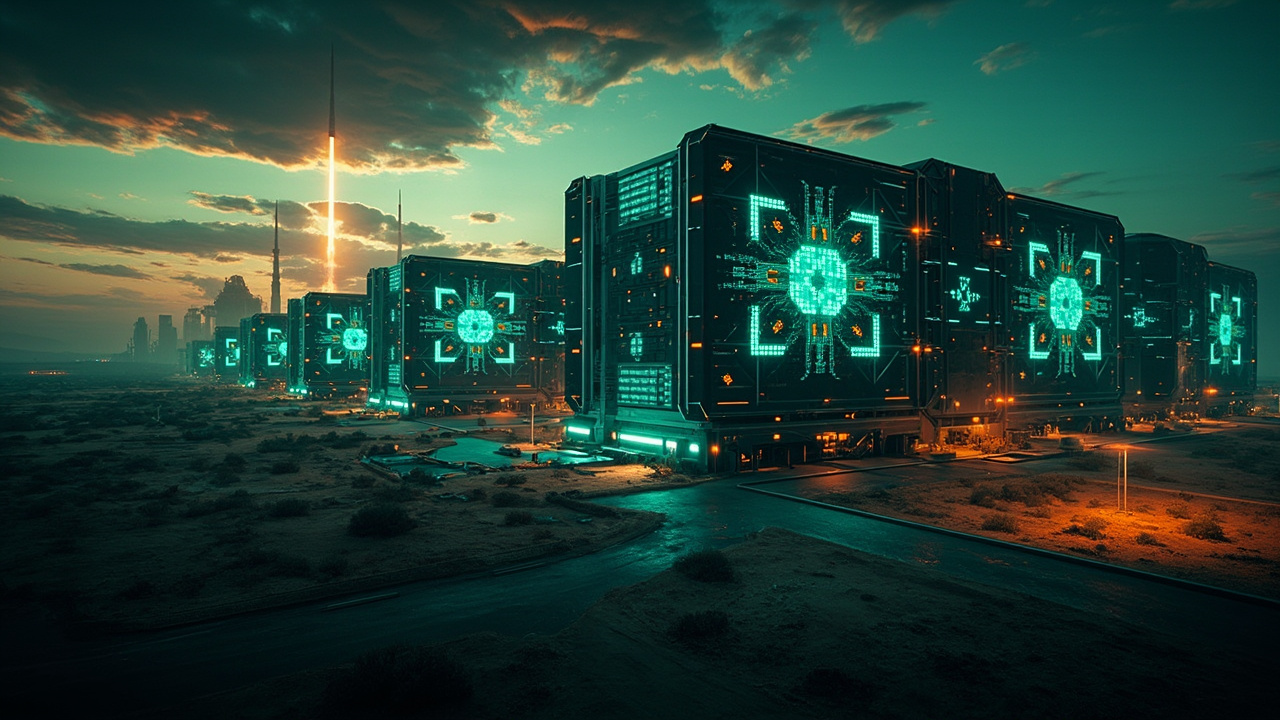
The world’s most advanced contract chipmaker is reportedly considering its biggest geography shift in decades — and the anchor tenant wouldn’t be Apple or Nvidia, but Elon Musk.
According to an exclusive report published October 2 by Tim Culpan’s Culpium newsletter, TSMC is exploring plans to work with Musk’s Terafab project, with the SpaceX-Tesla-Intel venture serving as a potential anchor client for a future multi-fab semiconductor campus in Texas. A separate Wall Street Journal report pegs the scale of the ambition: each fab in the plan would be priced at roughly $20 billion, and the whole undertaking is contingent on Washington extending the US 35% advanced-manufacturing tax credit, which is currently set to expire at year-end.
What the reporting actually says
The Culpium report, attributed to sources familiar with the discussions, frames the deal as TSMC exploring ways to help Terafab run its new semiconductor factories in Texas. In practice that could mean several structures: TSMC operating fabs built for the Musk venture, building and operating its own fabs on a shared campus with Terafab as the guaranteed offtaker, or a hybrid in which TSMC contributes process technology and manufacturing expertise while Musk’s companies supply demand and capital.
Two details stand out. First, talks between Terafab and Intel have reportedly stalled, leaving TSMC as Musk’s lead fab partner. Intel had joined the Terafab project in April 2026, with Musk announcing that Intel’s 14A (1.4nm) process would be used at the full-scale facility. Second, the WSJ’s cost estimate — north of $20 billion per fab — puts the TSMC variant in the same financial territory as TSMC’s most expensive Arizona builds.
Why TSMC would want this
On the surface, TSMC moving deeper into Texas looks like a straightforward extension of its existing Arizona expansion. The company has already committed hundreds of billions of dollars to US production, and Arizona Fab 21 is in volume production. But a TSMC-branded Texas campus would be qualitatively different for three reasons.
Demand certainty. Terafab’s stated goal is nothing less than a terawatt of annual AI compute capacity. Musk has claimed that all existing fabrication facilities on Earth produce only about 2% of what Tesla and SpaceX will need across their projects — Optimus humanoid robots, Cybercab vehicles, orbital AI data centers, and xAI’s training clusters. For a foundry, an anchor client with that appetite and Musk’s cost-of-capital machinery is a rare de-risking instrument for a $20-billion-per-fab bet.
Policy arithmetic. The 35% advanced-manufacturing tax credit is the single largest swing factor. If Congress extends it past December 31, the effective cost of every US fab drops by more than a third; if it lapses, the Texas calculus changes materially. The reporting explicitly ties TSMC’s willingness to move to that extension — which makes the project as much a bet on Washington as on Musk.
The Intel problem. Terafab was originally structured with Intel as the manufacturing brain trust. But Intel has been fighting its own battles — node transitions, foundry losses, and a scramble for liquidity that included a $20 billion raise earlier this year. Talks stalling is not shocking; what’s notable is that TSMC, the company Intel spent decades chasing, is the one stepping into the vacuum. For TSMC, absorbing Terafab demand converts a potential rival training ground into a customer relationship.
The Terafab context
Terafab itself remains one of the most audacious industrial projects ever proposed. Announced by Musk on March 21, 2026 at the defunct Seaholm Power Plant in Austin, the venture targets a vertically integrated facility near College Station, Texas — on the site of the former Gibbons Creek coal power plant in Grimes County — that would handle chip design, fabrication, memory production, advanced packaging, and testing under one roof. County filings in May 2026 discussed an initial outlay of about $55 billion and as much as $119 billion across all phases. In August, Tesla and SpaceX committed $16.8 billion to a first phase, with Texas filings listing a construction start of December 1, 2026 and completion by end of 2028.
The long-term targets are stratospheric: one million wafer starts per month and 100–200 billion custom AI and memory chips per year. Even TSMC’s most optimistic planners would treat those numbers as aspirational rather than bankable — which is precisely why having TSMC’s operational discipline attached to the project matters. SpaceX’s own IPO registration conceded that Terafab was at a “very early stage” with only a general framework agreed, financial terms and IP rights still open, and Intel’s and Tesla’s continuing participation subject to later agreements.
What to watch
Three things will determine whether this becomes real or joins the long list of Musk timelines.
- The tax credit vote. Any movement in Congress on extending the 35% credit before year-end is the single best leading indicator of a TSMC Texas announcement.
- TSMC’s capital expenditure guidance. The company updates capex plans quarterly; a Texas campus would require a multi-year, multi-hundred-billion-dollar line item that cannot hide in the noise.
- Intel’s next move. If Intel-Terafab talks are merely stalled rather than dead, TSMC’s involvement could be leverage in a three-way negotiation — exactly the dynamic readers of Culpan’s reporting on the TSMC-Intel-Apple “circle of trust” will recognize.
For now, the signal is clear enough: the world’s most important chipmaker is seriously evaluating a future in which its most dramatic expansion is anchored not by a smartphone maker, but by a rocket company that wants to put data centers in orbit.
Sources
- [1] https://www.culpium.com/p/exclusive-tsmc-exploring-plans-to
- [2] https://aiweekly.co/ai-news-today
- [3] https://www.wsj.com/business/spacex-tesla-to-build-chip-plant-in-texas-to-meet-compute-demand-bcf070ce
- [4] https://en.wikipedia.org/wiki/Terafab
- [5] https://www.cnbc.com/2026/05/06/elon-musks-spacex-chip-fab-in-texas-to-cost-up-to-119-billion.html