Four TPUs in Orbit: Google's Suncatcher Prototype Is Live and Phoning Home
Google's first Project Suncatcher satellite — carrying four Trillium TPUs — reached orbit October 1 aboard SpaceX's Transporter-18 and is operating as expected, opening the first in-orbit test of AI compute hardware.
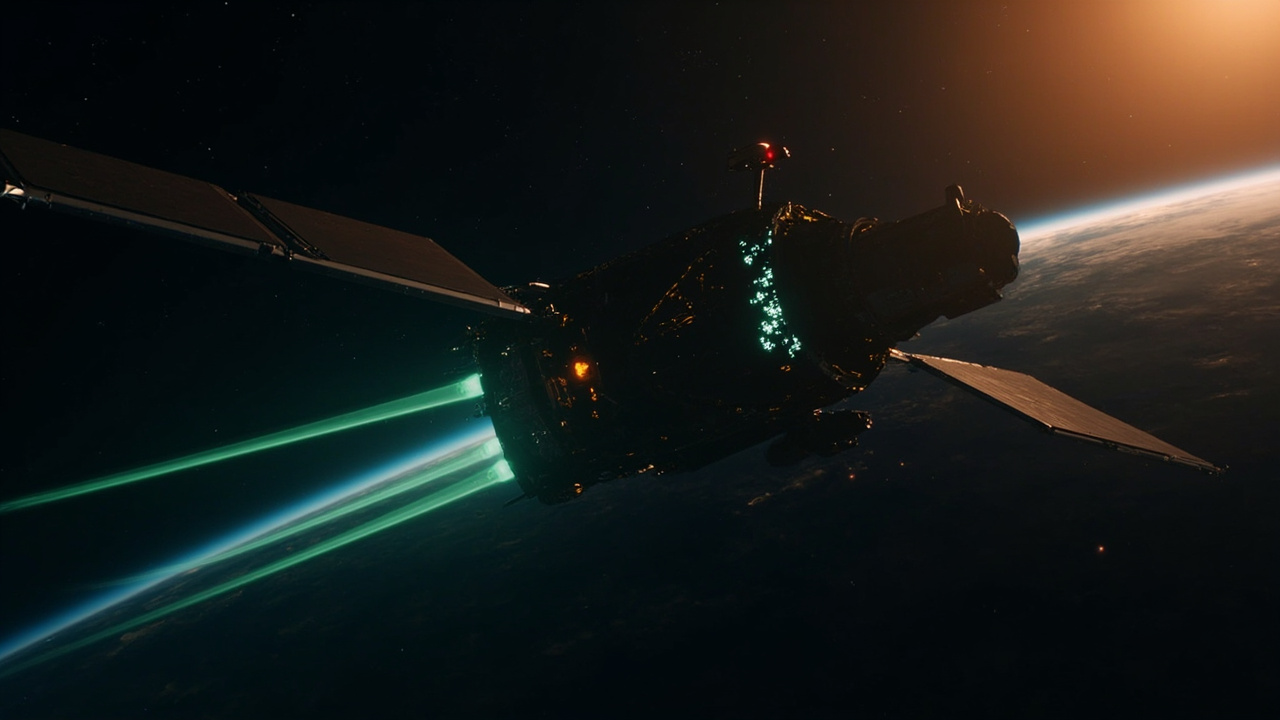
At 2:32 p.m. EDT on October 1, 2026, a fog-wrapped Falcon 9 lifted off from Vandenberg Space Force Base in California carrying 130 payloads — and among them, the most consequential one for the AI industry was roughly the size of a refrigerator. Google’s first Project Suncatcher prototype satellite, built in partnership with Earth-observation company Planet and carrying four Trillium tensor processing units, is now in low Earth orbit. Within hours, Google Research confirmed first contact: the spacecraft is operating as expected. For the first time, hardware purpose-built for machine learning is running in orbit as a live experiment in whether space itself can host AI data centers.
What just happened
The prototype flew as a rideshare payload on SpaceX’s Transporter-18 mission, the second leg of a remarkably busy day for SpaceX that also included NASA’s Crew-13 astronaut launch and the NROL-97 national security flight. The Falcon 9’s first stage returned to Vandenberg about 7.5 minutes after liftoff, completing its 25th flight — a routine bit of reusability that quietly underscores why Google’s orbital economics are even thinkable: the booster that lofted the first space-borne TPUs had already done this two dozen times.
The satellite itself is deliberately modest. Four Trillium TPUs, about a kilowatt of solar power, and a bus built by Planet. But its purpose is not throughput — it is truth-gathering. Over the coming weeks, Google will collect in-orbit data on three things ground testing can only approximate: how the chips handle the physical violence of launch, how they survive radiation, and how they shed heat in a vacuum.
The case for AI compute in space
Project Suncatcher, first announced in 2025 and detailed in a September 24 blog post by Travis Beals, Senior Director for Paradigms of Intelligence at Google, is a long-term research moonshot asking a blunt question: as AI demand for electricity collides with terrestrial constraints, can orbit do the computing instead?
The physics argument is straightforward. In a dawn-dusk sun-synchronous orbit around 650 kilometers up, a satellite is in near-constant sunlight, and its solar panels can generate up to eight times more power than equivalent panels on Earth — no night, no weather, no atmosphere absorbing the light. Beam those watts into TPUs, link clusters of satellites with high-bandwidth lasers, and you have a data center with no grid connection, no water usage, and no local opposition.
The engineering argument, however, is brutal — and Google has been refreshingly specific about it.
What Google already knows
Before committing a single chip to orbit, the Suncatcher team put Trillium TPUs through a gauntlet. At UC Davis’s Crocker Nuclear Laboratory, the chips were bombarded in a proton beam while actively running AI workloads, with engineers monitoring for bitflips and other radiation-induced errors in real time. The results were better than expected: the TPUs survived a total ionizing dose greater than what they would absorb across an entire five-year space mission — by some accounts nearly three times the expected dose.
Launch survivability was tested too. The roughly ten-minute ride to low Earth orbit subjects a spacecraft to sustained loads around 10 g, while individual components can see 50 to 100 g. The team shook the satellite on all three axes to mimic launch frequencies, and the hardware held up — a result Beals described as a pleasant surprise, since such tests “rarely go as planned.”
Cooling is the harder problem. In a vacuum there is no airflow; the only way to dump heat is radiation. TPUs concentrate a large amount of heat in a small area, so Google has been developing heat-pipe-and-radiator combinations tested in thermal vacuum chambers. How that system actually performs in orbit is one of the prototype’s core experiments.
Lasers next, constellations later
The current prototype is a single satellite. The vision is clusters — future satellites each carrying dozens of TPU chips, flying in tight formation and communicating over free-space optical links. That imposes ferocious precision requirements: Google describes the alignment challenge as similar to hitting a coin-size target from miles away while both endpoints are moving. Existing space laser systems are optimized for low bandwidth over long distances; Suncatcher needs the opposite — enormous bandwidth over very short distances between neighbors.
The bench results are encouraging: ground tests of the optical links hit 800 Gbps in each direction, for 1.6 Tbps aggregate between two satellites flying 100 to 200 meters apart. The first real in-space test of the inter-satellite link comes in 2027, when Google plans to fly two operational satellites together.
The economics horizon matters as much as the engineering one. Google’s internal projections suggest launch costs falling below $200 per kilogram by the mid-2030s — a threshold at which orbital compute could plausibly reach cost parity with ground data centers, especially when land, power, and permitting costs on Earth keep climbing.
Google isn’t alone up there
Transporter-18 offered a snapshot of an emerging orbital-compute ecosystem. Cowboy Space’s Reason-1 satellite, also on the flight, is testing power beaming — using a high-power laser to transfer energy from orbit to a ground receiver — which its backers frame as foundational infrastructure for space data centers. Starfish Space’s first Otter servicing vehicle flew as well, a step toward the in-orbit maintenance economy that any long-lived AI constellation would eventually need. The race to move computation off the planet is no longer a single-company curiosity.
Why it matters
Ground truth is finally arriving for one of AI infrastructure’s most speculative bets. The terrestrial constraint is real: gigawatt-scale buildouts are colliding with community backlash, grid limits, and water concerns — just this week, an estimated $42 billion of planned European data-center investment was reported stalled or canceled over public opposition. If even a fraction of inference workloads could someday run on sunlight in orbit, the bottleneck shifts from permitting wars to physics and launch cadence.
Google is careful to frame Suncatcher as methodical research, not a product roadmap — “measured, deliberate steps,” with a peer-reviewed paper now published in Joule documenting the underlying analysis. But the significance of this week’s milestone is easy to state precisely: the first purpose-built AI chips are now running above the atmosphere, and the data streaming back will determine whether the idea of orbital data centers graduates from moonshot to line item.
The next checkpoint is 2027: two satellites, one laser link, and the first real test of whether machines can compute together in formation — powered by nothing but the sun.
Sources
- [1] https://blog.google/innovation-and-ai/models-and-research/google-research/project-suncatcher-prototype/
- [2] https://blog.google/innovation-and-ai/models-and-research/google-research/google-project-suncatcher-facts/
- [3] https://www.space.com/space-exploration/satellites/spacex-google-project-suncatcher-ai-satellite-transporter-18-mission
- [4] https://mixed-news.com/en/google-project-suncatcher-tpus-orbit-transporter-18-radiation-test/