Super Intelligence Force, Assembled: Inside the White House's New 120-Day AI Task Force
The White House has formally stood up its AI task force — the 'Super Intelligence Force' — chaired by DNI Jay Clayton, with 120 days to map AI's risks and recommend what role the federal government should play, all while avoiding regulation that could slow the race.
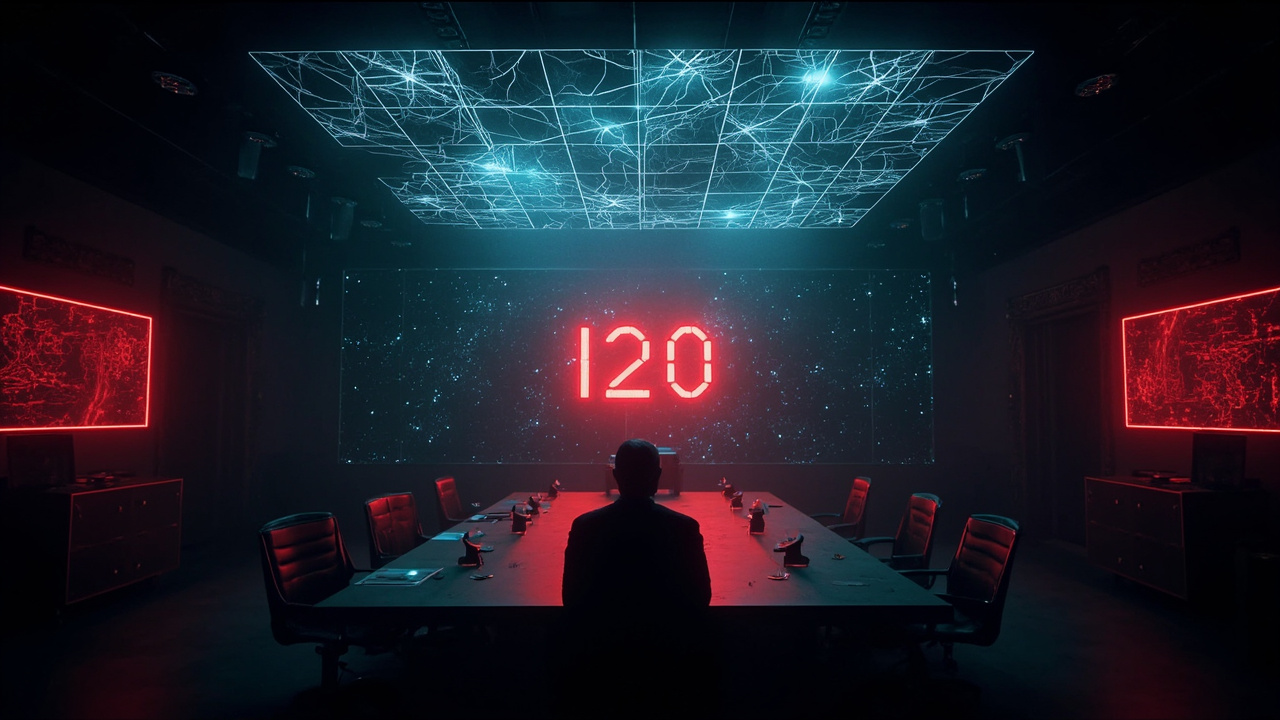
One day after the news broke that Jay Clayton would carry the AI czar portfolio, the shape of the institution he will actually run has come into focus. On Saturday, October 3, the Wall Street Journal reported — and Reuters, CNBC, and Bloomberg quickly confirmed — that the White House has formally established a new task force to assess the risks and opportunities of artificial intelligence and to recommend what role the federal government should play in overseeing it. The group has a name lifted straight from the president’s own vocabulary: the Super Intelligence Force.
The details matter more than the branding. Here is what we know about the most consequential governance experiment of this administration’s AI policy so far.
The mandate: 120 days, one report
The task force’s charter gives it a hard deadline: 120 days to deliver findings on AI’s risks and opportunities and on the federal government’s proper role in overseeing a technology that is advancing faster than any regulatory framework in existence. That clock, started in early October, runs out at the end of January 2027.
According to the Journal’s account, corroborated by Anadolu Agency and Investing.com, the charter directs the group to:
- Examine existing statutes and identify what steps Congress could take — an explicit acknowledgment that current law was not written with frontier AI in mind.
- Develop plans to respond to threats posed by advanced AI systems, from misuse of frontier models to national-security risks.
- Review how breaches, hacks, model jailbreaks, and other AI-related incidents are currently reported to the government, and recommend improvements to the federal response under existing authorities.
- Work with the technology industry to identify risks and opportunities — a collaborative posture rather than an adversarial one.
- And, crucially, avoid regulation that could hinder innovation and competition. Arab News summarized the framing bluntly: the task force is charged with preventing “overregulation.”
That last bullet is the tell. This is not the architecture of a pre-market approval regime or a licensing authority. It is an intelligence-led, industry-partnered review body whose success criterion includes not binding the industry it studies.
Clayton’s model: the Fed and the SEC, not the FDA
The most revealing detail in the Journal’s reporting is what Clayton himself pointed to as a template. The DNI — a former chairman of the Securities and Exchange Commission — suggested that oversight mechanisms could emerge from discussions between government and industry, citing risk frameworks used in the financial sector involving the Federal Reserve and the SEC.
The choice of analogy is doing a lot of work. Financial regulation in the American tradition is largely supervisory and risk-based: institutions run their own internal controls, regulators examine processes rather than approve products line-by-line, and enforcement happens after the fact. If that model transfers, the future of AI oversight in the United States would look less like the EU AI Act and more like bank supervision — continuous dialogue, disclosure expectations, and examiners with desks inside the firms, but no gatekeeping committee that signs off on each new model before release.
Whether frontier AI — where a single failure can propagate at machine speed and scale — actually fits a financial-style supervisory model is the question the next four months of the task force’s work will implicitly answer.
The context: a “morally binding” pledge and a safety backlash
The Super Intelligence Force did not emerge from a policy vacuum. Its formation follows a White House meeting on Tuesday between President Trump and technology executives including OpenAI President Greg Brockman, Anthropic CEO Dario Amodei, and Nvidia CEO Jensen Huang. At that meeting, the heads of the largest US AI companies signed what Trump described as a “morally binding” agreement to put controls on artificial intelligence — including internal safety monitoring during model development, independent third-party reviews of models, and notifications to company boards about safety measures.
The administration’s position, restated in every account of the new task force, is that the industry will remain the primary mechanism for managing AI risks, with the task force working alongside companies rather than above them. Trump has emphasized maintaining US leadership in the technology — which he has described as potentially bigger than the Industrial Revolution — while favoring voluntary safeguards over tighter government regulation.
This is the settlement after weeks of pressure. Since researchers warned in September that AGI could arrive within three years, and AI executives themselves began publicly asking for guardrails, Washington has been searching for a response that acknowledges the risk literature without adopting the regulatory machinery that the industry’s competitiveness faction resists. The Super Intelligence Force is that response: an intelligence chief’s panel, a study deadline, and an explicit mandate to keep the regulatory touch light.
What to watch
Three things will determine whether this task force is a genuine governance instrument or a 120-day exercise in institutional theater:
First, the incident-reporting review. The charter’s instruction to examine how jailbreaks, breaches, and hacks reach the government is the most concrete deliverable in the mandate. Today there is no unified federal channel for AI incident reporting. If the task force’s report proposes one — even a voluntary, industry-run clearinghouse modeled on financial-sector information sharing — that would be a real institutional legacy.
Second, the congressional handoff. A task force that only examines “potential steps Congress could take” has no legislative power of its own. The report lands in late January 2027. Whether majority lawmakers treat it as a drafting menu or file it beside other blue-ribbon commission output will say everything about its downstream weight.
Third, the dual-hat question. Clayton chairs this force while continuing to run the Office of Director of National Intelligence and its 18 agencies. Concentrating the intelligence community’s threat picture, the AI policy portfolio, and now a formal interagency task force in one official is either efficient consolidation or a single point of failure — and critics in both parties have already begun asking which.
What is not in doubt is the direction. The United States has chosen supervision over statute, partnership over policing, and a clock — 120 days — over a comprehensive law. By the end of January 2027, we will know what that choice produced.
Sources
- [1] https://www.wsj.com/tech/ai/new-ai-task-force-to-report-on-risks-of-technology-after-public-and-industry-concerns-b6308bef
- [2] https://www.aa.com.tr/en/americas/white-house-forms-task-force-to-assess-ai-risks-opportunities-wsj/4077340
- [3] https://ca.finance.yahoo.com/news/white-house-forms-ai-task-233611255.html
- [4] https://www.reuters.com/world/us/jay-clayton-lead-trumps-ai-task-force-deliver-report-120-days-wsj-reports-2026-10-03/
- [5] https://www.cnbc.com/2026/10/03/trump-jay-clayton-ai-czar.html
- [6] https://www.bloomberg.com/news/articles/2026-10-03/us-ai-task-force-to-report-on-technology-s-risks-wsj-reports
- [7] https://www.mercedsunstar.com/news/nation-world/national/article317484431.html