890 MW Without a New Reactor: Google's 20-Year Nuclear Uprate Deal Redraws the AI Power Playbook
Google signed a 20-year deal with Constellation to fund uprates at 11 nuclear units, adding 890 MW of new carbon-free capacity to the PJM grid by 2028 plus a 2,700 MW supply agreement — the equivalent of a large new reactor built in a fraction of the time.
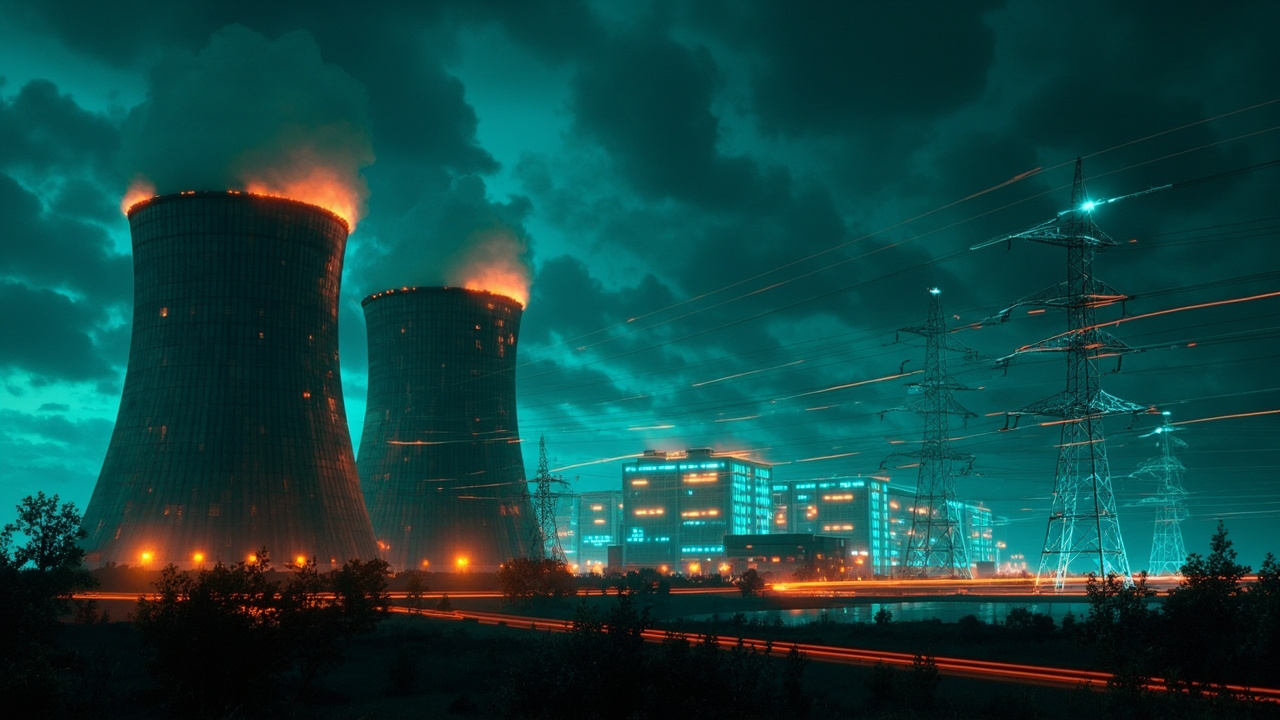
For two years the story of AI and electricity has been a race to line up gigawatts: Microsoft signed Three Mile Island, Amazon bought Calvert Cliffs, Oracle subscribed to Point Beach. On October 6, 2026, Google and Constellation Energy published a deal that changes the shape of that race. Instead of waiting a decade for a greenfield reactor, Google will pay to squeeze more electricity out of plants that already exist — and the grid gets a full large-reactor’s worth of new capacity in barely more than two years.
What was announced
The centerpiece is a 20-year power purchase agreement under which Google funds nuclear uprates — turbine, steam-generator, and digital control-system upgrades — at 11 Constellation-owned nuclear units across six sites in Illinois, Pennsylvania, and New Jersey. Together the upgrades add 890 MW of new, firm, carbon-free capacity to the PJM Interconnection, the largest power grid in the United States. The first uprate is expected to be delivered by 2028.
An uprate is the unglamorous cousin of a new reactor: you keep the licensed core and most of the plant, then modernize the equipment around it so the same fission yields more usable electricity. Constellation frames the 890 MW as “entirely new” supply — capacity that would not otherwise exist — and notes it equals the output of several Small Modular Reactors or a large new conventional reactor, without the interconnection queues or construction timelines that have stalled new-build projects for years.
Alongside the uprate program, the companies signed a separate 15-year energy supply agreement covering 2,700 MW of Constellation’s existing PJM fleet. The financial mechanics matter here: long-term revenue certainty keeps those plants economically viable and prevents them from being retired, so the deal adds supply rather than merely reallocating it. Add the two pieces together and Google has contracted for roughly 3.6 GW in total — CNBC’s headline number for the arrangement.
Constellation says the package represents more than $4.3 billion of new investment, sustains roughly 4,400 existing jobs, and creates approximately 7,200 construction jobs during the building period.
Why Google is doing this
The immediate driver is arithmetic. Google’s AI infrastructure buildout — TPUs, GPU clusters, and the data centers that house them — has pushed its electricity demand steeply upward, and PJM territory, which serves 67 million people across the Mid-Atlantic and Midwest, is where much of that growth lands. But PJM has also been ground zero for the political fight over who pays for AI’s power appetite: the grid operator’s “Bring Your Own Power” proposal would require large new data-center loads to shoulder their own generation costs rather than socialize them across residential ratepayers.
Google’s deal is explicitly structured as an answer to that proposal. Amanda Peterson Corio, Google’s global head of energy and power, said the uprates “will strengthen the PJM grid, which serves 67 million people, all while protecting energy affordability and supporting local union jobs.” The company positions the structure as compliant with the White House’s Ratepayer Protection Pledge — new capacity funded privately, growth without cost-shifting to households.
There is also a timing argument. New nuclear construction in the US remains slow and litigation-prone; even the SMR wave Google itself has backed through Kairos Power is a 2030s story. Uprates deliver megawatts this decade. For a company whose constraint is power now, trading a decade of delay for existing-plant efficiency is the rational move.
The AI-for-energy flywheel
The most novel clause is the reverse flow: Constellation selected Google Cloud and Gemini Enterprise under an expanded five-year technology alliance to build an “AI for Energy” blueprint inside the utility’s own operations. Three focus areas were named:
- Speed to power — AI for site selection, power-flow modeling, permitting, and interconnection planning, shortening the engineering and regulatory work behind uprates so capacity reaches the grid sooner.
- Generation optimization — asset health monitoring, outage management, and scenario optimization to keep plants at full output during the construction period.
- Critical-infrastructure protection — Google Cloud’s “defense-grade” platforms securing operational-technology networks, including air-gapped systems tied to the bulk electric system.
This turns the deal into more than a commodity purchase. Google is simultaneously the customer, the financier, and the technology vendor — a flywheel in which AI demand funds nuclear upgrades, and AI tooling helps deliver those upgrades faster. Critics will note the circularity; supporters will note that the grid genuinely benefits from faster interconnection studies and better outage planning regardless of who profits.
Context: a crowded nuclear land grab
The Google–Constellation pact joins a rapidly lengthening list of tech-nuclear marriages. Microsoft’s 2024 Three Mile Island restart deal (Constellation plans to bring the 835-MW Unit 1 back in 2028). Meta’s 1,121 MW Clinton deal with the same utility from June 2025, plus its TerraPower and Vistra agreements from January 2026. Amazon’s 690 MW Calvert Cliffs arrangement announced just last week, which also includes upgrade-driven capacity. Oracle’s “subscription” to 20% of Point Beach, disclosed October 2, tied to its $15B Project Lighthouse campus with OpenAI and Vantage. Google’s own prior moves: the NextEra/Duane Arnold restart support in Iowa and September’s funding of Southern Co. upgrades at two plants.
Two features distinguish today’s announcement. First is scale of new supply: most earlier deals preserved or reallocated existing output; this one is engineered to add the equivalent of a large reactor’s worth of new generation. Second is the explicit BYOP framing — it is the first major tech-nuclear deal designed from the ground up as a regulatory-political answer to PJM’s cost-allocation fight.
What to watch
- Delivery: uprates are engineering projects with NRC touchpoints; whether the first tranche actually lands by 2028 will test the “speed to power” thesis.
- Replication: the strategic framework Google and Constellation signed to evaluate further generation, storage, and demand-response projects could make this a template rather than a one-off.
- Ratepayer politics: if PJM’s BYOP rule hardens, expect every hyperscaler with Mid-Atlantic load to seek a similar structure — and expect scrutiny of whether “new” capacity claims survive audit.
- The AI-for-Energy deployment: Gemini Enterprise workflows inside a nuclear operator’s OT environment will be a live test of agentic AI in safety-critical infrastructure.
The AI-power story of 2024 was “tech rediscovers nuclear.” The story of 2026 is becoming “tech learns to build megawatts without building plants.” Google’s 890 MW bet is the clearest expression yet of that shift — and, if the uprates land on schedule, possibly the most consequential.
Sources
- [1] https://www.googlecloudpresscorner.com/2026-10-06-Google-and-Constellation-Announce-Landmark-Agreement-to-Bring-890-MW-of-New-Nuclear-Capacity-to-PJM-Grid-as-Part-of-Long-Term-Power-Deal
- [2] https://www.cnbc.com/2026/10/06/google-enters-massive-3point6-gw-power-deal-with-constellation-energy-.html
- [3] https://www.reuters.com/legal/litigation/google-constellation-near-deal-nuclear-power-bloomberg-news-reports-2026-10-06/
- [4] https://breakingthenews.net/Article/Google-Constellation-ink-nuclear-energy-deal/67241624
- [5] https://www.investing.com/news/stock-market-news/constellation-shares-gain-on-20year-nuclear-power-deal-with-google-4933938
- [6] https://www.cnbctv18.com/business/alphabet-google-constellation-near-billion-dollar-deal-for-nuclear-power-energy-artificial-intelligence-data-center-20005305.htm
- [7] https://www.utilitydive.com/news/constellation-three-mile-island-nuclear-power-plant-microsoft-data-center-ppa/727652/