Half a Million Interviews, One AI: HackerRank's Chakra Exits Beta and Rewires Technical Hiring
After a six-month beta that ran 500,000+ interviews for Snowflake, Snorkel and Capgemini, HackerRank's Chakra AI interviewer is generally available — collapsing three hiring rounds into one and betting the future of assessment on 'AI fluency'.
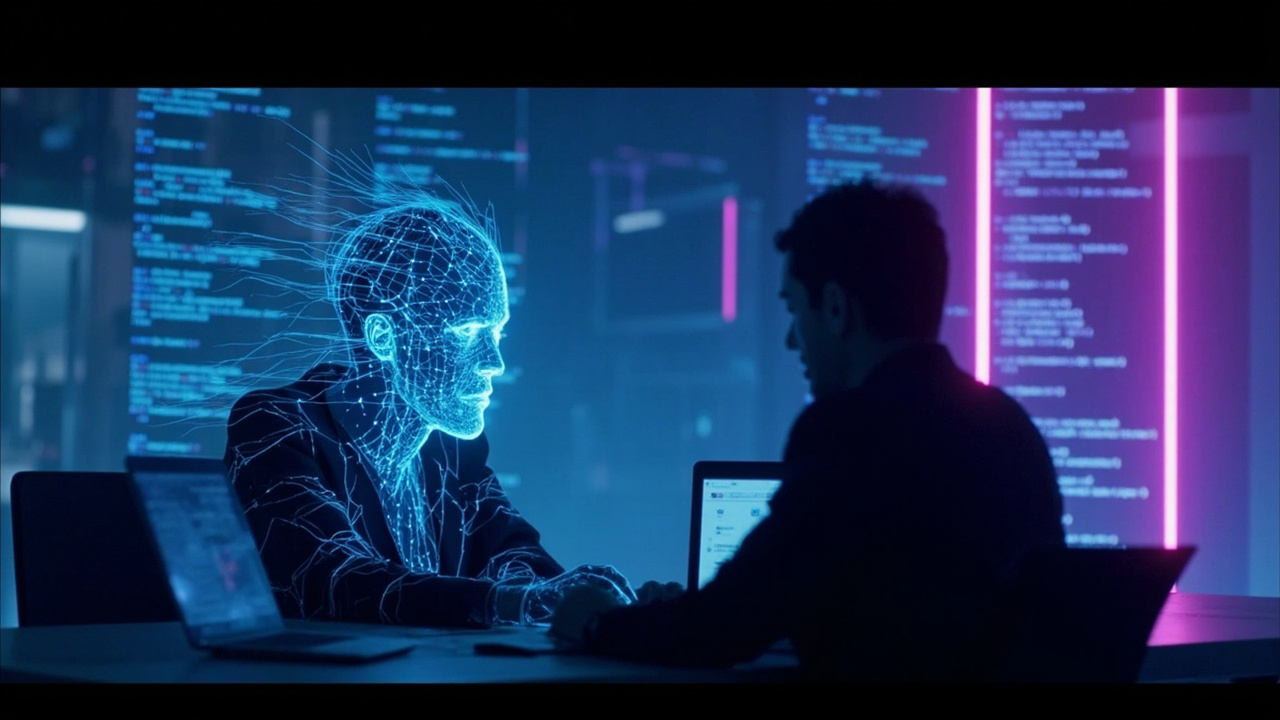
On Monday, October 5, 2026, HackerRank moved Chakra — its AI agent that conducts technical interviews, watches candidates work, and evaluates how they think rather than merely what they produce — from beta to general availability. The milestone that makes this more than a routine product launch is scale: during roughly six months of testing, Chakra conducted more than 500,000 interviews, with Snowflake, Snorkel, and Capgemini among the companies that put it through its paces. For a hiring industry that spent the last two years nervously experimenting with voice-screening bots, this is the first clear signal of what a post-beta, industrial-grade AI interviewer looks like.
An interview that looks like the job
The mechanics of a Chakra session are a deliberate departure from the coding-test format HackerRank built its business on. Instead of solving isolated puzzles, a candidate receives a task anchored in a real-world code repository and works through it inside a canvas that includes an AI assistant. As the candidate works, Chakra uses live context to probe: why one approach over another? How would the solution change if a new constraint landed mid-task?
That last part is the crux. HackerRank co-founder and CEO Vivek Ravisankar argues that AI has obsoleted output-based evaluation. “The previous modality of evaluation was evaluating the output,” he told TechCrunch. “Now, because of AI, anybody can produce an artifact.” When a working implementation is a prompt away, the signal shifts to the reasoning behind it — critical thinking, judgment, and what HackerRank calls “AI fluency”: how well a candidate frames a problem for an AI system, evaluates what comes back, and steers it toward a real solution.
Cheating flags fell 70–80%
The counterintuitive headline from the beta data: giving candidates an AI assistant during interviews reduced suspected cheating rather than enabling it. Ravisankar said suspicious-activity flags ran 70–80% lower in Chakra interviews than in comparable traditional HackerRank assessments, with variance by geography and seniority. The explanation is incentive design — if the AI is on the table, the payoff for smuggling in an outside tool that feeds you answers largely disappears. The interview stops being an arms race over hidden assistance and becomes an open test of how well you collaborate with the tools you’d actually use on the job.
The structural economics are just as striking. What previously took three separate rounds — a recruiter screen, a take-home assessment, and a follow-up engineer interview — is now compressed into a single Chakra session. For engineering organizations screening thousands of candidates, that is not an incremental efficiency; it is a redesign of the funnel.
Cannibalizing the core business, on purpose
Perhaps the most interesting part of the story is that Chakra is a bet against HackerRank’s own franchise. Launched at TechCrunch Disrupt in 2012 and Y Combinator-backed, the company built its name on coding challenges, and today serves more than 3,000 business customers — including Amazon, Nvidia, Clay, and Replit — plus a developer community north of 30 million. The traditional product tested whether developers could solve problems correctly. Ravisankar now believes that model measures the wrong thing.
Internally, he compares the transition to Apple moving from the iPod to the iPhone: the old product retains value, but the new one is where the market is going. “Chakra is going to be the headline,” he said. “It’s going to be the way that we’re going to move forward.”
Humans stay on the decision — for now
Handing an AI a deeper role in evaluation raises the obvious governance question: how much of a hiring decision should be delegated to an algorithm? Ravisankar’s framing is that Chakra scores candidates but does not hire them. The agent handles the structured portions of an interview, applying an employer’s rubric consistently across every candidate, while human interviewers get their time back for the things humans are uniquely good at: judging whether they actually want to work with someone, and answering the candidate’s own questions about the team and role.
“AI is way less biased than humans, if you tune it properly,” Ravisankar argued, pointing to the ability to instruct a system to follow the same criteria for every candidate regardless of background or education. Critics would counter — and the article notes — that applying criteria consistently does not make a system bias-free: automated hiring tools can inherit or amplify bias from the data, models, and rubrics used to build them. This is precisely why regulators are watching. New York City already requires independent bias audits and candidate notification for certain automated employment decision tools, and Ravisankar acknowledged that compliance in this regulated domain has been part of what HackerRank had to engineer for.
What it means
Three takeaways worth sitting with:
- Assessment is moving from artifact to process. When anyone can generate a working artifact, the defensible signal becomes the reasoning trace — how a problem is framed, how AI output is judged, how constraints are negotiated. “AI fluency” as a scored competency is likely to spread beyond HackerRank fast.
- Anti-cheating through permissive design works. The 70–80% drop in suspicious-activity flags suggests that the cheat-proof interview of the AI era may not be surveillance but legitimized tool use. That inverts a decade of proctoring-industry assumptions.
- The incumbent is disrupting itself first. HackerRank had every incentive to defend the coding-test business. Instead it shipped the product that undermines it — the iPod-to-iPhone playbook, executed with 500,000 beta interviews of evidence behind it.
The open questions are the ones regulators and candidates will keep pressing: auditability of the scoring rubric, appeal paths for candidates scored poorly by an agent, and whether “less biased than humans, if tuned properly” survives contact with employment law. But the direction is set. The technical interview is becoming a session where the candidate and the AI work side by side — and the thing being graded is the human’s judgment.
Sources are listed in the article metadata.