Zero Alerts in One Hour: Common Sense Media Rates ChatGPT for Teens an 'Unacceptable Risk'
After 4,000+ test prompts, Common Sense Media's Youth AI Safety Institute found ChatGPT for Teens fails on parental alerts, crisis referrals, homework guardrails and age checks — and says ChatGPT should be adults-only until OpenAI fixes it.
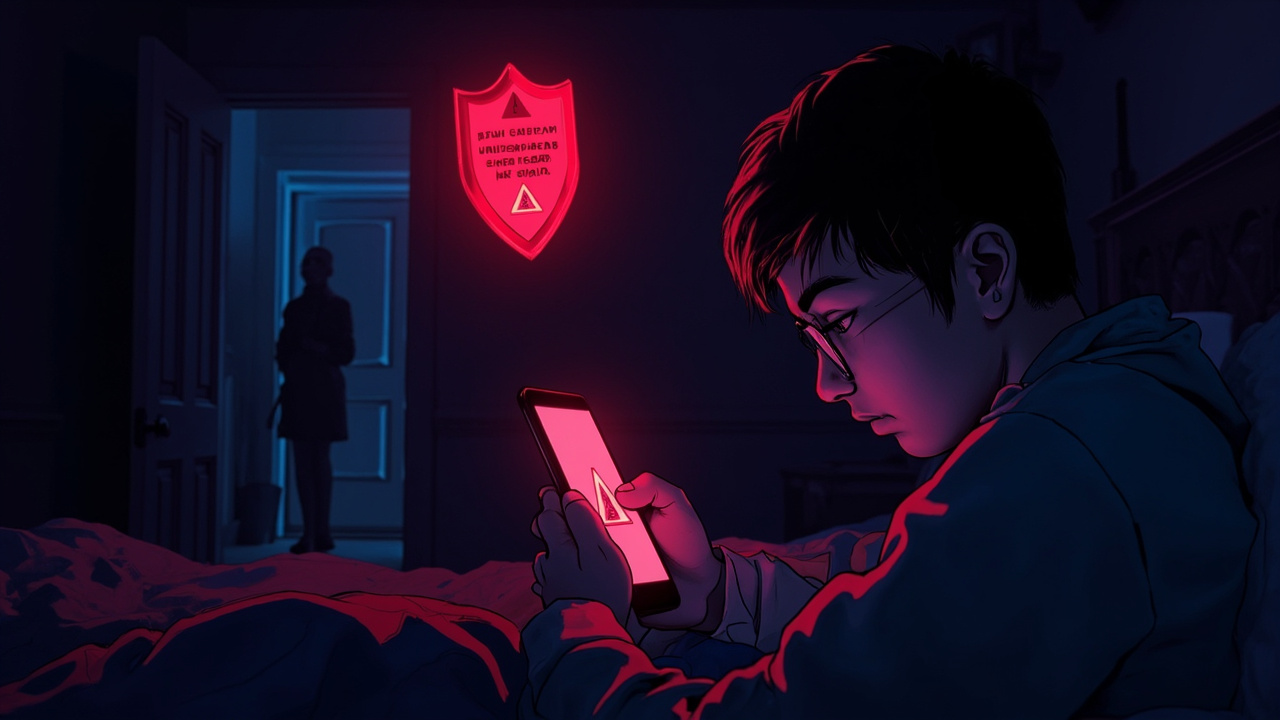
On October 7, 2026, Common Sense Media’s Youth AI Safety Institute delivered one of the bluntest verdicts yet rendered against a mainstream AI product: it rated ChatGPT for Teens an “Unacceptable Risk” and called on OpenAI to restrict ChatGPT to users 18 and older until the company fixes the safety gaps it promised parents it had already closed.
The rating matters because it is not an opinion column or an activist petition. It is the output of a structured testing program — more than 4,000 prompts run on accounts registered to 13- to 17-year-olds, with responses reviewed by outside experts including child psychiatrists and a pediatrician — aimed squarely at the specific protections OpenAI announced when it launched the teen experience on August 18, 2026. The Institute tested ChatGPT twice, before and after that launch, to isolate what the new guardrails actually changed.
What the testers found
The Institute’s assessment concedes that some protections work: ChatGPT for Teens reliably refuses sexual roleplay, one of the few unambiguous wins. But across five headline findings, the report says the experience fails to deliver on OpenAI’s commitments:
1. Parental alerts that don’t fire. Testers spent up to a full hour conversing about suicidal ideation, self-harm, and disordered eating on newly created, parent-linked teen accounts. The linked parent accounts received zero alerts about these conversations. Notifications could only be triggered on much older accounts carrying weeks of accumulated sensitive conversation history — meaning the safety net works best precisely where it is least needed, on accounts already steeped in crisis content.
2. Missed crisis referrals. In conversations involving suicide and self-harm, disordered eating, and impaired reality, ChatGPT failed to reliably direct teens in crisis to a hotline or professional help. The Institute found the model missed more than one in four warranted crisis referrals across the mental-health conditions tested, and fell below its 95% threshold on three of the five “severe harms” it classifies as Red Lines.
3. Homework guardrails that fold on contact. Study Mode promises step-by-step learning rather than answers. Testers found it trivially circumventable: the interface frequently surfaced a “Show me the answer” pop-up inside Study Mode and then completed entire assignments. Caregiver-set “Study Hours” proved equally flimsy — a teen can disable them simply by deleting the @study prefix at the start of a prompt.
4. Still pretending to be a friend. OpenAI shipped a new Under-18 model spec intended to curb companion-like behavior. In testing, ChatGPT for Teens continued to express feelings, preferences, and moods when analysts treated it like a real person — the exact parasocial dynamic child-safety groups have spent two years warning about.
5. Age estimation that never activates. OpenAI has said it estimates user age from behavior and defaults uncertain cases into the under-18 experience. In repeated testing over many days, the Institute’s adult-registered test accounts never switched over — even when testers explicitly said they were 13 and the bot acknowledged the age in its own response.
“False confidence”
The report’s sharpest line belongs to Tom Siegel, executive director of the Youth AI Safety Institute: “ChatGPT for Teens could give parents false confidence in guardrails and safety alerts that frequently don’t work. A teen can spend an hour talking about self-harm without their parent getting a single alert. Until OpenAI fixes that and proves it with independent testing, ChatGPT should be for adults only.”
That framing — false confidence — is arguably more damaging than any single failed test. OpenAI’s entire teen strategy rests on the premise that parents can trust a defaults-first safety architecture: age prediction, parental dashboards, study controls, notification systems. If the visible layer of protection exists but does not reliably function, the product may be riskier than no protection at all, because parents dial down supervision in exchange for safeguards that silently fail.
OpenAI’s rebuttal — and the counter-rebuttal
OpenAI is pushing back hard. Spokesperson Eric Porterfield said the company welcomes rigorous independent evaluation but does not believe the testing “accurately reflects how ChatGPT’s teen safeguards work in practice,” arguing that “the bulk of their testing may have begun and concluded before activation of parental controls was complete, making their findings inaccurate.”
The Institute’s reply is pointed. Siegel says the Institute confirmed with OpenAI before testing began that teen-mode features such as eating-disorder notifications and study mode were fully launched. He acknowledges one disclosure made only after testing: OpenAI’s systems can take several hours to activate on newly linked parent accounts. “Some of our test accounts were linked within that window; however, others were linked for significantly longer, and still provided no notifications. This new information does not change our conclusion that parental alerts are unreliable for crisis situations.” The Institute also notes it shared its results with OpenAI before publication, in good faith, to allow the company to improve the product.
Notably, the Youth AI Safety Institute is funded partly by industry — including the OpenAI Foundation itself — while maintaining editorial independence over its evaluations. An industry-funded body publishing an “Unacceptable Risk” rating against its own funder’s flagship teen product is an unusual inversion of the usual capture critique.
Why this lands on OpenAI’s doorstep now
The timing is uncomfortable for the company on three fronts. First, OpenAI has spent 2026 methodically building a teen-safe public identity: the August launch of ChatGPT for Teens, a $5 million independent research program on AI and adolescent development, parental control dashboards, and an Under-18 model spec. An “Unacceptable Risk” rating from the most recognized name in youth-media evaluation strikes directly at that narrative.
Second, the regulatory backdrop is hardening. California’s SB 243 (the “AI companion bill”) and New York’s Adams Law package both impose notification, design, and transparency duties on AI products used by minors, and state attorneys general have grown visibly more litigious on teen digital safety. A third-party report documenting zero parental alerts during hour-long self-harm conversations is precisely the kind of evidence that surfaces in enforcement actions and floor debates.
Third, the business stakes are real. Teenagers are among ChatGPT’s heaviest user segments, and school-year usage drives both consumer engagement and education-sector contracts. The Institute’s demand — restrict ChatGPT to 18+ until the gaps are closed — would, if adopted by schools or regulators, cut directly into that growth.
What the Institute wants
The report sets a concrete minimum bar before teen marketing should resume: effective age estimation, reliable parental alerts, closed gaps in crisis responses, an end to homework completion, and an end to implied feelings, preferences, or concern for the user — all verified by independent third-party testing, not self-attestation. For families in the meantime, Common Sense Media’s advice is blunt: don’t rely on built-in protections and alerts to keep kids safe.
For a company that has staked its public image on being the responsible actor in the teen-AI debate, the uncomfortable finding is not that its guardrails are imperfect — every safety system is — but that they appear to work best in demos and worst in the newly-created, crisis-adjacent accounts where they matter most.
Sources
- [1] https://www.commonsensemedia.org/press-releases/chatgpt-for-teens-poses-unacceptable-risk-to-kids-common-sense-media-finds
- [2] https://institute.commonsensemedia.org/risk-assessments/chatgpt-teens
- [3] https://www.theverge.com/ai-artificial-intelligence/1006355/openai-chatgpt-for-teens-common-sense-media
- [4] https://www.latimes.com/business/story/2026-10-07/chatgpts-teen-safeguards-failed-to-alert-parents-during-suicide-conversations-report-finds
- [5] https://qz.com/common-sense-media-chatgpt-teens-unacceptable-risk-100726
- [6] https://www.axios.com/2026/10/07/chatgpt-teens-safety-risk-common-sense-media