No Humanoid Required: Tesla's Ex-Optimus AI Lead Bets $100M on Purpose-Built Industrial Robots
Ashish Kumar, who led AI for Tesla's Optimus humanoid, has co-founded a startup building non-humanoid industrial robots and is seeking roughly $100 million — a deliberate counter-thesis to the humanoid hype cycle.
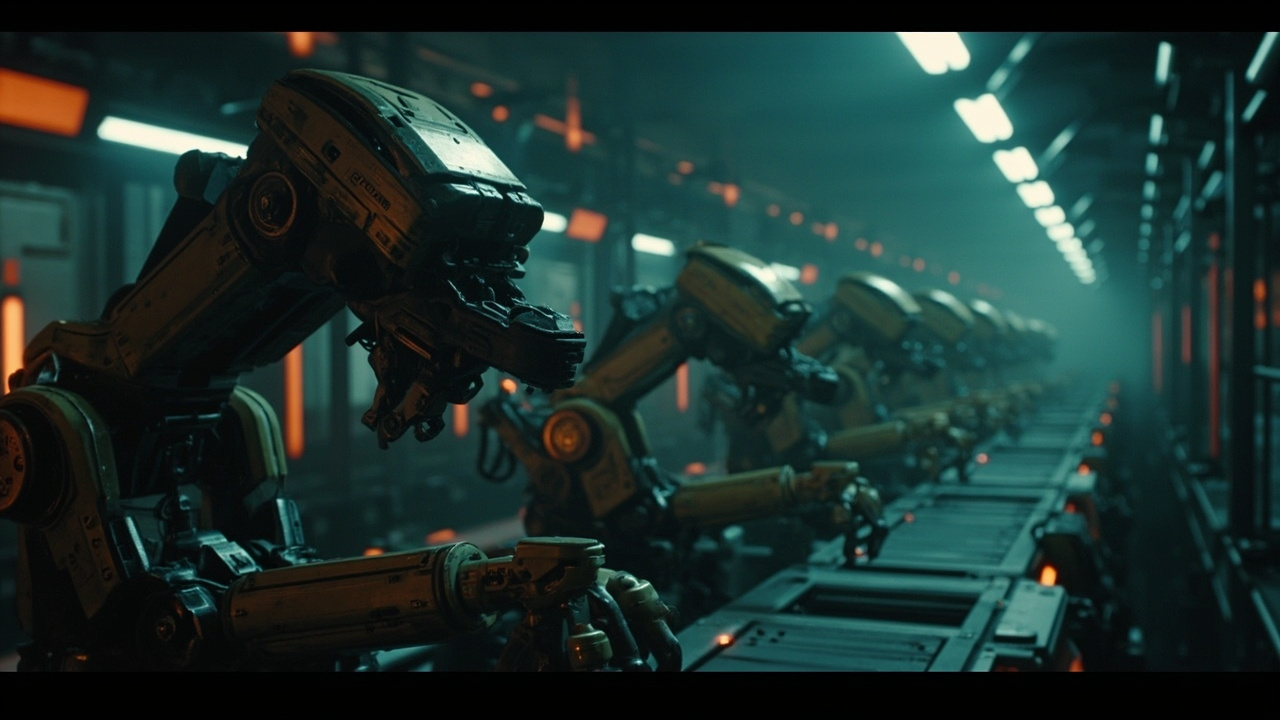
One of the most consequential bets in robotics right now is a bet against the form factor everyone else is chasing. Ashish Kumar — the engineer who led the AI team for Tesla’s Optimus humanoid robot and later moved to Meta as a research scientist — has co-founded a new startup that is developing non-humanoid industrial robots, according to an exclusive report by Kevin McLaughlin in The Information’s AI Agenda newsletter on October 7, 2026. The venture is reportedly seeking to raise approximately $100 million to fund its push into industrial automation.
On the surface, this reads like just another talented founder spinning out of Big Tech. It is much more interesting than that. Kumar isn’t a robotics generalist — he is precisely the kind of person the humanoid camp has been recruiting aggressively, and his decision to build machines that deliberately don’t look like us is a data point about where the real demand in physical AI sits today.
Who Is Ashish Kumar?
Kumar led the AI effort for Tesla’s Optimus program for roughly two years, a period in which the project’s technical direction changed materially. When he announced his departure from Tesla in September 2025, he described the team’s strategic shift in unusually specific terms: “We went all-in on scalable methods — swapping the classical stack with reinforcement learning & scaling dexterity by learning from videos.” He added that “AI is the most significant bit to unlock humanoids.”
That last sentence is worth revisiting. Kumar’s argument was never that humanoids were the wrong product — it was that intelligence, not hardware, was the binding constraint. His new venture suggests he has carried that conviction into a different conclusion about the hardware: if learning-based AI is now the core capability, the robot’s body should be whatever shape the work demands, not necessarily a human one.
His résumé backs the technical depth. Before Tesla, Kumar earned a Ph.D. at UC Berkeley, spent time at Microsoft Research, and completed his undergraduate degree at IIT Jodhpur. At Optimus he was associated with work on manipulation, natural walking, robustness — and notably the “dance” demos that became some of the program’s most visible proof points. His exit from Tesla came shortly after Milan Kovac, the VP who oversaw the entire Optimus program, departed in mid-2025, with overall leadership passing to Ashok Elluswamy, Tesla’s VP of AI Software.
When pressed on X about why he would leave one of the most watched projects in technology, Kumar rejected the money explanation flatly: “Financial upside at Tesla was significantly larger… If I wanted to optimize for money, I would have stayed at Tesla.” The same logic presumably applies to Meta, one of the best-funded frontier AI labs on Earth, which he has now also left to start this company.
The Counter-Thesis: Non-Humanoid Industrial Robots
The details of the new startup remain sparse — The Information’s report is behind a paywall, and the company’s name and co-founder roster have not been widely circulated. What is clear is the category: robots built for industrial workloads, designed as purpose-built machines rather than general-purpose humanoids, handling tasks that don’t require a human-shaped body.
This is a deliberate architectural argument, and it has real engineering substance behind it:
- Economics. A humanoid robot carries an enormous bill of materials — dual arms, dexterous hands, balance systems, perception stacks — that is wasted on a machine whose entire job is, say, picking from a fixed shelf or tending a machine tool. Purpose-built manipulators, gantries, and mobile platforms deliver far more work per dollar.
- Reliability. Bipedal balance and whole-body control remain hard research problems. A robot bolted to a floor or running on wheels eliminates entire classes of failure modes before you write a single line of learning code.
- Deployment friction. Factories are already designed around non-human workflows — conveyor heights, fixture geometry, safety cages. Fitting robots to the environment is cheaper than rebuilding the environment to fit robots.
The counter-argument, of course, is the one Elon Musk and Figure’s Brett Adcock make constantly: a general-purpose humanoid can go anywhere a human can, do any task a human does, and amortize its development cost across every industry at once. If dexterous manipulation generalizes, the humanoid wins on volume. Kumar spent two years inside that bet — and is now investing his next decade in the opposite one.
The $100 Million Signal
The reported ~$100 million raise matters beyond the number itself. Seed and early-stage rounds of that size for hardware ventures are rare and signal that institutional investors see industrial physical AI as a venture-scale category rather than a private-equity equipment business. Kumar is joining a widening cohort of ex-Tesla and ex-Meta robotics talent founding companies rather than climbing inside existing giants — Rémi Cadene, another ex-Optimus scientist, unveiled his Paris-based humanoid venture UMA and its Northstar robot earlier this year, aiming at the European market.
There is also a labor-market reading. Gurufocus framed the founding announcement alongside its observation that Tesla’s stock shows “modest overvaluation” — but the more durable signal is talent flow. When the people who built the most-watched humanoid AI stack on Earth choose industrial form factors for their own companies, the market should update on how quickly humanoid generalization actually arrives in paying factory deployments.
What to Watch
The unanswered questions are the interesting ones. Which industries will the startup target first — logistics, automotive, electronics assembly? Will the machines be sold as capex or offered as robots-as-a-service, the model gaining traction among customers wary of owning unproven hardware? And critically: how much of Kumar’s Optimus-era playbook — reinforcement learning, learning dexterity from video demonstrations — transfers to non-humanoid bodies? If video-learning scales on purpose-built hardware as well as it did in humanoid research demos, the cost curve for industrial automation could bend sharply.
One thing is certain: the physical AI gold rush is no longer a monoculture. Between the humanoid maximalists and the form-factor pragmatists, the next two years of deployment data will settle the argument — and Kumar has just made himself one of its most credible protagonists.
Disclosure note: details of the raise are as reported by The Information and Gurufocus as of October 7, 2026; the round is described as being sought, not closed.
Sources
- [1] https://www.theinformation.com/newsletters/ai-agenda/former-tesla-optimus-lead-launching-industrial-robot-startup
- [2] https://www.gurufocus.com/news/9113619/former-tesla-ai-lead-launches-robotics-startup-tsla-stock-shows-modest-overvaluation
- [3] https://www.humanoidsdaily.com/news/tesla-optimus-ai-lead-departs-in-latest-high-profile-exit