One Petaflop in Your Lap: Microsoft Bets the PC's Next Chapter on Local AI
At its San Francisco event today, Microsoft pairs Satya Nadella with Jensen Huang to launch the RTX Spark-powered Surface Laptop Ultra and an agentic vision for Windows — the biggest PC bet since Copilot+.
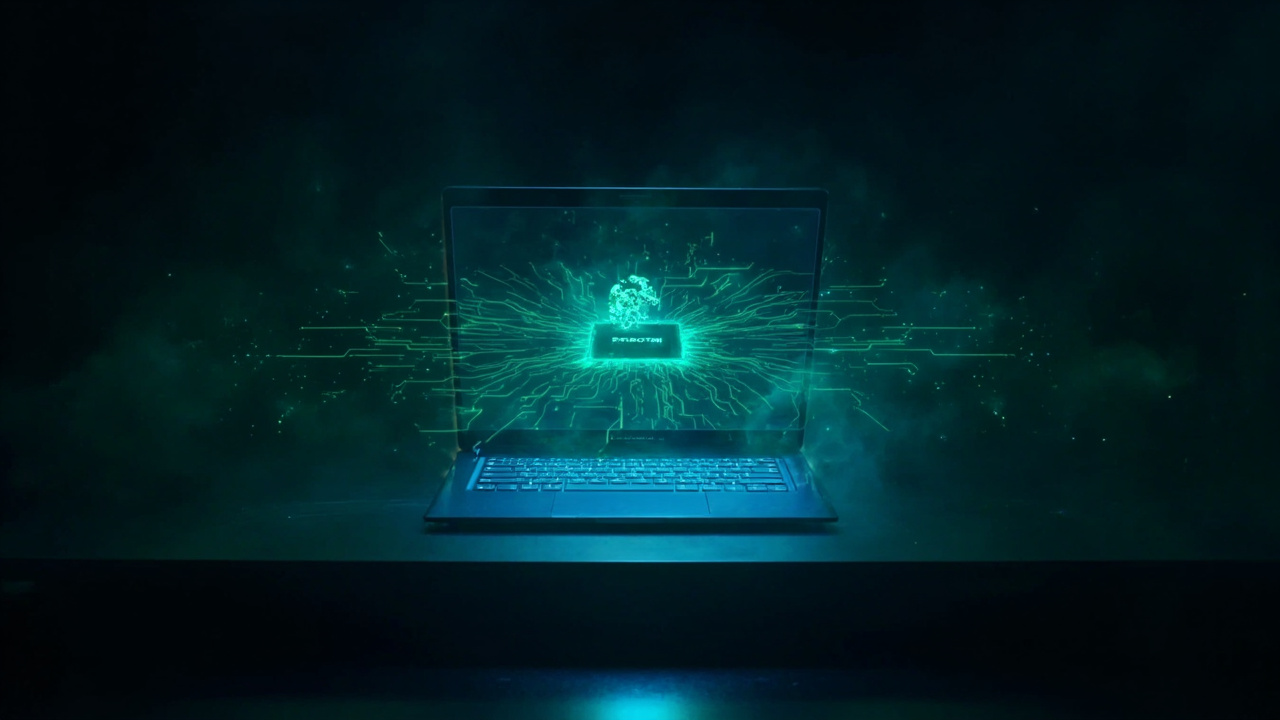
Today in San Francisco, Microsoft hosts its first major Windows and Surface event in two years — and it is not a retread of the Copilot+ formula. The company describes the show, which begins at 10 a.m. PT, as “a conversation on how local AI will shape the next chapter of the PC.” CEO Satya Nadella will share the stage with NVIDIA CEO Jensen Huang, and the pairing tells the story before a single product is announced: Microsoft is placing its biggest PC bet in a decade on NVIDIA silicon and on AI that runs on the device in front of you, not in a data center a continent away.
The hardware centerpiece: Surface Laptop Ultra
The headliner is the Surface Laptop Ultra, the flagship laptop built around NVIDIA’s RTX Spark platform — a custom chip that fuses an ultra-efficient Arm CPU with a Blackwell-generation RTX GPU. Microsoft’s own product page puts the headline number plainly: up to one petaflop of AI compute with 128GB of unified memory, enough to run frontier-class open models of roughly 120 billion parameters entirely locally.
The platform, first detailed at Computex in May, comes in two configurations. The core model pairs a 20-core Grace Arm CPU with 5,120 Blackwell GPU cores; the 18-core step-down variant carries 6,144 GPU cores per Windows Central’s spec sheet — an inversion that looks odd until you realize the “core model” naming refers to the CPU configuration, with GPU clusters scaled to thermal budgets across partner designs. Across the ecosystem, Acer, ASUS, Dell, HP, Lenovo and MSI are shipping their own RTX Spark machines this month, making Microsoft’s first-party device the reference design for a whole category.
Pricing remains the open question. Pre-announcement reporting pegged the base configuration around $3,500, climbing steeply from there — premium territory that puts the Ultra in direct competition with Apple’s M5 Ultra Mac Studio on memory-per-dollar, and with workstation-class laptops on raw capability. Microsoft conspicuously avoided branding the machine a “Copilot+ PC” during the Build preview, a detail PCMag’s Mark Hachman flagged as deliberate: when the world’s largest GPU vendor launches an AI PC platform and pointedly declines to borrow your category label, that label has become a liability rather than an asset.
The software story: an agentic Windows
Hardware is only half the event. Windows Central’s preview points to “new agentic OS capabilities” as the deeper announcement — Windows features designed around AI agents that use your PC rather than apps you click through. This is the direction Microsoft has been telegraphing all year: September’s Copilot relaunch introduced Copilot Home, Copilot Code and an “Autopilot” mode; last month the company quietly retired the Copilot+ PC brand as a marketing pillar; and Microsoft has spent 2026 rebuilding Copilot’s architecture around persistent memory and multi-step task execution rather than chat.
The bet is that “local AI” and “agentic AI” converge on the same hardware. Agents that run for hours, hold context across sessions and touch your files need exactly what RTX Spark provides: large unified memory for long context, sustained throughput for background reasoning, and privacy guarantees that only on-device inference can offer. A cloud agent reading your documents is a trust question; a local agent never has to be.
Why this matters beyond one event
Three currents make today’s announcements more consequential than a routine hardware refresh.
First, the local-AI competitive map is being redrawn. For two years the question was whether Intel, Qualcomm or AMD could match Apple’s neural engines. NVIDIA entering with a discrete-GPU-first architecture changes the axis of competition from NPUs to raw GPU compute — and Microsoft choosing NVIDIA as its flagship partner is a pointed departure from the Qualcomm-exclusive Copilot+ era.
Second, it formalizes the shift from cloud-first to hybrid AI. Every major lab has spent 2026 hedging its compute story. OpenAI is buying tens of thousands of Macs for RL workloads; Apple’s M5 Ultra is winning local-inference benchmarks against desktop AI machines; and NVIDIA’s own DGX Spark line just gained a $4,999 entry configuration. Microsoft putting a petaflop-class laptop at the center of its PC lineup is the clearest signal yet that the industry expects meaningful inference to migrate toward the edge — for latency, for cost, and for data sovereignty.
Third, it is a referendum on what an “AI PC” is for. The Copilot+ generation promised recycled features — background blur, live captions, a chat sidebar — and consumers yawned. The RTX Spark generation promises something categorically different: a machine that runs frontier-scale open-weight models, powers developer agents, and treats local inference as its primary workload rather than a checkbox. If that framing lands with buyers, every PC roadmap for the next five years bends around it. If it doesn’t, local AI remains a niche for developers and privacy diehards while the frontier stays in the cloud.
The caveats
Honesty requires noting what today is not. No Windows 12 is coming, per Microsoft’s own messaging — this is Windows 11’s next chapter, not a new OS. The software experience remains the risk: a petaflop of compute is worthless if the agentic features feel like demos, and Microsoft’s track record on shipping AI features that survive contact with daily use is mixed. Battery life on a Blackwell GPU laptop running sustained inference is unproven. And $3,500-plus pricing confines the first wave to professionals and enthusiasts, not the mainstream.
But as statement events go, this one is unusually legible. Microsoft, the company that spent 2023-2025 betting on the cloud and a small NPU, is now betting on NVIDIA, a big GPU, and the premise that the next hundred million PCs should be able to think for themselves. Watch the stream at 10 a.m. PT — the PC industry’s direction for the next several years is being argued out on that stage.
Sources
- [1] https://news.microsoft.com/windows-surface-october-2026-news/
- [2] https://www.engadget.com/2275196/microsoft-surface-windows-event-october-7-preview/
- [3] https://www.windowscentral.com/microsoft/windows-11/what-to-expect-at-microsofts-special-windows-and-surface-event-on-october-7-surface-laptop-ultra-and-rtx-spark-revealed-new-agentic-os-capabilities-and-more
- [4] https://www.pcmag.com/news/microsoft-surface-and-windows-event-2026-all-the-announcements-and-analysis
- [5] https://www.thurrott.com/windows/341720/microsoft-to-hold-surface-and-windows-event-on-october-7
- [6] https://nvidianews.nvidia.com/news/nvidia-microsoft-windows-pcs-agents-rtx-spark
- [7] https://uk.pcmag.com/laptops/167664/microsoft-is-betting-on-local-ai-with-nvidia-as-its-wingman-on-oct-7-well-see-if-it-pays-off