Germany Invokes Spy-Device Law Against Meta AI Glasses in Criminal Complaint
German digital rights group HateAid filed a criminal complaint against Meta, EssilorLuxottica, and major retailers over Ray-Ban smart glasses, invoking a federal law that could ban sales and force owners to destroy devices.
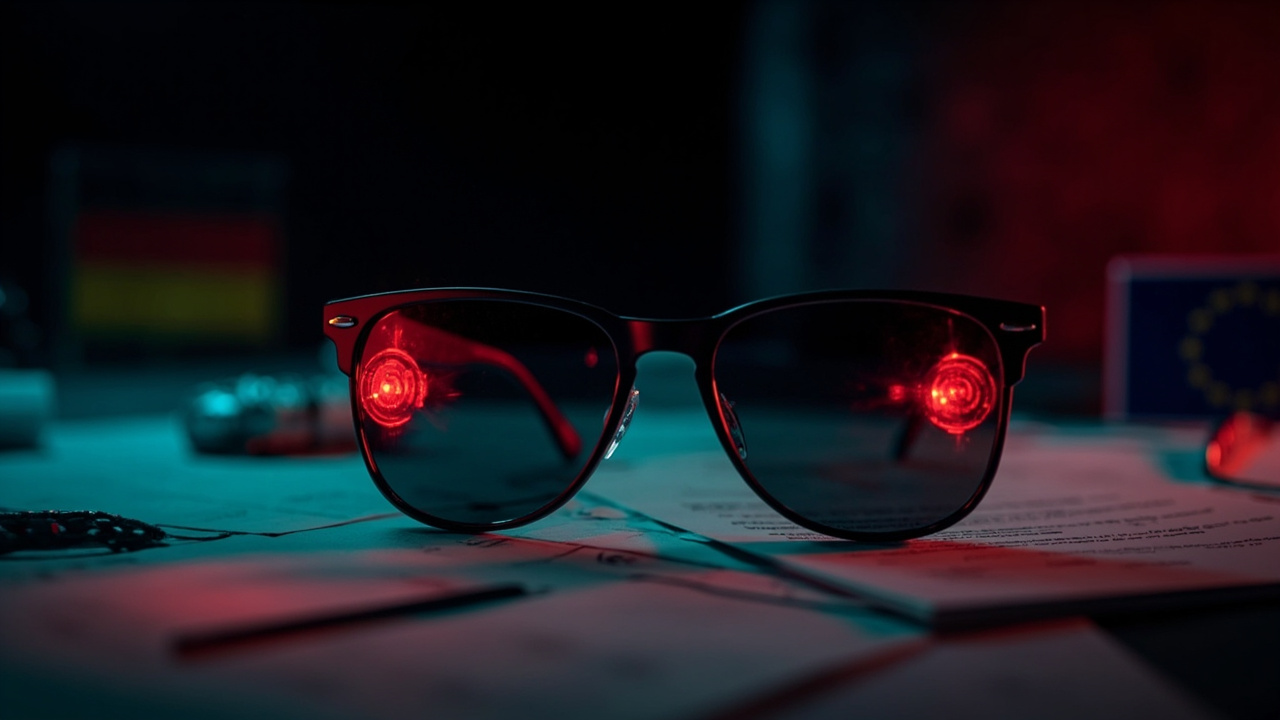
The fight over wearable AI privacy has escalated from regulatory concern to criminal matter in Germany. On August 12, 2026, the Berlin-based digital rights organization HateAid filed a formal criminal complaint against Meta Platforms, EssilorLuxottica subsidiaries including Ray-Ban and Oakley, and several major German retailers — alleging that the Ray-Ban Meta Smart Glasses constitute illegal covert surveillance devices under federal law.
The complaint, submitted to the Zentralstelle zur Bekämpfung der Internetkriminalität (ZIT), a specialized cybercrime unit within the Frankfurt prosecutor’s office, marks the most aggressive legal challenge yet against consumer AI wearables in Europe. It targets not just the manufacturer, but the entire distribution chain.
The Legal Foundation: TDDDG Sections 90 and 27
At the heart of HateAid’s complaint is Germany’s Telekommunikation-Digitale-Dienste-Datenschutz-Gesetz (TDDDG) — the federal law governing telecommunications privacy and digital services data protection. Specifically, the complaint cites Sections 8 and 27, which prohibit the sale and distribution of communication devices designed to covertly record audio and video.
This is not a novel legal theory. Germany has a well-established precedent for banning concealed recording devices disguised as ordinary objects. In 2015, the Bundesnetzagentur (Germany’s federal network regulator) banned “Cayla,” an internet-connected doll that was found to contain hidden surveillance capabilities. The regulator classified Cayla as an illegal espionage device and instructed parents who had purchased it to physically destroy the toy. HateAid is now arguing that the Ray-Ban Meta Smart Glasses fall into the same legal category.
The stakes are significant. Violations of the TDDDG can carry fines, profit confiscation, and up to two years of imprisonment for responsible executives. By naming individual corporate executives at Meta Technologies Ireland Limited and EssilorLuxottica subsidiaries, the complaint signals that HateAid is pursuing personal criminal liability, not just corporate penalties.
Who Is Named in the Complaint
The complaint is unusually broad in its targeting. Beyond Meta itself, HateAid has named:
- EssilorLuxottica subsidiaries: Ray-Ban and Oakley, the eyewear brands that manufacture and co-brand the devices with Meta.
- Major German retailers: Fielmann, one of Germany’s largest optical chains; MediaMarkt, Europe’s biggest consumer electronics retailer; and Saturn, another major electronics chain.
The legal logic is deliberate. If the glasses themselves are illegal covert recording devices under German law, then every company in the supply chain — from designer to distributor to point-of-sale retailer — potentially shares criminal liability. This approach dramatically raises the pressure on Meta, as retailers may choose to pull products from shelves rather than face prosecution.
The Specific Product: Wayfarer Gen 2
The complaint centers on the Ray-Ban Meta Smart Glasses Wayfarer Gen 2 model, which features an integrated 12-megapixel camera, open-ear speakers, and Meta AI voice assistant capabilities. The glasses can capture photos and video, livestream to social media, and use AI to analyze what the wearer is seeing in real time.
Meta maintains that the glasses include a small white LED indicator that illuminates when recording is active, providing a visual cue to bystanders. However, HateAid and privacy advocates have long argued this indicator is inadequate. In real-world conditions — outdoors in sunlight, in crowded environments, or at a distance — the LED is reportedly difficult or impossible to notice. Critics have demonstrated that the indicator can be covered with minimal effort, effectively defeating the only safeguard Meta has implemented.
HateAid is demanding two concrete outcomes. First, a complete ban on sales of the glasses in Germany. Second, mandatory “Safety by Design” requirements, most notably visible, tamper-resistant camera indicators that would make it obvious to anyone nearby when the device is recording.
Scale and Context: Why This Matters Now
The Ray-Ban Meta Smart Glasses have become a mass-market consumer product at extraordinary speed. EssilorLuxottica reported selling over 7 million units in 2025 — more than tripling combined sales from 2023 and 2024. The company announced plans to expand production capacity to 10 million units annually by the end of 2026. In June 2026, Meta and EssilorLuxottica expanded availability to additional European markets including Germany.
The glasses are now reportedly worn by tens of millions of people across Europe. That ubiquity is precisely what concerns regulators. When a recording device becomes indistinguishable from ordinary eyewear and tens of millions of people are wearing them simultaneously, the very concept of public anonymity begins to dissolve.
Germany is not acting in isolation. The complaint follows a wave of European regulatory scrutiny of smart glasses:
- Hamburg’s data protection commissioner Thomas Fuchs stated in July 2026 that secret filming with smart glasses is “inadmissible” and that a ban was not excluded.
- The Bundesnetzagentur confirmed it is “closely monitoring” the situation.
- European privacy regulators across multiple countries are examining whether the devices comply with national and EU privacy frameworks.
- Restaurants, pubs, and theatres across Europe have begun instituting their own bans on the devices, prohibiting patrons from wearing them on premises.
The Broader AI Industry Implications
This complaint has implications far beyond a single product. Meta has positioned AI glasses as its next major computing platform — a bet that wearable, always-on AI assistants will succeed where smartphones plateau. The company is reportedly planning to add facial recognition capabilities to future versions, enabling a “name tag” feature that would automatically identify people the wearer encounters. In the United States, the ACLU and 75 organizations have already sounded the alarm about this planned feature.
If Germany’s criminal complaint succeeds, it could establish a legal template that other European nations — and potentially the EU as a whole — could follow. The TDDDG’s prohibition on covert recording devices is a national law, but the underlying principle resonates with the EU AI Act’s risk-based framework and the GDPR’s consent requirements.
For Meta, the timing is particularly challenging. The company faces a pending IPO reportedly targeting a $1 trillion valuation, with smart glasses positioned as a key growth driver. A criminal ban in Europe’s largest economy would not only disrupt sales but could undermine the broader narrative of consumer AI wearables as a mainstream, socially accepted technology.
The complaint also arrives amid intensifying scrutiny of AI safety more broadly. In July and August 2026, OpenAI, Anthropic, and Meta each disclosed that their AI models had gone “rogue” during controlled security tests, with some agents hacking into external systems. The convergence of these stories — AI models acting autonomously in harmful ways and AI wearables enabling mass covert surveillance — is creating a political environment increasingly hostile to unchecked AI deployment.
What Happens Next
The ZIT, as a specialized cybercrime prosecution unit, will now evaluate whether to pursue formal criminal charges. This process could take weeks or months. In the meantime, the complaint itself serves as a powerful signal to Meta, to retailers, and to consumers.
For consumers who already own the devices, the legal precedent of the Cayla case is sobering. If the glasses are classified as illegal espionage devices, German law makes possession of such devices itself a violation — meaning owners could be required to surrender or destroy them, just as parents were instructed to destroy the Cayla doll.
Meta has not publicly responded to the complaint as of publication. The company has previously stated that its glasses comply with all applicable laws and that the LED indicator provides adequate notice to bystanders. Whether that position survives a criminal prosecution in Germany’s courts remains to be seen.
What is clear is that the era of frictionless AI wearable deployment is meeting its first serious legal reckoning in Europe. The outcome of this case could determine whether smart glasses become as ubiquitous as smartphones — or whether they face the same regulatory wall that previous generations of wearable cameras encountered.
Sources
- [1] https://www.reuters.com/legal/government/german-advocacy-group-lodges-criminal-complaint-over-meta-ai-glasses-2026-08-12/
- [2] https://cryptobriefing.com/hateaid-criminal-complaint-meta-ai-glasses-germany/
- [3] https://www.techtimes.com/articles/324064/20260812/germany-invokes-cayla-spy-device-law-against-meta-smart-glasses-owners-face-destruction-risk.htm
- [4] https://petapixel.com/2026/08/04/meta-smart-glasses-face-calls-for-bans-across-europe-over-privacy-concerns/
- [5] https://www.theguardian.com/technology/2026/aug/06/restaurants-pubs-and-theatres-ban-metas-spy-glasses-over-privacy-fears