Fermi America Lands $6.5B Tenant and New CEO for Texas AI Mega-Campus
After months of turmoil and zero clients, Fermi America secured a $6.5 billion lease with TensorWave and appointed TerraPower veteran Lee McIntire as CEO — signaling a turnaround for its 17GW Project Matador AI campus in the Texas Panhandle.
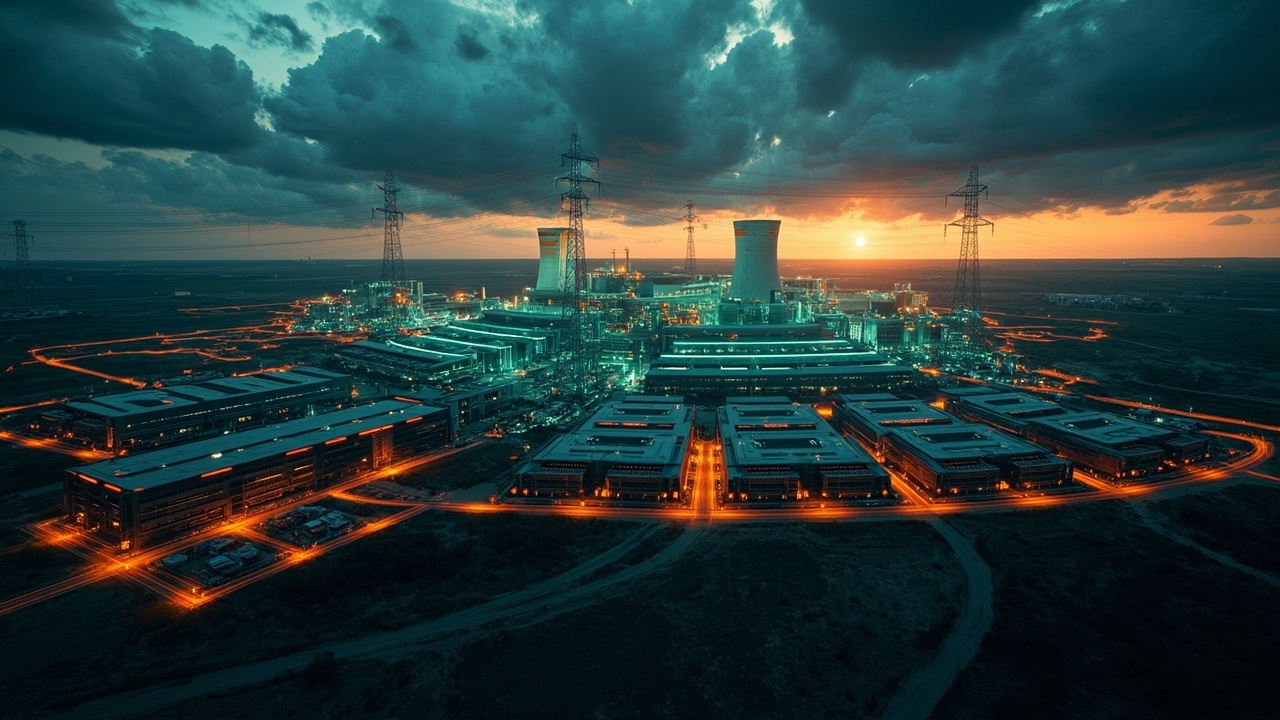
Fermi America Lands $6.5B Tenant and New CEO for Texas AI Mega-Campus
For months, Fermi America was the cautionary tale of the AI infrastructure boom — a company that promised gigawatt-scale nuclear-powered data centers and couldn’t sign a single client. This week, that narrative flipped.
On August 10, 2026, Fermi announced a binding 15-year lease agreement with TensorWave Inc. covering 222 megawatts of capacity at its Project Matador campus in Carson County, Texas, near Amarillo. The deal is expected to generate approximately $6.5 billion in total contracted revenue over the initial term. Two days later, on August 12, Fermi appointed Lee McIntire — a board member and veteran of TerraPower and CH2M Hill — as its new Chief Executive Officer, effective August 11.
Together, the announcements mark the most significant step yet in the company’s “2.0” reset, transforming Fermi from a struggling startup into a player with a real revenue pipeline in the hottest real estate market on Earth: AI compute.
Project Matador: 17 Gigawatts of Ambition
Project Matador is, by any measure, a staggeringly ambitious undertaking. Fermi envisions a 17-gigawatt private power and AI campus spanning the Texas Panhandle — a site designed to combine gas-fired generation with longer-horizon nuclear baseload power, all dedicated to serving hyperscale AI workloads. At full build, it would rank among the largest private energy and computing complexes ever proposed.
The scale reflects a fundamental shift in how AI infrastructure is being conceived. Hyperscalers — Amazon, Google, Microsoft, Meta — and frontier AI labs like OpenAI and Anthropic are locked in an arms race for power. The bottleneck is no longer just GPUs or model talent; it is megawatts. Data center power consumption in the United States is projected to double or triple within five years, and the grid cannot keep pace. Projects like Matador represent a new paradigm: building dedicated power generation alongside compute, bypassing traditional utility interconnection queues that now stretch years.
Fermi’s website touts “day-one megawatts at scale” and “redundant, dispatchable power ready to serve hyperscale loads in 2026.” The company’s pitch is that it can deliver power on a hyperscaler’s timeline — faster than grid-connected alternatives — by building its own generation assets on private land.
The TensorWave Deal: $6.5 Billion and Counting
The TensorWave lease is Fermi’s first publicly announced binding tenant agreement, and the numbers are substantial. The initial phase covers 222 MW of total facility power, with delivery beginning in the second half of 2027. The 15-year contract is projected to generate approximately $6.5 billion in contracted revenue for that first phase alone.
Crucially, the deal includes expansion rights for two additional data centers, potentially bringing TensorWave’s total footprint at Project Matador to up to 650 MW. Ilya Tabakh, a Fermi executive, confirmed on LinkedIn that “the first 222 MW comes online in the second half of 2027, with expansion rights for two more data centers beyond that.”
TensorWave, the tenant, is a GPU cloud services provider that operates inference infrastructure for AI workloads — precisely the type of customer that needs massive, reliable, cheap power. The company’s decision to commit to Fermi, despite the startup’s well-documented struggles, is a strong signal of demand urgency in the market.
Lee McIntire: From TerraPower to Fermi
The CEO appointment adds a layer of credibility that Fermi has badly needed. Lee McIntire is not a venture-backed upstart; he is an engineering executive with more than 40 years of experience building and operating complex infrastructure projects. He previously served as CEO of TerraPower — the advanced nuclear company founded by Bill Gates — and held the chief executive role at CH2M Hill, one of the world’s largest engineering and construction firms.
McIntire had served as an independent director on Fermi’s board since September 2025. His elevation to CEO, effective August 11, sends a clear message to investors and potential tenants: Fermi is being run by someone who has actually built gigawatt-scale energy projects before. For a company whose core thesis depends on delivering massive, complex power infrastructure on schedule, that experience is not a luxury — it is existential.
The appointment comes more than three months after Fermi’s board removed co-founder and then-CEO Toby Neugebauer. Bloomberg reported in May 2026 that Fermi had ousted Neugebauer after the company failed to sign a single client despite extensive marketing of its Texas site. Fortune’s coverage in April described a “financially struggling” company launching a “2.0 reset” after both its CEO and CFO departed.
A Rocky Road to Redemption
Fermi’s journey to this point has been anything but smooth. Founded with connections to former U.S. Energy Secretary Rick Perry and pitched as a flagship of the AI-nuclear convergence, the company spent 2025 and early 2026 marketing Project Matador aggressively but couldn’t convert interest into signed contracts. The Los Angeles Times reported in May that Fermi “promised nuclear power for AI but couldn’t sign a single client.” Bloomberg revealed internal turmoil, including the co-founder’s removal and a battle for control of the company.
The challenges were not purely commercial. Building a 17-gigawatt campus — whether powered by gas, nuclear, or both — requires navigating an extraordinary web of permitting, water rights, transmission infrastructure, environmental review, and community opposition. The Amarillo-area reporting highlighted negotiations with local water authorities and city councils, underscoring the physical-world friction that separates AI infrastructure renderings from operational gigawatts.
What This Means for the AI Infrastructure Landscape
The Fermi-TensorWave deal lands amid an unprecedented mobilization of capital toward AI compute infrastructure. In the same week, NVIDIA announced a $500 billion financing partnership with six Wall Street giants, Anthropic locked in a $9.1 billion compute lease with Riot Platforms in Texas, and PitchBook reported that 87.5% of all U.S. venture dollars in H1 2026 went to AI-related deals.
But the Fermi story highlights a dimension of this buildout that gets less attention than chip supply or model performance: the power problem is real, urgent, and geopolitical. The United States, China, the European Union, Saudi Arabia, India, and others are all racing to secure the energy infrastructure that will determine who controls the compute layer of the AI economy. Projects like Matador — private, multi-gigawatt, dedicated to AI — represent a bet that the traditional utility model is too slow for the pace of AI demand growth.
For Fermi specifically, the path forward remains challenging. The TensorWave lease is a contract, not operational megawatts. The first 222 MW will not come online until H2 2027 at the earliest, and the company must execute on construction, permitting, and power delivery at a scale it has never previously achieved. The 17-gigawatt vision is years — possibly a decade — from full realization, assuming it proceeds as planned.
But for a company that couldn’t sign a single client six months ago, $6.5 billion in contracted revenue and a seasoned nuclear-energy CEO represent a dramatic inflection point. Fermi may yet prove that the AI infrastructure boom rewards those who control the land, the water, and the power — even if the journey to get there is brutal.
Sources
- [1] https://techcrunch.com/2026/08/12/ai-nuclear-power-firm-fermi-finally-has-a-new-ceo/
- [2] https://investor.fermiamerica.com/fermi-announces-binding-lease-agreement-with-tensorwave
- [3] https://www.newschannel10.com/2026/08/10/fermi-america-announces-65-billion-contract-with-tensorwave/
- [4] https://abc7amarillo.com/news/local/fermi-america-signs-six-point-five-billion-dollar-lease-for-worlds-largest-data-center-after-months-of-turmoil-tensorwave-amarillo-texas-carson-county-water-city-council-greg-abbott-audir
- [5] https://www.bloomberg.com/news/articles/2026-05-01/nuclear-ai-startup-fermi-ousts-co-founder-over-lack-of-clients
- [6] https://fortune.com/2026/04/20/financially-struggling-ai-power-startup-fermi-loses-ceo-reset/
- [7] https://runtimewire.com/article/lee-mcintire-fermi-ceo-project-matador
- [8] https://www.datacenterdynamics.com/en/news/fermi-signs-agreement-with-tensorwave-for-up-to-650mw-of-data-center-capacity-at-project-matador-site/
- [9] https://www.amarillo.com/story/news/local/2026/08/11/fermi-project-matador-ai-campus-near-amarillo-gets-first-tenant-lease-agreement-tensor-wave/91029237007/