Unitree's Humanoid Robots Became Influencers — and Shanghai's Hottest IPO
China's Unitree turned its $13,500 G1 humanoid into a viral social-media star while retail investors piled into its 8,000x-oversubscribed Shanghai IPO.
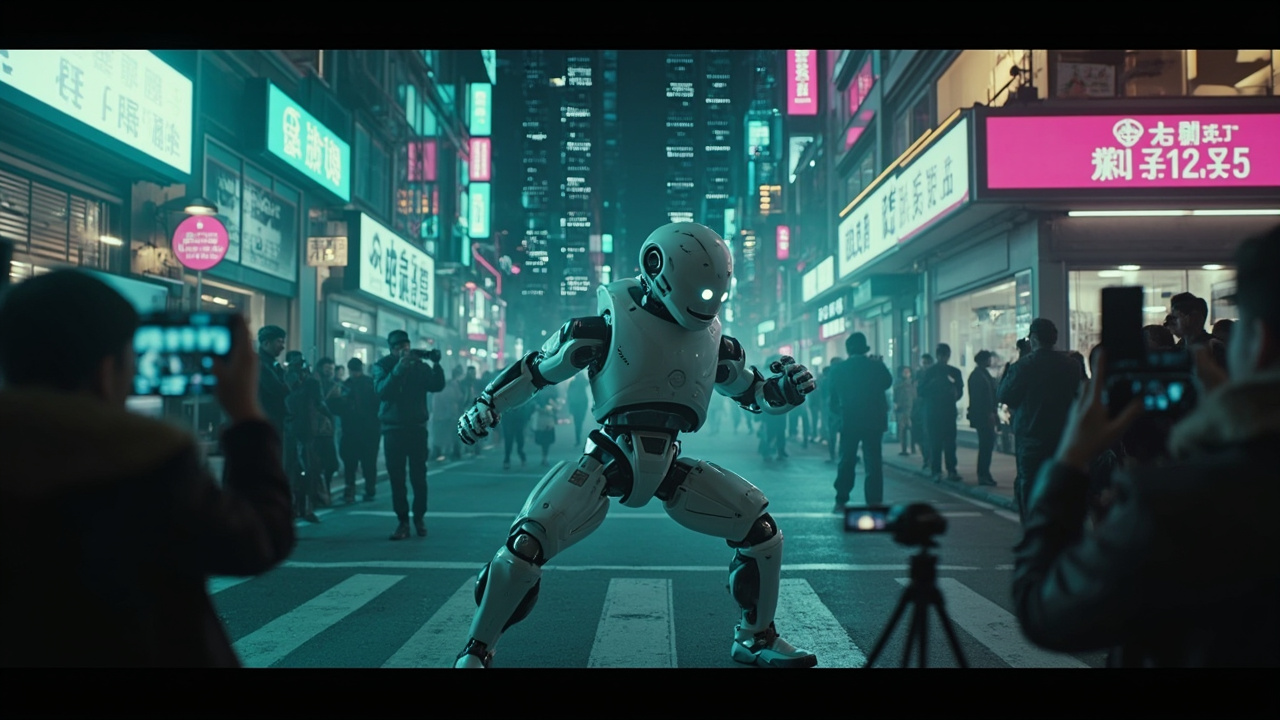
The strangest AI story of the summer doesn’t come out of a frontier lab. It comes out of Hangzhou, where Unitree Robotics has spent the past eighteen months turning four-foot-tall humanoid robots into social-media celebrities — and where, this week, retail investors decided those dancing machines were worth the most oversubscribed tech listing in Shanghai’s history.
From backflips to brand deals
WIRED’s Zeyi Yang profiled the phenomenon this week: Unitree’s G1 and R1 humanoids — the compact, relatively affordable robots the company has been shipping by the thousands — now anchor viral influencer accounts posting martial-arts routines, dance clips, and stunts to global audiences.
The archetype is “Edward Warchocki,” a G1 that wanders the streets of Poland. “Not super intelligent, but very emotional, very easy to make friends with,” is how Bartosz Idzik, the robot’s creator, describes him. When Warchocki speaks, he sounds like a regular guy. It’s only when he goes quiet that you remember what he actually is: a 132-centimeter-tall machine built by a Chinese company most Western consumers had never heard of two years ago.
That gap — between a robot’s actual capabilities and the personality audiences project onto it — is precisely what makes these accounts work. The G1 doesn’t need to fold your laundry. It needs to nail a synchronized kung-fu routine next to a human sparring partner, which it did at a widely shared August performance, or perform a lion dance with a pack of identical siblings. Charisma, it turns out, is cheaper to ship than dexterity.
The numbers behind the meme
The viral fame sits on top of a genuinely aggressive hardware economics story. Unitree has cut the pretax price of its flagship G1 from $16,000 to $13,500 in just 18 months, per TIME’s July profile. The R1, a 25-kilogram lightweight companion with 26 joints, launched at $5,900 — a price point many in the industry thought was five years away. The full lineup now spans from the $4,290 R1-D up through the $29,900 H2 and the $90,000 H1.
By units shipped, Unitree says it was the world’s largest humanoid maker in 2025, with more than 5,500 humanoids delivered and total mass-production output exceeding 6,000 units, on revenue of roughly ¥1.7 billion. Those are still consumer-gadget numbers, not industrial-deployment numbers — but they’re an order of magnitude beyond what Western humanoid startups like Figure or Agility have publicly reported.
Shanghai can’t get enough
The IPO turned the hype into a price. Unitree priced its Shanghai STAR Market offering on August 6 at ¥150.80 (about $22.34) per share, raising ¥6.1 billion — roughly $904 million — at a valuation of about ¥61 billion, or $9.04 billion, per CNBC.
Then came the frenzy. Reuters reported the retail tranche was more than 8,000 times oversubscribed, making it the most oversubscribed tech listing ever on the STAR Market. The FT separately reported a 5,500x figure at the institutional book-building stage before the final retail tally. Pre-listing gray-market contracts were already pricing the shares well above the IPO price ahead of the debut expected later this month.
The listing lands in the middle of a full-blown Chinese tech rally. The Financial Times reported this week that the STAR 50 index is up 29% year-to-date with a price-to-earnings ratio above 150 — more than four times the Nasdaq 100’s 35 — as retail investors chase Beijing’s tech-sovereignty push. Unitree, as China’s first publicly listed humanoid-robot company, is the rally’s perfect mascot: state-backed narrative, viral product, and a scarcity of pure-play humanoid exposure anywhere else in the world.
Can the influencers hold down a real job?
The WIRED piece asks the question that matters: the G1 “has found online fame as a relatively affordable robot that can charm a crowd. But can it ever hold down a real job?”
The honest answer is: not yet, and Unitree knows it. The company’s own prospectus-era disclosures emphasize shipment volumes and price cuts rather than deployment revenue from factories or warehouses. Most G1 and R1 units in the wild are doing exactly what the influencer accounts show — performing, entertaining, and being endlessly remixed into content — while the harder robotics problems (manipulation at industrial reliability, battery life, safety certification for human-adjacent work) remain unsolved at this price tier.
But dismissing the influencer era as a sideshow misses the point. Every viral clip is free marketing in markets Unitree could never have reached with ads: Poland, the United States, Southeast Asia. Edward Warchocki has done more for Unitree’s brand in Europe than any distributor relationship. The company has effectively outsourced its international go-to-market to hobbyists with Ring lights.
The risk is equally structural. Unitree is going public at a ~$9 billion valuation on roughly ¥1.7 billion of annual revenue — a revenue multiple somewhere north of 35x — justified largely by a narrative that Chinese humanoid robotics will scale the way Chinese EVs and solar panels did. If the STAR 50’s dot-com-flavored rally cools, or if a well-publicized robot accident dents the public affection these machines currently enjoy, the same retail investors who bid the IPO up 8,000x will set the tone on the way down.
Why it matters
Two things are genuinely new here. First, the price collapse in humanoid hardware is real: a capable bipedal robot now costs less than a used car, and it’s built by a company that prices for volume rather than for venture-deck demos. Second, the demand signal — an 8,000x-oversubscribed IPO and billions of organic video views — suggests the public isn’t afraid of these machines; it wants to befriend them. That’s a very different starting condition than the one self-driving cars or drones faced.
Whether Unitree converts celebrity into cash flow is the multi-year question. For now, the world’s most famous robot influencer is a four-foot Chinese humanoid with a Polish name, and the market has decided that’s worth nine billion dollars.
Sources
- [1] https://www.wired.com/story/unitree-influencer-4-foot-robot-from-china/
- [2] https://www.reuters.com/world/asia-pacific/unitrees-shanghai-ipo-more-than-8000-times-oversubscribed-by-retail-investors-2026-08-10/
- [3] https://www.cnbc.com/2026/08/06/chinese-humanoid-robot-maker-unitree-prices-ipo-at-9-billion-valuation.html
- [4] https://time.com/article/2026/07/23/unitree-china-human-robotics/