Starcloud Raises $250 Million as Launch Scarcity Reshapes the Orbital Data Center Race
The orbital AI compute startup has added a $250 million extension to its Series A at a $2.3 billion valuation, with Nvidia and Cisco backing a plan to beat a looming launch-capacity crunch.
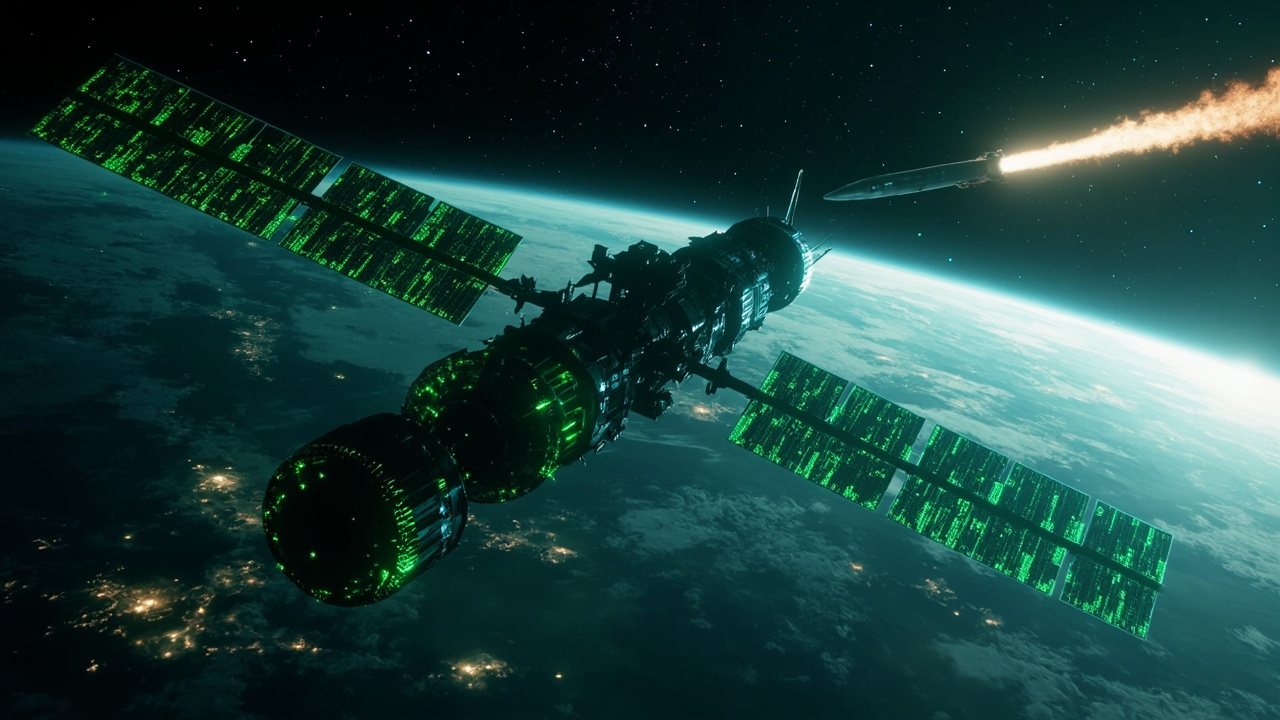
Starcloud, the startup building satellites that perform AI inference in orbit, has added a $250 million extension to its March Series A, the company told TechCrunch on August 21, 2026. The new capital values the Redmond, Washington-based company at $2.3 billion — more than double the $1.1 billion valuation from just five months ago — and signals that the race to put data centers in space is now as much about securing rocket rides as it is about compute.
The extension was led by Manhattan West Ventures and includes participation from Nvidia and Cisco. A person familiar with the deal said Nvidia contributed $25 million. Returning investors Benchmark, EQT, Soma, NFX, 776, Cedar Capital, Goanna Capital, and Standard Capital also joined. The raise brings Starcloud’s total funding to roughly $450 million since it was founded in 2024.
The launch squeeze
The timing of the raise is no accident. CEO Philip Johnston says the company is amassing capital now so it can book launch capacity before the market for rocket transportation tightens further — a constraint that is quietly reshaping the economics of the entire space-compute sector.
“We can see what’s coming — we’re going to need to book an enormous amount of launch,” Johnston told TechCrunch. Starcloud has already requested permission from the U.S. Federal Communications Commission to operate 88,000 spacecraft, a constellation that would dwarf anything ever flown.
The anxiety is grounded in rocket arithmetic. SpaceX plans to phase out its workhorse Falcon 9 in 2028, replacing it with the much larger but still unproven Starship. Competing rockets — Blue Origin’s New Glenn and United Launch Alliance’s Vulcan — are not yet flying regularly, and newer vehicles like Rocket Lab’s Neutron have not reached the pad. For a satellite operator planning thousands of launches, that transition window is a bottleneck with real financial risk attached. This week, Elon Musk said SpaceX will delay its next attempt to catch a returning Starship by a few months, pushing the first re-flight of the vehicle to the end of 2026 or early 2027.
“As soon as we can, we want to get under contract with things like Starship,” Johnston said. “One of the biggest costs is now on securing your launch capacity… launch is pretty constrained right now because [SpaceX’s] Falcon 9 program is scheduled to end in 2028.” He acknowledges the exposure plainly: “Obviously if we can’t book any SpaceX launch capacity in 2029, that will be challenging for us.”
The crunch is acute enough that one competitor, Cowboy Space, raised $275 million in May explicitly to build its own rockets rather than fight for slots. Launch costs were already considered the single biggest obstacle to viable orbital AI economics, and the coming vehicle transition is making the problem worse before it gets better.
What the money builds
Near-term, Starcloud is focused on launching two of its new generation of 8-kilowatt compute satellites — dubbed Starcloud-2 — on rideshare flights in 2027. These spacecraft will perform orbital inference tasks for customers including U.S. government agencies. The company is also weighing a dedicated Falcon 9 purchase and contracts with other launch providers.
The larger prize is Starcloud-3, the company’s biggest orbital data center spacecraft, designed to fly on SpaceX’s Starship. The entire thesis rests on Starship driving launch costs low enough that orbital inference can compete with terrestrial data centers, using abundant solar power and passive radiative cooling in space instead of grid electricity and water on the ground.
The new funding will also expand Starcloud’s manufacturing footprint. The 25-person company is developing production lines at a 100,000-square-foot facility in Woodinville, Washington — deliberately located near where SpaceX and Amazon build satellites for their own communications constellations.
Why Nvidia wrote a check
The most strategically interesting participant in the round is Nvidia. Starcloud is, as far as is publicly known, the only company currently operating a terrestrial-grade Nvidia H100 data center GPU in orbit — and the first to train a model in space using it. Most other space GPUs are designed for modest edge processing, not frontier-scale compute. Starcloud launched its first GPU satellite, Starcloud One, with the H100 in November 2025.
That operational data matters because Nvidia is now developing its first purpose-built GPU for space: the Vera Rubin Space-1 chip. Starcloud says it is sharing its hard-won learnings with Nvidia as the chipmaker refines the design, and the startup hopes to fly the space-ready chip sometime in late 2028.
“The reason they’ve chosen to do this investment now is because of all of this data that we got from Starcloud One,” Johnston said. “They, more than any other VC, did way more technical diligence on this than anybody else.”
The engineering questions Starcloud’s team is tracking for the space chip are the ones that define the whole category: the relationship between chip operating temperature and the size of the radiators needed to dissipate heat in a vacuum, the placement of radiation shielding, and the ruggedizing required for chips to survive the violence of a rocket launch.
A crowded, contrarian bet
Orbital data centers remain a contrarian proposition. Physics offers free cooling and uninterrupted solar power, but critics point to radiation-induced errors, impossible on-site repair, and launch costs that must fall by another order of magnitude for the math to work. The AI industry’s terrestrial energy crisis — grid interconnection queues, power purchase agreements, and water-hungry cooling — is nonetheless pushing serious capital toward the idea. Ajeet Singh’s Lumen Orbit became Starcloud in 2025, and rivals including Axiom Space and IBM-backed ventures have floated similar orbital compute concepts.
With $450 million raised, a doubling valuation, Nvidia’s silicon roadmap attached, and an FCC filing for 88,000 spacecraft, Starcloud has moved from science project to the most credible bet in the category. Whether it becomes a real infrastructure layer depends on two things outside its control: Starship hitting its reusability targets, and AI inference demand growing fast enough to justify moving compute off the planet. On both counts, the next 18 months — through the Starcloud-2 launches in 2027 — will be decisive.
Sources
- [1] https://techcrunch.com/2026/08/21/starcloud-raises-200-million-for-orbital-data-centers-as-launch-options-dry-up/
- [2] https://www.reuters.com/business/retail-consumer/starcloud-reaches-11-billion-valuation-ai-space-race-heats-up-2026-03-30/
- [3] https://spacenews.com/starcloud-achieves-unicorn-status-with-170-million-raise-for-orbital-data-centers/
- [4] https://techcrunch.com/2026/03/30/starcloud-raises-170-million-series-ato-build-data-centers-in-space/
- [5] https://techcrunch.com/2026/05/11/there-arent-enough-rockets-for-space-data-centers-cowboy-space-raised-275-million-to-build-them/
- [6] https://techcrunch.com/2026/04/13/the-largest-orbital-compute-cluster-is-open-for-business/