Washington's Ultimatum: Pick Pax Silica or Beijing's AI Bloc
The US is warning 35 signatories of its AI Opportunity Statement that joining China's World AI Cooperation Organization will get them excluded from the US-led coalition — and Beijing is pushing back hard.
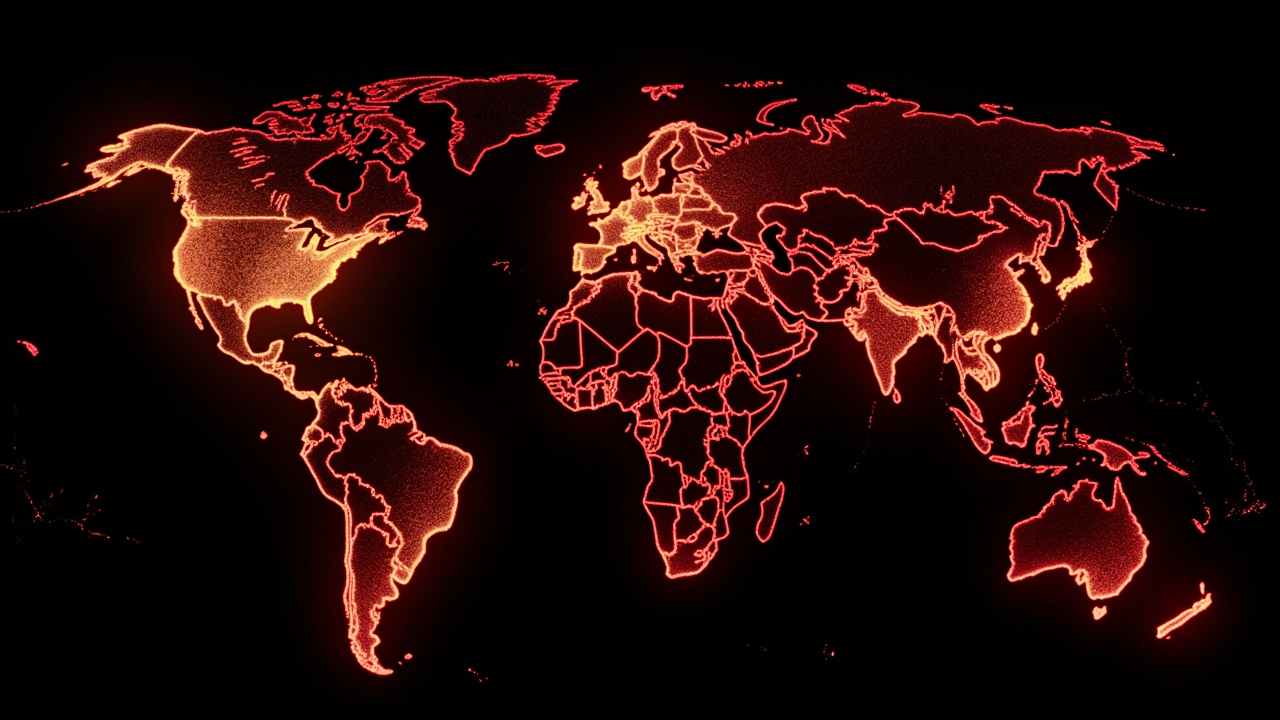
The global AI race just flipped from a technology competition into a full-blown geopolitical bloc confrontation. According to a Reuters exclusive published on August 14, 2026, the United States is preparing to send a letter to dozens of partner countries with a blunt message: you cannot have it both ways. Nations that sign up for Beijing’s competing World Artificial Intelligence Cooperation Organization (WAICO) will be excluded from the US-led AI coalition known as Pax Silica.
Five days later, on August 19, Beijing fired back. At a regular briefing, Chinese Foreign Ministry spokesperson Lin Jian urged respect for each country’s digital sovereignty, saying China firmly opposes “taking sides and camp-based confrontation” on artificial intelligence and calling on all parties to abandon zero-sum thinking. The exchange marks the sharpest rhetorical escalation yet in what analysts are increasingly describing as the fragmentation of global AI governance into two rival systems.
What the US letter actually says
The draft letter, according to Reuters, is addressed to the 35 signatories of the AI Opportunity Statement — a June declaration focused on expanding access to AI, encouraging its development, and cooperating on AI models, chips, and critical minerals. The core warning is exclusivity: join China’s framework and you are out of Pax Silica.
Pax Silica, launched in late 2025, is a US-led strategic initiative to build a secure, innovation-driven silicon supply chain spanning critical minerals, semiconductor manufacturing, and AI infrastructure. Its founding coalition included Israel, Japan, South Korea, Australia, Singapore, and other close US partners, and India’s accession earlier this year was widely read as a diplomatic win for Washington. A separate but related track, the AI Opportunity Statement, has attracted 35 countries — a broader tent that includes nations Washington would very much like to keep away from Beijing’s orbit.
The strategic logic is resource denial. By pressing countries to choose sides, the US hopes to starve China of the ingredients needed to build the most sophisticated AI systems: advanced chips, rare-earth processing, and the diplomatic alignment that keeps supply chains open. Recipients of the letter reportedly include countries that have hedged between the two camps — Kazakhstan being the most cited example, a critical-minerals powerhouse that joined Pax Silica tracks and also signed on to China’s coalition.
Beijing’s counter-frame: digital sovereignty
China’s response has been to reframe the contest as a question of national autonomy rather than allegiance. At the August 19 press conference, Lin Jian said all countries have the right to choose their partners based on their own national conditions and development needs, and called for joint efforts to build fair AI rules that benefit everyone rather than a mutually exclusive blocs.
The sovereignty argument is not new — it has been the backbone of China’s Global AI Governance Initiative since 2023 — but it lands differently now that WAICO exists as a concrete institutional alternative. Where Washington offers technology access, chip supply, and investment conditioned on alignment, Beijing offers cheap open-weight models, infrastructure financing, and no political strings attached. For much of the Global South, that pitch is not a close call.
The collision point: overlapping membership
The flashpoint is the roughly two dozen countries that have joined both frameworks. On July 16, 2026, at the World Artificial Intelligence Conference in Shanghai, representatives from 29 countries — including Russia, Belarus, Serbia, Cuba, Brazil, Venezuela, Pakistan, and Indonesia, plus 10 African and 12 Asian nations — signed the founding charter of WAICO. Just weeks later, the US draft letter emerged with its exclusion clause. The sequencing is hard to miss: Beijing built the institution first, and Washington is now moving to fence it off.
This puts middle powers in a genuinely difficult position. Countries like Brazil, Indonesia, and Kazakhstan derive real value from both relationships — US chips and cloud commitments on one side, Chinese open-source models and infrastructure funding on the other. An exclusivity demand forces a cost-benefit calculation that many governments have spent the past two years deliberately trying to avoid. Early reporting suggests several US partners have quietly asked whether the letter’s language might soften before it is sent, a sign that even allies find the binary framing uncomfortable.
Why it matters beyond diplomacy
The stakes extend well into the technical layer. The two blocs are converging on incompatible stacks: US-aligned countries standardize on American-designed accelerators, frontier API models, and export-controlled toolchains, while WAICO members adopt Chinese open-weight models, domestically fabricated chips, and Beijing-pushed technical standards. Divergent safety regimes, data governance rules, and evaluation regimes are likely to follow. For multinational companies, the era of building one global AI product and shipping it everywhere is quietly ending; regional forks — a Pax Silica build and a WAICO build — are becoming the pragmatic default.
There is also a real question about whether the US tactic works. Exclusion threats strengthen hardliners in Beijing and hand ammunition to the sovereignty argument China is already making. And the US coalition is not uniformly enthusiastic: European participants in particular have long resisted binary framing, having invested heavily in their own regulatory identity with the EU AI Act. If the letter is sent as drafted, expect a wave of carefully-worded non-committal responses in the weeks that follow.
The AI race has entered its alliance-politics phase. The next milestone to watch is whether the letter goes out in its current hardline form — and how many of the 35 signatories respond by quietly removing their names from one list or the other.
Sources
- [1] https://www.reuters.com/world/china/us-tell-partners-they-must-pick-sides-ai-race-with-china-2026-08-14/
- [2] https://www.reuters.com/world/china/china-urges-respect-digital-sovereignty-ai-race-2026-08-19/
- [3] https://thenextweb.com/news/pax-silica-us-letter-35-countries-china-ai-coalition
- [4] https://www.aljazeera.com/news/2026/7/17/chinas-xi-jinping-launches-new-ai-alliance-what-is-it
- [5] https://itif.org/publications/2026/08/13/pax-silica-timeline/